
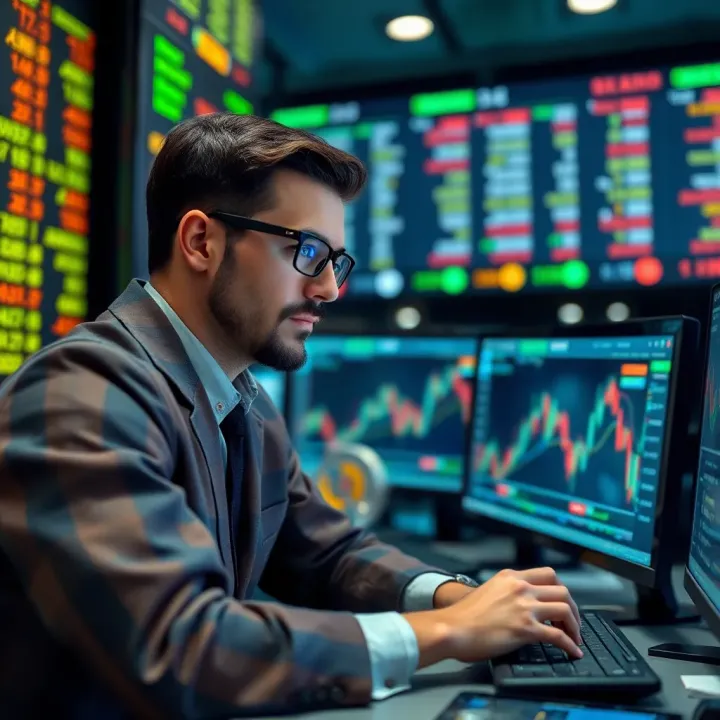
Understanding Dummy Trading: A Beginner's Guide
📈 Learn dummy trading to practise stock market skills without risking money. Understand tools, strategies & common mistakes before investing real ₹₹. Start smart!
Edited By
Liam Foster
Free trading refers to the unrestricted buying and selling of financial assets like stocks, commodities, or currencies during designated market hours without major constraints. For traders and investors, understanding how free trading operates is essential to tapping into market opportunities and managing risk efficiently.
The concept extends beyond just the absence of transaction costs; it involves a transparent ecosystem where prices are determined by supply and demand with minimal external interference. Globally, exchanges such as the New York Stock Exchange and London Stock Exchange enable free trading, while in India, the National Stock Exchange (NSE) and Bombay Stock Exchange (BSE) play vital roles.
Free trading allows market participants to act swiftly, responding to price changes and economic developments, which supports liquidity and fair price discovery.
No trading restrictions: Investors face no limits on how many shares or contracts they can buy or sell within market hours.
Price transparency: Real-time quotes reflect the current market value, helping decision-making.
Liquidity: Easier to enter or exit positions without significantly impacting prices.
Regulatory oversight: Though ‘free’, markets are regulated by bodies like the Securities and Exchange Board of India (SEBI) to maintain fairness and prevent manipulation.
For individual investors in India, free trading empowers active portfolio management. For example, during the Diwali season when market volumes spike, traders can quickly capitalise on price movements. Similarly, free trading facilitates systematic investment plans (SIPs) and day trading alike, offering flexibility.
Meanwhile, brokers across India offer platforms that provide seamless access to free trading with features like margin trading and real-time market data. However, investors must remain cautious of factors such as volatility spikes and transaction costs, even within free trading frameworks.
This section sets the foundation for deeper exploration of free trading’s benefits and challenges in India and beyond, helping you comprehend its role in modern financial markets.
Free trading refers to the practice of buying and selling financial instruments without incurring transaction fees or facing significant access restrictions. In the context of financial markets, this concept has transformed how investors and traders operate, making participation more accessible and cost-effective. Understanding what free trading entails helps investors make informed decisions about their strategies and platform choices.
Eliminating transaction fees means investors can trade securities such as stocks, bonds, or currencies without paying brokerage commissions or other charges per trade. For instance, several Indian brokerages now offer zero-commission equity trading, which lowers the overall cost burden for retail investors. This allows frequent traders to execute orders without worrying about fees eating into their profits or increasing losses, making active trading more attractive and financially feasible.
Free trading also implies eased access to various markets without stringent barriers. Traditionally, certain markets required high minimum capital or specific account types, which restricted many retail investors. Today, digital trading platforms provide nearly borderless access, enabling users to participate in Indian stock markets or even foreign exchanges with minimal account thresholds. This inclusiveness supports wider market participation and enhances liquidity.
In stock and equity trading, free trading typically means zero or minimal brokerage fees on buying and selling shares of companies listed on stock exchanges like BSE and NSE. Popular platforms—such as Zerodha, Upstox, and Groww—offer such facilities, encouraging more Indians to enter the equity market. This helps investors accumulate wealth over time without worrying about small fees cutting into their returns, especially important for those employing systematic investment plans (SIP) or making regular small purchases.
Free trading principles extend to forex and commodity markets where investors buy or sell currencies and commodities like gold, crude oil, or agricultural products. Although transaction fees are a bit more common here due to market structure, some platforms offer competitive spreads and reduce extra charges to attract retail traders. For example, currency trading through NSE’s currency derivatives or multi-commodity exchanges provides easier, cost-effective entry points. Reduced trading costs help spot market opportunities and improve risk management.
Cryptocurrency trading is among the fastest-growing areas for free trading, with several Indian and global platforms adopting zero commission models. Exchanges like WazirX and CoinDCX now allow users to buy, sell, or trade popular cryptocurrencies such as Bitcoin and Ethereum with minimal fees. This lowers the entry barrier for crypto enthusiasts in India, enabling them to experiment, diversify portfolios, and take advantage of market volatility. However, investors should remain cautious about platform security and regulatory changes.

Free trading reshapes investor behaviour by lowering cost hurdles and opening up multiple markets, fostering a more dynamic and inclusive financial ecosystem.
Free trading has brought notable advantages to both individual investors and overall market dynamics. Removing fees and restricting barriers has made entry easier, improved liquidity, and provided more flexibility and cost savings. These benefits collectively reshape how investors interact with the markets and how markets themselves operate.
Impact on Retail Investors
Free trading reduces the upfront costs that often deter small investors. When brokerage charges vanish or drop to zero, retail participants can start with modest sums, such as ₹5,000 or ₹10,000, rather than needing large capital to justify fees. This has particularly helped tier-2 and tier-3 city investors, who found trading expensive earlier due to minimum brokerage costs. Platforms like Zerodha and Upstox, which offer zero-commission equity trades, have expanded the investing base across India, promoting financial inclusion.
Encouraging Market Participation
With lower entry costs, more people feel encouraged to participate actively. Free trading platforms have gamified investment experiences with easy-to-use apps, instant order executions, and access to fractional shares or ETFs, making the process more engaging. A higher participation rate not only diversifies market activity but also stabilises price movements over time as the pool of buyers and sellers widens.
How Free Trading Enhances Liquidity
Free trading contributes to higher transaction volumes by attracting a wider range of investors who trade more frequently. Increased activity means stocks and commodities can be bought or sold quickly without affecting prices too much. For example, during heavy market fluctuations, assets with greater liquidity show smaller bid-ask spreads, which benefits active traders and institutions alike.
Effect on Price Discovery
Better liquidity supports more efficient price discovery, which means that market prices reflect real-time information quickly and accurately. When many investors freely trade stocks or currencies, the collective sentiment sharper guides prices toward their intrinsic values. This process benefits everyone by reducing arbitrage opportunities and ensuring fairer valuations.
Saving on Brokerage and Other Fees
Free trading eliminates brokerage fees and sometimes other charges such as account maintenance or transaction levies. Over a year, this can save investors thousands of rupees, especially those who trade frequently or work with small portfolios. For instance, if an investor trades 500 shares monthly, saving ₹20 per trade can amount to over ₹12,000 annually.
Flexibility in Trade Execution
Without fee constraints, investors can place orders more freely, be it intraday, swing trades, or diversification across asset classes. This flexibility encourages better management of risk and opportunity. Traders can quickly adjust portfolios in response to market events without worrying about incremental costs piling up, making the investment process more dynamic and responsive.
Free trading has transformed the investing landscape by empowering smaller investors, enriching market activity, and reducing unnecessary expenses. However, it still requires careful risk management to maximise these advantages effectively.
Free trading often sounds attractive, but it comes with its set of challenges and risks that investors must be aware of. Understanding these obstacles helps investors navigate markets with more prudence, especially in the era of easy access and zero-commission trading platforms.
Behavioural Risks Among Investors
The lure of trading without fees encourages many to trade more frequently than necessary. This overtrading can stem from impatience or the excitement of constant market action. For example, a retail investor using a free trading app might place multiple trades in a single day chasing small price movements, incurring unintended risks. Such behaviour often results in elevated transaction costs in the form of taxes or bid-ask spreads, which free trading platforms do not cover.
Market Volatility Concerns
An increase in speculative trading can amplify market volatility. When many investors react impulsively to short-term trends, price swings can become unusually sharp, affecting the overall stability of financial markets. This pattern was visible during the 2021 Indian stock market surge driven by aggressive retail speculation, which led to swings that unsettled even experienced traders.
Challenges for Market Regulators
Free trading intensifies the volume and speed of trades, making it harder for regulators like the Securities and Exchange Board of India (SEBI) to monitor suspicious activities effectively. The rise of zero-commission platforms increases complexity in keeping track of all transactions, complicating enforcement against malpractice.
Risk of Market Manipulation
With reduced costs, some actors may exploit free trading environments to manipulate prices or spread misleading information. This risk is particularly pronounced in less liquid securities or newer markets such as cryptocurrencies, where regulation remains comparatively lax, and manipulation attempts can affect genuine investors.
Non-Monetary Costs and Restrictions
Though trading may be free of commissions, investors often face hidden costs like limited access to research, delayed order execution, or restrictions on trade types. Some platforms may cap the number of free trades or impose conditions that affect trading flexibility, which can impact investor outcomes.
Quality and Reliability of Trading Platforms
Low-cost platforms sometimes compromise on technology or customer service quality. Instances of app crashes during high market activity or poor data accuracy have left many investors frustrated. For example, during volatile Indian markets, some free trading apps faced frequent downtime, blocking users from making timely trades.
Understanding these challenges is vital before diving into free trading. Being aware helps investors avoid pitfalls while taking advantage of lower costs.
Making informed choices about platforms and managing trading behaviour carefully can help you benefit from free trading without falling prey to its drawbacks.
India has witnessed a notable shift towards free trading, especially with the rise of zero-commission brokers. This trend has made trading more accessible and cost-effective for retail investors, marking a significant change in how market participation is structured. Several platforms now offer free equity trading services, helping investors to enter markets without the traditional brokerage fees.
Popular brokerages such as Zerodha, Upstox, and Groww have paved the way for zero-commission trading in India. These firms eliminated brokerage charges on equity delivery trades, allowing users to buy and hold stocks without incurring fees, while only modest charges apply for intraday or F&O trades. This business model disrupts the conventional brokerage landscape that previously charged fees based on trade volumes or values.
Apart from cost savings, these platforms often provide well-designed mobile apps and web interfaces, making market access simpler for first-time investors and active traders alike. Features like instant account opening through Aadhaar e-KYC, real-time market data, and easy fund transfers through UPI have further boosted adoption.
This shift has had notable effects on Indian retail investors. By removing brokerage costs, free trading platforms lower the entry barrier for small investors who might otherwise hesitate due to cost reasons. Consequently, more participants have joined the market, diversifying the investor base beyond traditional institutional and high-net-worth players. It also encourages frequent trading and experimentation, although this can sometimes lead to impulsive investment decisions.
The Securities and Exchange Board of India (SEBI) plays a critical role in overseeing free trading operations to protect investors. SEBI regularly updates guidelines to ensure transparent disclosures by brokers, preventing hidden charges or unfair practices. It also monitors rising trends to address the risks associated with increased retail participation, such as market volatility or misuse of client funds.
Ensuring market integrity remains a priority amid the rise of free trading platforms. SEBI works to strengthen surveillance against market manipulation and unfair trading practices by these new entrants. The regulator also encourages brokers to maintain robust technology infrastructure and client fund segregation to avoid operational risks. On top of that, investor education campaigns help users understand the risks involved in trading, helping them make informed choices rather than act on hype or misinformation.
The rise of free trading platforms in India has empowered retail investors but calls for vigilant regulatory oversight to maintain fair and stable markets.
In summary, free trading in India has transformed market participation by facilitating cost-effective access. Zero-commission brokers have driven this change, expanding trading opportunities across the country. Meanwhile, SEBI’s proactive approach aims to safeguard investors and uphold market standards amid these developments.
Free trading offers a tempting avenue for investors to enter markets with minimal costs. However, it also requires caution to avoid common pitfalls. Safely using free trading means picking the right platform, managing risks wisely, and adopting sound investment strategies. This section outlines how to make the most of free trading without compromising financial safety.
Evaluating Broker Credibility
Not all zero-commission trading apps are created equal. It's crucial to check if the broker is registered with the Securities and Exchange Board of India (SEBI) and has a solid track record. User reviews, complaints, and regulatory warnings are useful indicators. For example, a broker with repeated outages during market peaks or unresolved customer grievances could harm your trading experience.
Understanding Terms and Conditions
Free trading often comes with strings attached. Some platforms may offer zero commission but earn through order flow or withdrawal charges. Reading the fine print helps uncover hidden costs like inactivity fees or premium features locked behind a paywall. Before committing funds, verify how the platform handles margin, settlement, and data privacy to avoid surprises.
Setting Investment Limits
Without transaction fees, there's a tendency to trade recklessly. Defining monthly or weekly investment limits keeps your exposure in check. For instance, allocating ₹50,000 per month toward free trading ensures you don’t drain savings chasing every market move. Discipline here acts as a safeguard against impulsive decisions and prevents financial strain.
Avoiding Overtrading
Free trading platforms make it easy to place multiple orders quickly. Yet, overtrading can erode returns through poor timing and emotional decisions. Setting rules like "maximum trades per day" or "no day trading beyond a fixed amount" helps maintain focus. Remember, not every market dip demands action.
Long-Term vs Short-Term Trades
Free trading allows experimenting with both styles. Long-term investing in strong companies or index funds supports wealth creation with lower risk. Meanwhile, day trading or swing trading requires alertness and technical know-how but can be profitable when done cautiously. Indian investors often benefit from blending both: using free trades to build a core portfolio and selectively speculating.
Using Free Trading for Diversification
Reduced costs provide an opportunity to diversify across different sectors and asset classes, like stocks, ETFs, or mutual funds. For example, an investor can buy small positions in emerging sectors such as clean energy, IT, and pharmaceuticals without hefty fees. This spreads risk and captures broader market growth without locking all capital in one basket.
Safe use of free trading hinges on choosing reliable platforms, controlling risks through limits, and smart investing strategies that suit your goals and market understanding.
By following these guidelines, traders and investors in India can harness the benefits of free trading while guarding themselves against common hazards in the market.
📈 Learn dummy trading to practise stock market skills without risking money. Understand tools, strategies & common mistakes before investing real ₹₹. Start smart!
📈 Explore demo trading apps to safely grasp market basics, explore features, and master platform tools before moving to live trades. Ideal for Indian beginners!
Learn the basics of forex trading online with our practical guide 📈 Explore key strategies, platforms, risks, and regulations tailored for Indian traders.
Discover how binary bots automate binary options trading 🤖, their tech, pros and cons, safety tips, and how to pick trustworthy bots for your trading goals 📊.
Based on 9 reviews