

RBI's Legal Framework for Forex Trading in India
Explore RBI's detailed rules on forex trading in India 🇮🇳. Understand authorized dealers, permissible transactions, and compliance essentials for traders and businesses.
Edited By
Ethan Reynolds
Forex trading online involves buying and selling foreign currencies through digital platforms. The foreign exchange market is the largest financial market worldwide, with daily trading volumes crossing $6 trillion. Unlike stock exchanges, forex trading operates 24 hours from Monday to Friday, offering flexibility for traders across different time zones.
In India, growing internet penetration and mobile usage have made online forex trading accessible to many retail investors. However, trading forex is not about quick riches; it requires understanding market movements, trading strategies, and risk management.
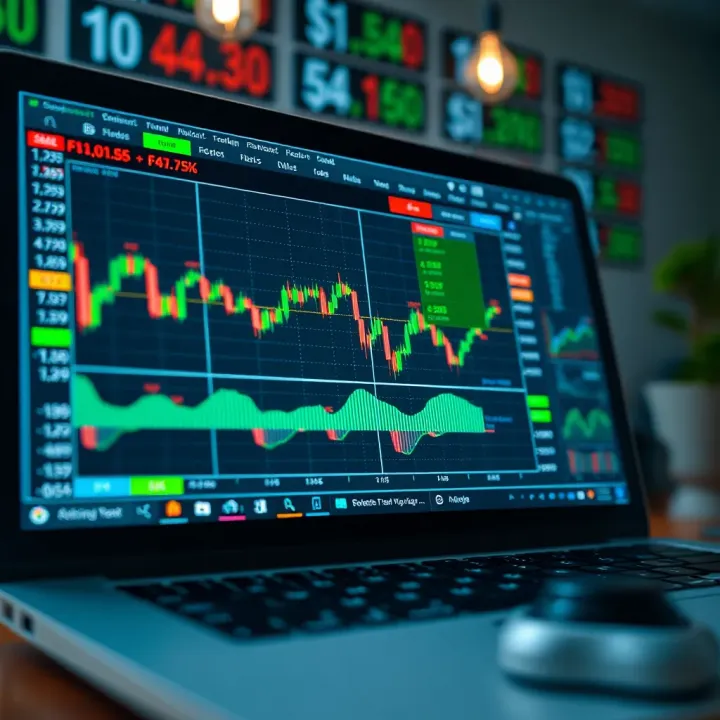
Online platforms like MetaTrader 4/5, Zerodha, and Upstox provide traders with tools like live charts, indicators, and automated trading features. These platforms offer access to currency pairs such as USD/INR, EUR/USD, and GBP/INR, each influenced by diverse economic, political, and geopolitical factors.
The forex market's highly liquid nature allows for swift execution of trades but also demands strong discipline and analytical skills from traders to navigate price volatility effectively.
Key factors influencing currency markets include interest rate changes by central banks like the Reserve Bank of India (RBI), inflation data, trade balances, and global economic trends. Traders often use fundamental and technical analysis to inform decisions:
Fundamental analysis focuses on economic indicators and news events.
Technical analysis studies price charts and patterns to predict future movements.
The potential rewards in forex trading are paired with high risks. Leverage, available through many brokers, magnifies gains but also losses, sometimes beyond the initial investment. Indian traders should ensure they comply with regulations from the Securities and Exchange Board of India (SEBI) and RBI guidelines to trade legally and securely.
Understanding terms like spread, pips, and margin is vital before entering trades. Proper education, demo accounts, and continuous learning help build proficiency.
This guide will cover practical aspects like platform selection, strategies, risk controls, and the regulatory landscape to help you engage confidently with forex trading online.
Understanding how the online forex market operates is key to making informed trading decisions. This market runs 24 hours a day, five days a week, allowing Indian traders to access currency pairs from any corner of the world. With globalization, online platforms have made forex trading accessible beyond traditional financial centres, making timing and platform choice vital factors.
Understanding currency pairs is fundamental. Forex trading always involves two currencies traded against each other – for instance, USD/INR or EUR/USD. The first currency is the base, and the second is the quote. When you see USD/INR quoted as 82.50, it means one US dollar costs ₹82.50. This knowledge helps traders decide whether to buy or sell based on how they expect the value of the base currency will move relative to the quote.
Exchange rate determinants influence the value of currency pairs and fluctuate constantly. Factors such as interest rates set by central banks, inflation rates, geopolitical tensions, and trade balances directly affect exchange rates. For example, if the US Federal Reserve hikes interest rates, the US dollar might strengthen against other currencies. Indian traders must watch these economic indicators closely, as they affect the timing and profitability of trades.
The role of major currencies such as the US dollar (USD), Euro (EUR), Japanese yen (JPY), and British pound (GBP) is quite significant. These currencies dominate forex trade volumes and often act as benchmarks. The USD, being the reserve currency globally, is involved in nearly 90% of forex trades. Indian traders commonly deal with USD/INR pairs, making understanding the dynamics of USD movements essential for effective trading.
There are several types of trading platforms catering to forex traders. Desktop platforms like MetaTrader 4 and MetaTrader 5 offer advanced charting and analysis tools preferred by experienced traders. Web-based platforms provide easier access without installation, suitable for beginners. The right choice depends on your trading style and technical comfort.
When choosing platforms, features Indian traders should look for include low spreads on currency pairs, RBI-compliant transaction processing, and integration with popular payment gateways for smooth deposit and withdrawal. Real-time quotes in Indian Rupee pairs and customer support during IST working hours add value. Platforms that offer educational resources tailored for Indian users can also help new traders.
Mobile trading has changed access significantly. Mobile trading applications enable trading anytime, anywhere, especially for those on the move in bustling cities like Mumbai or Bengaluru. These apps often come with push notifications on price movements, helping traders grab opportunities promptly. Popular apps like MetaTrader mobile or broker-specific apps from Zerodha or ICICI Direct make forex trading more convenient for India's vast smartphone users.
Remember, the online forex market is fast-moving. Choosing the right platform and knowing currency fundamentals can be the difference between profit and loss.
In summary, grasping how currency pairs work, the factors shaping exchange rates, and the prominence of major currencies is crucial before stepping into the online market. Equally, selecting a platform offering relevant features tailored to Indian traders ensures smoother, more informed trading experiences.
Using the right strategies and tools is essential for anyone who wants to trade forex online effectively. These approaches help traders make informed decisions, reduce risks, and increase their chances of profit. Whether you are a beginner or an experienced trader, understanding the available strategies and tools can give you a solid edge in the fast-moving forex market.
Technical analysis relies on studying price charts and trading volumes to predict future currency movements. Traders use patterns such as head and shoulders, support and resistance lines, and trend lines to decide when to buy or sell currency pairs. For instance, if the USD/INR currency pair breaks a strong resistance level, a trader might expect prices to rise further and enter a buy trade. This approach works well for those who prefer a data-driven, systematic trading style.
Fundamental analysis looks at economic indicators and news events that affect currency values. Factors like interest rate decisions by the Reserve Bank of India (RBI), inflation rates, and GDP growth influence the strength of a currency. For example, if the RBI hikes interest rates to control inflation, the Indian rupee might strengthen, attracting traders to buy INR pairs. Fundamental analysis appeals to traders focusing on long-term trends based on real-world economic conditions.

Sentiment analysis gauges the overall mood of the market. It reflects whether traders are broadly optimistic (bullish) or pessimistic (bearish) about certain currencies. Tools such as the Commitment of Traders (COT) report or social media sentiment can provide insights. Suppose a large number of traders are bearish on the EUR/USD pair; this might prompt cautious traders to avoid buy positions or look for short opportunities. This approach acts as a check against purely technical or fundamental strategies.
Charting software is the backbone of technical trading. These platforms display real-time price movements in the form of candle or bar charts and allow customisation to suit trader preferences. Indian traders often use software like MetaTrader 4/5 or TradingView for their comprehensive charting and analysis features. Quality charting software helps traders visualise trends clearly and execute trades swiftly.
Indicators and oscillators are mathematical calculations based on price and volume data, helping traders spot overbought or oversold conditions and trend strength. Common examples include the Relative Strength Index (RSI), Moving Average Convergence Divergence (MACD), and Bollinger Bands. These tools assist in timing entry and exit points, improving trade precision. For example, an RSI reading above 70 might suggest the currency is overbought and due for a correction.
Automated trading systems allow traders to program specific rules and strategies that execute trades automatically. These systems reduce emotional bias and can operate 24/7, taking advantage of forex markets’ round-the-clock nature. Indian traders with programming skills might use Expert Advisors (EAs) on MetaTrader or custom-built bots. While automation can boost efficiency, it's essential to test strategies extensively in demo accounts before live deployment to avoid unexpected losses.
Successful online forex trading depends on blending the right strategies with suitable tools. Traders benefit most when they understand the nuances of technical, fundamental, and sentiment analysis alongside using reliable charting, indicators, and automation systems.
Having a keen grasp of these methods and tools will help you navigate the forex market with more confidence and less guesswork.
Managing risks is a core part of forex trading, especially online where the market changes rapidly. Traders often overlook how quickly things can shift, which can lead to significant losses. This section highlights the kinds of risks traders face and practical ways to control them.
Market volatility is when currency prices can swing dramatically in a short period. This happens due to economic news, geopolitical events, or sudden market sentiment shifts. For example, a surprise RBI policy announcement can cause the rupee to fluctuate sharply against the dollar within minutes. Traders exposed to such swings without preparation can lose money quickly.
Leverage-related risks come from borrowing money to trade larger positions than your own capital. Forex brokers often offer high leverage, letting you trade ₹1 lakh worth of currency with just ₹1,000 as margin. Although this amplifies profits, it also magnifies losses. If the market moves against your position by a small percentage, you could lose your entire margin amount very fast.
Counterparty risk means the possibility that the forex broker or platform you use may fail to honour trades or payments. While many global brokers are trustworthy, others may delay withdrawals or even disappear with client funds. Indian traders need to pick brokers regulated by reputed authorities to avoid these scams.
Stop-loss orders let traders cap potential losses by automatically closing a position at a predetermined level. For instance, if you buy EUR/USD at 1.10 and set a stop-loss at 1.08, your trade will close if the price dips to 1.08, limiting your downside. This simple tool prevents emotional decision-making during fast market moves.
Position sizing refers to choosing how much of your capital to risk on a single trade. Many experienced traders limit risk to 1-2% of their total trading capital per trade. So, if you have ₹1 lakh, you'd risk only ₹1,000 or ₹2,000 on a trade. This helps protect your account from big losses that can wipe you out.
Diversification strategies involve spreading your investments across different currency pairs instead of putting all funds into one. This approach reduces risk since all currencies usually don’t move the same way at once. For example, if the US dollar weakens, your trades in USD/EUR and USD/JPY pairs might both be affected, but exposure to other pairs like GBP/INR or AUD/USD can balance the impact.
Effectively managing these risks is what sets successful traders apart. While losses are inevitable sometimes, having clear rules around stop-losses, position sizes, and diversification makes it easier to protect your money and keep trading confidently.
Trading forex online requires a clear understanding of the regulatory framework in India to protect your investment and avoid legal hiccups. Indian forex markets operate under strict oversight from key authorities, which helps maintain transparency and fairness. Knowing these regulations not only safeguards your capital but also guides you towards legitimate trading channels.
The Reserve Bank of India (RBI) supervises currency trading to ensure financial stability and prevent illegal currency speculation. It restricts forex trading for Indian residents mainly to currency pairs involving the Indian rupee (INR). This measure limits unrestricted speculation on foreign currencies, aiming to protect the external value of the rupee. For example, trading USD/INR, EUR/INR, or GBP/INR is permitted on authorised platforms whereas direct forex trading between two foreign currencies like EUR/USD is usually restricted for Indian traders.
This cautious approach by the RBI helps balance openness in global markets with domestic economic safety. Indian traders need to ensure their activity aligns with RBI guidelines, avoiding unauthorized brokers or instruments not permitted by Indian regulations.
The Securities and Exchange Board of India (SEBI) oversees financial market intermediaries, including brokers offering forex trading. SEBI ensures brokers adhere to transparent practices, maintain proper client fund segregation, and follow investor grievance redressal mechanisms. Indian traders should choose SEBI-registered brokers to avoid fraud or unfair practices.
SEBI also regulates trading on recognised exchanges like the National Stock Exchange (NSE) and Bombay Stock Exchange (BSE), which offer currency derivatives for INR pairs. Trades happening off regulated venues risk legal complications and lack client protection.
Indians can trade in legally permissible instruments such as currency futures and options contracts on approved exchanges. These instruments provide exposure to forex markets while maintaining compliance with Indian laws. Spot forex trading with INR pairs is also allowed on authorised platforms.
Traders should avoid betting on offshore forex products or unregulated contracts as these carry high legal risk and potential loss of funds. Sticking to RBI-permitted currency pairs and SEBI-regulated instruments keeps trading safe and above board.
Selecting a trustworthy broker is crucial for safe forex trading. Look for companies with SEBI registration and transparency in their operations. Brokers such as Zerodha and ICICI Direct offer currency derivatives within Indian regulations. Check reviews and confirm their client fund protection policies.
Reliable brokers will also provide clear contract notes, easy deposit/withdrawal options, and responsive customer support. Avoid offshore brokers promising unrealistic returns or unregulated online platforms.
Forex trading attracts scams like fake brokers, signal sellers, and Ponzi schemes. Scam brokers often lure traders with promises of guaranteed profits or insider tips. They may delay withdrawals or manipulate trading platforms.
Watch out for unsolicited calls or emails offering forex trading opportunities, and never share sensitive personal information. Validate broker credentials and avoid platforms that operate outside Indian law.
Use regulated banking channels for deposits and withdrawals. Methods such as NEFT, RTGS, IMPS, or UPI ensure secure and documented fund transfers. Avoid wiring money directly to overseas accounts or using untraceable payment services.
Keep track of all transaction records and choose brokers that provide clear statements. This practice prevents disputes and eases fund recovery if issues arise.
Following India's regulatory norms and choosing trustworthy brokers are your first line of defence against forex frauds. Being careful with your payment methods adds another layer of safety to your trading journey.
Understanding these regulatory and safety aspects helps Indian forex traders trade confidently and legally, reducing risks and enhancing their chances of success.
Starting forex trading online in India demands practical preparation that directly impacts your trading experience and success. This section highlights key steps you must follow before you place your first trade, including opening an account and creating a solid trading plan. Understanding these elements helps reduce early mistakes and sets a foundation for consistent learning.
Documentation requirements are the first hurdle. Indian brokers require proof of identity (like PAN card, Aadhaar), address proof (utility bill, passport), and sometimes income proof to comply with Know Your Customer (KYC) norms. These checks help prevent fraud and ensure only authorised trading activity. Preparing these documents beforehand smoothens account opening, so you’re not caught unprepared after choosing a broker.
Account types and features vary among brokers. You will find options like standard accounts, mini accounts, and demo accounts. Standard accounts suit experienced traders who want higher leverage and larger trade sizes. Beginners may prefer mini accounts to limit risk. Features like leverage options, spread types (fixed or variable), and access to various currency pairs matter. For example, HDFC Securities offers standard accounts with up to 50:1 leverage, while Zerodha provides trading accounts that integrate with their commodity and equity platforms for convenience.
Deposit and withdrawal processes must be straightforward and transparent. Most Indian brokers accept transfers through net banking, UPI, and NEFT/RTGS. Transparency in fees related to deposits or withdrawals is crucial, as hidden charges can erode profits. For instance, many brokers do not charge for deposits but may levy small fees on international transfers. Ensuring a broker supports quick withdrawals — preferably within a couple of working days — is essential for effective cash flow management.
Setting realistic goals is essential to manage expectations. Forex trading isn’t a get-rich-quick scheme; instead, focus on steady growth of capital. For example, aiming for a 5% monthly gain is more manageable than expecting double your investment in a week. Realistic goals reduce emotional trading and help maintain discipline.
Choosing suitable currency pairs depends on your risk tolerance and interest. Major pairs like USD/INR, EUR/USD offer high liquidity and tighter spreads but may yield smaller price moves. Exotic pairs such as USD/TRY or USD/ZAR have higher volatility but greater profit potential and risk. Indian traders often prefer USD/INR because of its direct relevance to import-export businesses and remittances.
Testing strategies through demos is a must before trading with real money. Demo accounts simulate live markets without financial risk, allowing you to try different entry and exit methods. For example, you can test how moving averages or RSI indicators work over historical price movements. This practice builds confidence and helps spot flaws in your plan before actual losses occur.
Successful forex trading requires careful preparation. Setting up your account correctly and crafting a thoughtful trading plan is the backbone of sustained trading performance.
Explore RBI's detailed rules on forex trading in India 🇮🇳. Understand authorized dealers, permissible transactions, and compliance essentials for traders and businesses.

Crypto demo trading lets you practise cryptocurrency trades without risking real money 💰. Learn how to develop skills safely in this practical guide 📈.
Discover how binary bots automate binary options trading 🤖, their tech, pros and cons, safety tips, and how to pick trustworthy bots for your trading goals 📊.
Start your forex journey with a demo account 💹. Learn its benefits, how to pick a trusted broker, avoid common errors & trade without risking real money.
Based on 7 reviews