
Gold Price Forecast in India by 2030
🔮 Explore the future of gold prices in India by 2030 with analysis of economic trends, demand-supply shifts, global influences, and policy impacts for informed investing.
Edited By
Chloe Morgan
Gold has long been a symbol of wealth and security in India, deeply woven into our culture and economy. Looking ahead to 2040, investors and analysts alike are keen to understand how gold prices might evolve, given the metal’s pivotal role as a hedge against inflation and geopolitical uncertainties.
The price of gold in India depends on a mix of global and local factors. Globally, shifts in the US dollar, geopolitical tensions, and central bank policies strongly influence prices. Closer home, demand patterns during wedding seasons, festive occasions like Diwali, and jewellery-driven consumption have a significant impact.
India imports a major portion of its gold requirement, so exchange rates between the Indian rupee and the US dollar directly affect gold costs. Fluctuations in customs duties and government regulations also shape the market. For example, hikes in import duties in recent years have temporarily slowed demand but pushed domestic prices higher.
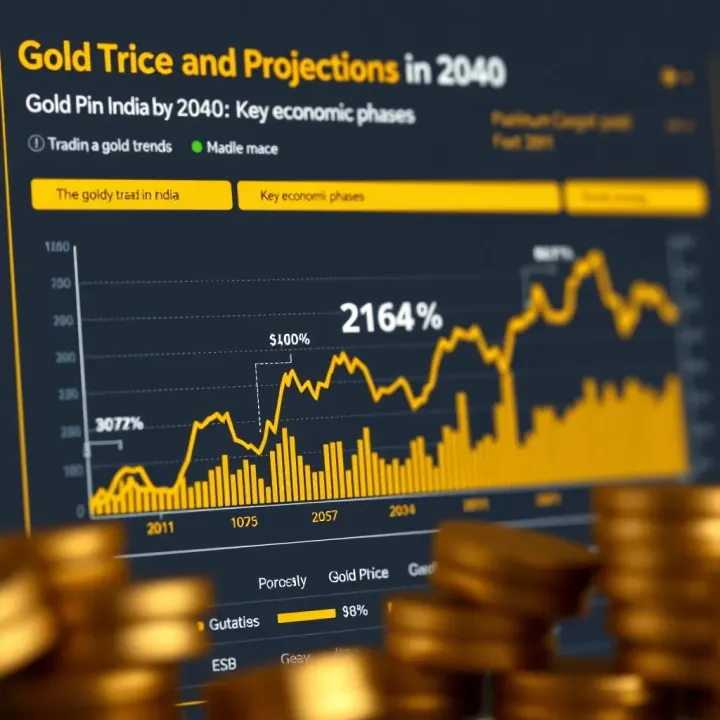
Over the past two decades, gold prices in India have shown an upward trajectory, with occasional dips linked to global economic cycles. These historical trends help anchor forecasts but don’t capture unexpected disruptions, such as geopolitical conflicts or technological shifts that may alter investment patterns.
Investors should watch key indicators like RBI monetary policy, currency stability, and global gold reserves to gauge price movements.
Key influences likely to affect the 2040 price include:
Inflation rates: Persistent inflation tends to boost gold’s appeal as a store of value.
Economic growth: Strong GDP growth could raise disposable income, pushing demand for gold jewellery and investments.
Technological developments: Advances in mining or alternative assets could impact supply-demand balance.
Policy frameworks: Government initiatives on making gold more investable or changes in import duties.
Understanding these variables provides a clearer picture, helping investors and traders make informed decisions about long-term gold exposure in India.
Next sections will break down historical data, model likely influences more closely, and present forecasts from leading market experts.
Understanding historical trends in gold prices in India is essential for investors and analysts aiming to forecast future valuations. These trends reveal how gold responded to economic shifts, policy changes, and cultural demands over time. Recognising past behaviour helps anticipate price movements amid changing conditions, especially when planning long-term investments for 2040.
Gold prices in India during the 1980s saw steady appreciation, mainly driven by domestic demand for jewellery and investment. Post-economic liberalisation in the 1990s, gold prices began reflecting global trends more closely, partly due to currency liberalisation and reduced gold import restrictions. For example, the price per gram rose from around ₹300 in the early 1980s to approximately ₹4,000 by 2000, marking significant growth that attracted long-term investors.
Gold tends to act as a safe haven during economic uncertainty. The 1991 balance of payments crisis saw a spike in gold demand in India, with prices rising sharply as the rupee weakened. Similarly, during the 2008 global financial crisis, gold prices surged worldwide, including in India, as stock markets tumbled and investors sought refuge. These episodes show how crises can temporarily inflate gold prices, making it a critical asset during volatility.
Gold often protects against inflation erosion. In periods when inflation surged, such as the late 2000s, gold prices in India climbed substantially. At the same time, fluctuations in the INR-USD exchange rate influence local gold prices since imports are dollar-denominated. For instance, a depreciating rupee typically pushes gold prices up in rupee terms. This interplay emphasises why inflation trends and currency stability matter when assessing gold price trajectories.
Gold holds deep cultural value in India, intertwined with rituals, weddings, and festivals. Owning and gifting gold jewellery is a traditional practice, sustaining demand despite price changes. For example, the wedding season consistently drives millions of families to invest in gold, reflecting its social importance beyond just financial aspects.
Festivals like Diwali and Akshaya Tritiya see heightened gold purchases, often pushing prices higher temporarily due to increased demand. Retailers and jewellers anticipate these periods, stocking accordingly. This seasonal pattern affects short-term price movements and must be factored into investment timing.
In recent decades, investment demand for gold – through coins, bars, and modern options like gold ETFs and sovereign gold bonds – has grown alongside traditional jewellery buying. Urban buyers increasingly view gold as a portfolio diversifier and inflation hedge. This shift indicates evolving consumption patterns that shape the overall demand landscape, influencing price sustainability.
Historical understanding of gold’s price movements, coupled with India’s cultural demand patterns, provides a realistic lens through which to view future price forecasts. For those serious about gold investments for 2040, these insights go beyond numbers, reflecting the market’s lived realities.
Key terms: gold price growth in India, inflation impact on gold, cultural demand for gold, seasonal gold demand, investment gold trends
Understanding what drives gold prices in India helps investors and traders make smarter decisions. Several domestic and international elements impact gold rates, ranging from economic indicators to geopolitical events. Knowing these can clarify why prices fluctuate and how to anticipate future trends.
Gold has long been seen as a shield against inflation. When inflation rises, the purchasing power of the Indian rupee often declines, prompting investors to turn towards gold to preserve their wealth. For instance, during periods when the Consumer Price Index (CPI) surged beyond 6%, gold demand visibly picked up as people sought protection from the eroding value of money. This tendency makes gold an essential part of portfolios aiming to balance inflation risks.
Interest rates affect gold prices through the opportunity cost of holding non-yielding assets like gold. When the Reserve Bank of India (RBI) raises the repo rate, fixed income returns become more attractive, often dampening gold demand. Conversely, lower interest rates reduce fixed income yields, making gold a comparatively better asset. For example, during RBI’s rate cuts in recent years, gold prices in India gained momentum as investors sought safer avenues amid lower returns on savings.
Gold is globally priced in US dollars, so the INR-USD exchange rate plays a crucial role in India's gold pricing. When the rupee weakens against the dollar, importing gold becomes costlier, pushing domestic prices up. For example, in 2020, the rupee's depreciation led to gold prices rising sharply in India despite stable global prices. Therefore, forex market behaviour is a key consideration for investors watching local gold price trends.
Global gold supply affects market balance. When mining outputs expand or recycling surges, supply might ease price pressure. However, demand shifts—especially from major consumers like China and the US—can cause price swings. For instance, China’s strong demand growth in the last decade influenced gold prices worldwide, impacting Indian import costs. Traders need to track mining reports and consumption patterns abroad to better predict local price movements.
Political unrest, conflicts, or economic uncertainty often prompt investors worldwide to buy gold as a safe asset. For example, during the 2019 US-China trade war and the early phases of the 2020 global pandemic, gold prices climbed as nervous investors looked for stability. India’s gold demand usually rises in tune with these global safe-haven trends, affecting domestic price levels.
Central banks globally hold gold to diversify reserves and manage currency stability. When central banks, including the RBI, increase gold reserves, it signals confidence in gold’s value, often boosting prices. Conversely, if major banks decide to sell reserves heavily, prices can fall. India’s strategic decisions on gold reserves thus indirectly shape market perceptions and price trajectories.
Keeping track of these key factors provides a grounded perspective on why gold prices move the way they do in India. Investors who factor in inflation trends, interest rates, currency strength, and global events can better prepare for price shifts through 2040 and beyond.
Government policies and regulations play a significant role in shaping gold prices in India. These policies impact not only the cost of gold but also its supply and demand dynamics, which are critical for investors and traders to understand while forecasting future price trends. Changes in import duties, taxation, and initiatives by the Reserve Bank of India (RBI) directly influence the Indian gold market, often causing noticeable shifts in price behaviour.
Customs duties on gold imports are a major factor affecting the domestic price of gold. When the government increases customs duty, the landed cost of gold rises, often leading to higher retail prices. For instance, the hike in customs duty in recent years from 10% to 12.5% caused a noticeable uptick in gold prices, discouraging some imports and shifting demand towards the domestic market. Conversely, duty reductions generally make gold cheaper, potentially boosting demand.
This makes it essential for investors and traders to keep an eye on government announcements around customs duties, especially during the budget season, as they can cause short-term price fluctuations or longer-term trend shifts.
The introduction of Goods and Services Tax (GST) simplified the taxation framework for gold in India but also affected consumer pricing. Currently, GST on gold jewellery stands at 3%, which is relatively low compared to other luxury goods, keeping gold jewellery attractive for buyers, particularly during festive seasons.
For investment products like gold coins and bars, GST at 3% applies as well, making bullion purchases moderately taxed. However, the absence of input tax credit on gold jewellery production means jewellers absorb GST costs themselves, which can sometimes reflect indirectly in retail pricing. Investors need to consider these tax impacts while planning purchases or sales, as they affect effective returns and liquidity.
The RBI's gold monetisation schemes encourage households and institutions to deposit idle gold and earn interest, which helps mobilise domestic gold supply. These schemes reduce India's reliance on imports by increasing the available gold stock within the country.
Such initiatives can ease pressure on gold prices by augmenting supply, especially during periods of elevated global price tension. Traders should note that monetisation can dampen gold's price volatility to some extent since it stabilises supply-demand balance.
RBI actively monitors gold demand and supply through multiple interventions. Besides monetisation, RBI adjusts import policies and advises on allowable stock limits to gold importers to ensure market stability. For example, in times of excessive demand surges or rupee volatility, RBI might tweak policy levers to prevent abrupt price spikes.
These measures, while not entirely controlling market prices, provide a regulatory framework that cushions extreme fluctuations. Investors and market analysts track RBI communications closely for clues about upcoming policy shifts that might influence gold prices.
Understanding the interplay of government duties, taxes, and RBI policies equips investors with an edge in anticipating price movements and managing risk in India’s gold market.
Customs duty hikes generally raise gold prices by increasing import costs.
GST at 3% affects jewellery and bullion differently, influencing retail pricing.
Gold monetisation schemes boost domestic supply and help moderate price swings.
RBI interventions stabilise supply-demand, reducing volatile price shocks.
Traders and investors should consider these regulatory factors alongside global trends to make well-informed decisions about gold investments in India.
Forecasting gold prices for 2040 helps investors and market experts plan ahead by understanding possible future valuation trends. Given India's unique position as one of the biggest consumers and importers of gold, accurate forecasting can guide investment decisions and policy-making. For instance, gold remains deeply linked to cultural practices like weddings and festivals, impacting demand spikes. Predicting prices two decades ahead allows traders to adjust portfolios and consider gold’s role as a hedge against inflation or currency fluctuations.
Historical gold price trends provide a strong foundation for long-term projections. Analysts typically examine decades of price data, inflation rates, and currency valuation patterns to estimate future movements. For example, gold in India has consistently outpaced inflation over long periods, suggesting its continued value preservation. By identifying recurring cycles and economic triggers, such projections help investors gauge potential price levels and plan systematic investments like gold ETFs or systematic investment plans (SIPs) for gold.
Market analysts foresee a generally upward trajectory for gold prices amid rising global economic uncertainty and inflation fears. They anticipate intermittent corrections influenced by geopolitical shifts or monetary policy changes but expect steady gains overall. Since volatility is likely, experts recommend diversifying exposure, balancing gold with equities or bonds within portfolios. For example, if inflation rises sharply, demand for gold as a safe haven may push prices beyond earlier forecasts.
Economic developments like recessions, shifts in interest rates, or currency devaluations can swing gold prices drastically. A sudden hike in US Federal Reserve rates, for example, might strengthen the dollar and lower gold's appeal, affecting Indian prices due to INR-USD linkage. Conversely, global crises — wars, supply chain disruptions, or pandemics — usually push investors towards gold as a safety net, driving prices up. Understanding these risks helps traders manage timing and exposure wisely.
Emerging technologies and material innovations could alter gold demand patterns. For instance, advances in electronics may reduce gold usage in gadgets, while developments in alternative investment platforms like blockchain could shift investor preferences. Additionally, innovations in gold recycling or lab-grown alternatives might influence supply and price dynamics. Such technological factors remain hard to predict but deserve monitoring as they may reshape demand fundamentals.
Government regulations, especially import duties or gold monetisation schemes, directly impact price and availability in India. For example, any increase in customs duty would likely raise domestic gold prices, affecting demand temporarily. RBI’s ongoing gold monetisation efforts aim to stabilise supply and reduce imports, which could moderate price volatility. Changes in GST rates on gold jewellery or investment products also affect retail prices. Monitoring these policy shifts is crucial for traders to anticipate market movements and plan purchases or sales.
Keeping an eye on expert forecasts alongside potential risks equips Indian investors with a balanced view for long-term gold investment strategies amid changing economic and political landscapes.
Gold continues to hold a unique place in Indian portfolios due to its cultural significance and role as a store of value. Investors looking ahead to 2040 must navigate various factors including price volatility, inflation trends, and evolving investment vehicles. Understanding investment strategies alongside the inherent benefits and limitations of gold can help create a balanced portfolio that withstands future uncertainties.
Diversification and risk management are key to managing gold’s market ups and downs. Rather than putting all funds into physical gold jewellery or bullion, combining gold with other asset classes like equities and bonds spreads risk. For example, in 2008 when the global markets crashed, gold prices rose, showcasing its value as a safe haven. Balancing gold’s stability against the growth potential of stocks helps cushion portfolio swings while maintaining capital growth prospects.
Using a mix of gold forms also helps. Physical gold faces risks like theft and storage costs, while financial gold products lower these barriers. Diversification within gold itself, such as mixing coins, bars and digital gold, spreads specific risks.
Using SIPs and gold ETFs offers a practical approach to steady investing. Systematic Investment Plans (SIPs) let investors buy small amounts regularly, smoothing out price fluctuations. Given India’s volatile gold price history, SIPs help average costs and reduce the impact of market timing.
Gold Exchange-Traded Funds (ETFs) provide exposure to gold prices without requiring physical possession. They trade like stocks on the Bombay Stock Exchange or National Stock Exchange, making them more liquid and convenient for urban investors. For example, SBI Gold ETF has become popular among first-time investors seeking low-cost access to gold. These financial instruments also come with lower overheads than traditional gold investments.
Gold offers inflation protection and capital preservation by traditionally maintaining value as the rupee weakens. When inflation in India spikes, gold prices often rise, shielding purchasing power. Between 2010 and 2013, while inflation averaged around 8%, gold prices saw significant growth, safeguarding many investors’ wealth.
However, gold is not without drawbacks. Liquidity and price volatility can complicate matters. While physical gold can take time to sell at a fair price, ETFs and digital gold offer quicker exits but are still subject to market swings. Price volatility means gold values can plunge unexpectedly, demanding patience and timing skill from investors.
Indian investors should remember that gold is better as a long-term safety net rather than a quick profit tool. Combining gold with other assets and choosing the right investment form can help navigate its ups and downs.
In short, successful gold investment looking toward 2040 is about balancing risk, cost, and convenience while holding on to gold’s traditional assets of stability and inflation hedge.
🔮 Explore the future of gold prices in India by 2030 with analysis of economic trends, demand-supply shifts, global influences, and policy impacts for informed investing.

📈 Explore Reliance Industries' growth, market trends, challenges, and opportunities shaping its share price outlook by 2040 for Indian investors.
📈 Explore Bitcoin price trends till 2040, key factors shaping value, expert views, and risks for Indian investors in the global crypto market 🌐

🔍 Explore how Reliance Power's stock could perform by 2040. We analyze market trends, financial strength, and key risks and opportunities for investors.
Based on 9 reviews