
Reliance Share Price Outlook by 2040
📈 Explore Reliance Industries' growth, market trends, challenges, and opportunities shaping its share price outlook by 2040 for Indian investors.
Edited By
James Harrington
Bitcoin continues to grab significant attention among traders, investors, and analysts worldwide, especially in India where crypto adoption is growing steadily. Predicting its price two decades ahead, like 2040, involves careful scrutiny of past trends, market dynamics, and technological shifts.
The past decade showed Bitcoin's extreme price swings — from a few thousand to several lakh rupees, then sharp dips and massive rallies. These patterns stem from various factors, including regulatory changes, investor sentiment, and innovations in blockchain technology.
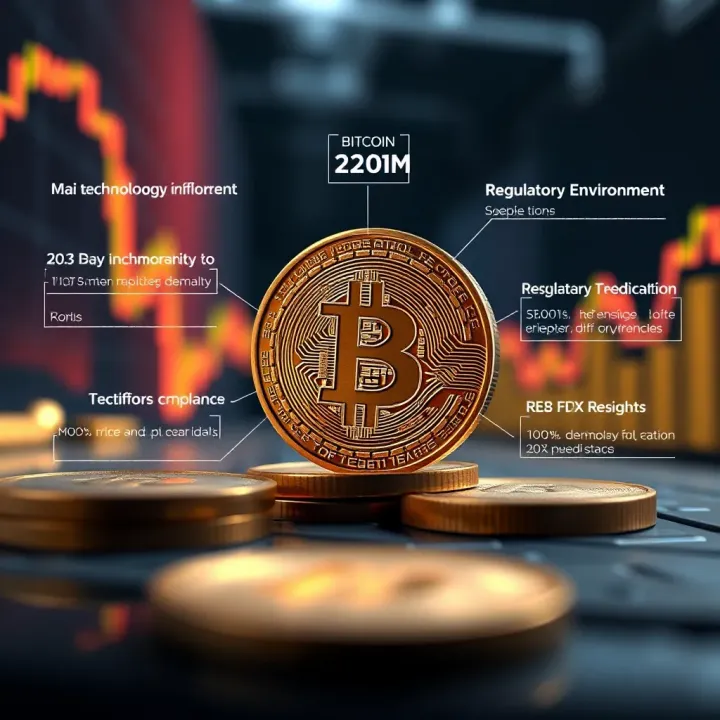
Looking ahead, several key factors will play a role in shaping Bitcoin's price:
Regulatory landscape: Indian government regulations and global frameworks can either boost confidence or create hurdles.
Technological advances: Improvements in scaling, security, and integration with financial systems affect Bitcoin’s usability and acceptance.
Market demand: Institutional investments and retail adoption drive price momentum.
Macro factors: Inflation rates, currency fluctuations, and geopolitical events influence investor behaviour.
It’s wise to track these factors continuously as they interact in complex ways, often causing unexpected market moves.
Expert opinions are divided; some foresee Bitcoin reaching several crore rupees per coin, while others cite risks like competition from central bank digital currencies (CBDCs) and regulatory clampdowns.
Long-term investors in India should also consider risks such as security of digital wallets, taxation policies, and market volatility when planning to hold Bitcoin till 2040.
This article will break down these elements to offer actionable insights for those watching Bitcoin’s long-term price journey, helping you navigate the digital asset’s future with better clarity.
Understanding how Bitcoin’s price has evolved and behaved over time is essential for anyone looking to predict its future value or make informed investment decisions. The market behaviour offers clues about Bitcoin’s reaction to various triggers such as regulatory announcements, technological advancements, or macroeconomic shifts. For Indian investors and global traders alike, knowing this history helps set realistic expectations and manage risk.
Bitcoin started trading in 2009 at practically zero value, with early transactions mainly among tech enthusiasts and cryptography fans. Its initial price was highly volatile; for example, the print of the first real-world purchase—a pizza costing 10,000 BTC in 2010—showed just how speculative and unpredictable Bitcoin was in those early days. This volatility highlighted Bitcoin’s experimental nature and lack of mainstream acceptance, which remains a factor for investors to watch even today.
Over its first decade, Bitcoin has seen sharp rises—such as the rally to nearly $20,000 in late 2017—followed by significant corrections. These swings often resulted from market hype, media attention, and fears of regulatory clampdowns. For instance, India’s demonetisation in 2016 briefly spiked interest in digital currencies, but subsequent regulatory uncertainty in India caused price slowdowns. These boom-and-bust cycles reveal how sentiment and external events can temporarily distort Bitcoin’s value.
Looking at the broader timeline, Bitcoin exhibits a pattern of rapid price growth followed by severe corrections, but with an overall upward trend. These cycles often coincide with developments like halving events, which reduce new supply and historically cause price appreciation. Indian investors benefit from recognising these trends to time their investments better, balancing the lure of high returns with the risks of sudden drops.
Government actions significantly sway Bitcoin’s value. In India, regulatory notices by the Reserve Bank of India (RBI) or proposed crypto laws have historically caused price dips or rallies. Globally, bans or endorsements impact market sentiment as well. For example, China’s crackdown on crypto mining led to short-term price falls but also pushed mining operations to India, indirectly influencing domestic interest and infrastructure.
Investors tend to be influenced by hype, fear of missing out (FOMO), or panic selling. In India, social media discussions and celebrity endorsements sometimes cause sudden buying sprees. Conversely, sudden negative news or rumours can lead to sharp sell-offs. Recognising these behavioural patterns can help traders avoid knee-jerk reactions and strategise around market psychology.
Institutional interest, such as from payment platforms or financial firms, lends Bitcoin credibility and stability. For instance, when Indian fintechs or global giants like PayPal integrated cryptocurrency services, it increased investor confidence and price support. Retail investor adoption, particularly among tech-savvy urban populations in India, also boosts demand. This growing acceptance clouds the divide between speculative and utility-driven demand, impacting price durability.
Understanding Bitcoin's history and market behaviour arms investors with the knowledge to anticipate not just price movements but the underlying causes, making investment decisions more data-driven and less reactionary.
Predicting Bitcoin's price involves more than just looking at past trends. Several key influences will shape its value until 2040. These include technology developments, regulatory changes, and broader macroeconomic events. Each factor impacts investor confidence, adoption rates, and market dynamics, especially for Indian investors keeping an eye on this volatile asset.
Blockchain scalability remains a critical factor in Bitcoin’s future price. Scalability improvements mean the network can process more transactions per second, reducing delays and lowering fees. For instance, the introduction of the Lightning Network already allows faster, cheaper payments compared to the original blockchain. As more people and businesses use Bitcoin daily, these upgrades will enhance usability and encourage wider adoption.
Layer-two solutions like the Lightning Network and other protocol upgrades play a significant role in making Bitcoin more practical. They enable transactions off the main blockchain while maintaining security. This helps avoid congestion and high fees during peak demand. For Indian users, who often face cost sensitivity, these advancements will make Bitcoin transactions more affordable and accessible, particularly in tier-2 and tier-3 cities.
India’s fintech ecosystem is also gradually integrating with blockchain and cryptocurrency technologies. Emerging platforms that accept UPI payments combined with crypto wallets are making it easier for everyday users to access digital assets. This integration could boost Bitcoin’s acceptance as both an investment and a payment medium. As Indian startups and banks explore blockchain applications, Bitcoin's network effects may strengthen locally, impacting price movements globally.
The Indian government and the Reserve Bank of India (RBI) have taken cautious but evolving stances on cryptocurrencies. While RBI has issued warnings, recent moves like introducing a digital rupee indicate openness to regulated digital currencies. Clarity in legal frameworks may reduce investor uncertainty and encourage institutional participation, pushing Bitcoin’s price upward.
Global regulatory trends also influence Bitcoin significantly. Countries like the US and the UK are developing clearer laws for crypto trading and taxation. Conversely, stricter measures from China have triggered sharp market volatility. India’s future policies will likely align with global norms, affecting market confidence.
By 2040, regulation could range from full acceptance with investor safeguards to tight restrictions limiting usage. Investors should monitor policy developments as these will shape liquidity and adoption. For example, a balanced framework might attract foreign institutional capital, whereas severe crackdowns could dampen enthusiasm.
High inflation and currency depreciation often push investors toward assets perceived as hedges, including Bitcoin. Given India’s inflation concerns and occasional rupee volatility, Bitcoin can become appealing for those seeking protection against currency debasement.
Geopolitical tensions, like trade wars or conflicts, can disrupt traditional markets and drive interest in uncorrelated assets such as Bitcoin. For instance, sanctions or capital controls in certain countries may increase demand for decentralized digital assets.
Compared to traditional investments like gold or equity markets, Bitcoin offers high volatility but also the chance of substantial returns. Its role as a diversification tool in Indian portfolios may increase as investors look beyond conventional avenues, especially with expanding financial literacy and access.
Understanding these forces—technology, regulation, and macroeconomics—helps investors make more informed decisions about Bitcoin’s future value.
By keeping an eye on these factors, you can better gauge how Bitcoin might move toward 2040 and position your investments accordingly.
Expert opinions and market predictions offer valuable guidance when looking at Bitcoin's price in 2040. Given Bitcoin's volatile and unpredictable nature, insights from industry specialists and forecast models help investors, traders, and financial professionals form realistic expectations. These forecasts support decision-making by clarifying potential price trajectories and identifying factors likely to impact value over the long term.
One widely used approach is the stock-to-flow model. This model analyses Bitcoin's scarcity by comparing the total supply (stock) to its annual production (flow). Historically, Bitcoin’s supply halves every four years through “halving” events, reducing new coins entering circulation. The model predicts price rises following each halving, driven by scarcity. For example, previous halvings in 2012, 2016, and 2020 corresponded to significant price increases, influencing many traders' outlooks.
Besides stock-to-flow, analysts use technical analysis, on-chain metrics, and sentiment analysis to understand price movements. Combining these gives a richer picture but also highlights Bitcoin’s complex behaviour beyond a single model’s reach.
However, limitations and uncertainties remain significant. Bitcoin markets are influenced by sudden regulatory moves, global economic shifts, and technological developments, factors often beyond model predictions. Predictive models struggle with such unpredictability, meaning forecasts should be viewed as scenarios rather than certainties. For instance, an abrupt ban on crypto trading in a large economy could skew price trends far from model expectations.
Some experts hold optimistic forecasts for Bitcoin’s long-term price. They point to increasing institutional adoption, integration with financial systems, and Bitcoin’s role as ‘digital gold’ under rising inflation. For example, some forecasts anticipate Bitcoin reaching ₹10 crore or more per coin by 2040, driven by scarcity and rising demand from emerging markets including India.
On the flip side, cautious and sceptical perspectives warn about regulatory crackdowns, technical vulnerabilities, and competition from alternate digital assets or central bank digital currencies (CBDCs). Skeptics caution investors about high volatility and the speculative nature of cryptocurrencies, indicating price corrections or stagnation as possibilities.
Despite divergent views, there is a general consensus on Bitcoin’s enduring value trend. Most specialists agree that Bitcoin will hold significant worth over decades due to its decentralised design and limited supply. While short-term swings are expected, Bitcoin’s long-term appreciation potential tends to be acknowledged across viewpoints.
Expert opinions, combined with forecast models, represent practical tools rather than crystal balls. Indian investors should weigh these insights with careful risk management and stay alert to market and regulatory developments.
This balanced perspective helps shape prudent investment strategies suitable for a fast-evolving digital asset landscape.
As Bitcoin continues its journey towards mainstream adoption, understanding the risks and challenges it faces becomes vital for investors and market participants. These factors not only influence Bitcoin’s price volatility but also affect its long-term viability as a digital asset. For Indian investors, especially, staying aware of these risks helps in making informed decisions and safeguarding their investments.
Bitcoin’s price is notorious for sharp ups and downs, which can unsettle even seasoned investors. Large price swings often lead to panic selling or hasty buying decisions, disrupting market stability. For example, during late 2017, Bitcoin surged close to ₹20 lakh but crashed soon after, eroding investor confidence. Such volatility can deter risk-averse investors, impacting market participation and liquidity.
Speculative trading plays a significant role in Bitcoin’s price movements, often amplifying its volatility. Traders seeking quick profits may trigger rapid price fluctuations unrelated to Bitcoin’s fundamental value. This speculative nature means market prices can react strongly to rumours, social media hype, or sudden news, complicating long-term price prediction. Indian investors should approach speculative phases cautiously and avoid chasing short-term gains that could result in losses.
Although Bitcoin’s blockchain is widely regarded as secure, potential vulnerabilities can emerge, particularly with network upgrades or third-party applications like wallets and exchanges. Hacks of crypto exchanges in India and worldwide have exposed user funds to theft despite the blockchain’s inherent security. Weak points in private key management or phishing attacks can also lead to irreversible losses, highlighting the need for strong cybersecurity practices.
Quantum computing poses a looming threat to Bitcoin’s cryptographic security. Once quantum machines become powerful enough, they could theoretically break Bitcoin’s cryptographic algorithms, enabling attackers to forge transactions or steal coins. While this risk is not immediate, researchers and developers are already exploring quantum-resistant algorithms to future-proof the network. Indian tech enterprises and crypto projects must monitor these developments closely.
Crypto regulation remains uncertain in many countries, including India. Occasional announcements of possible restrictions or bans create uncertainty among investors. For instance, the Indian government has debated crypto bans, leading to temporary market dips. Globally, regulatory decisions can vary widely—from accepting Bitcoin as legal tender in some countries to outright bans in others—affecting its accessibility and market sentiment.
Strict regulations or crackdowns can reduce bitcoin’s liquidity and slow adoption rates. When trading platforms face shutdowns or penalties, it limits buying and selling options for investors, shrinking market size. Reduced liquidity often results in wider bid-ask spreads, increasing transaction costs. This effect can deter institutional investors and dampen innovation, slowing Bitcoin’s growth trajectory, especially in regulated markets like India.
Understanding these risks equips investors to navigate Bitcoin’s complex ecosystem more confidently, balancing opportunities with caution for sustainable growth.
As Bitcoin continues to draw attention from Indian investors, practical guidance becomes essential for navigating its unique market dynamics. Unlike traditional assets, Bitcoin's volatility and regulatory landscape demand a cautious yet well-planned approach for long-term holdings. This section offers strategies and tools that can help Indian investors make informed decisions while managing risk effectively.
Diversification and portfolio balance play a key role in mitigating Bitcoin's price swings. Investors should avoid putting all their funds into cryptocurrencies alone. For example, combining Bitcoin with equities, fixed deposits, or mutual funds reduces exposure to sudden crypto market drops. In practice, allocating a moderate proportion—say 5–10% of your overall investment pool—to Bitcoin may help capture potential growth without risking the entire portfolio.
Using systematic investment plans (SIPs) in crypto introduces discipline into Bitcoin investments. Instead of making lump-sum bets during market highs, Indian investors can adopt monthly or quarterly SIPs, buying small amounts regularly regardless of price. Platforms like CoinDCX and WazirX allow such periodic purchases. This approach averages the cost and lowers the impact of short-term volatility, making it easier to stay invested over years without emotional panic or rush.
Timing considerations and risk tolerance remain vital to long-term crypto investments. While it’s difficult to time Bitcoin perfectly, understanding your personal risk appetite helps. Conservative investors might start with lower monthly contributions and gradually increase them as they get comfortable. Conversely, those willing to tolerate sharp price drops can invest more aggressively. Remember, Bitcoin’s cycles often feature sudden ups and downs, so patience is crucial for holding through corrections.
Reliable sources for crypto developments in India ensure investors stay aware of changing laws, government policies, and market trends. Indian websites like CoinCrunch India, Crypto Kanoon, and updates from SEBI and RBI official channels provide trustworthy information. Staying updated helps prevent surprises like RBI circulars that affect banking access or declarations impacting taxation.
Tools and platforms to track Bitcoin price movements allow investors to act promptly. Popular apps such as CoinMarketCap, CoinGecko, and Indian exchanges’ native apps offer real-time price alerts, charts, and volume indicators. Using these tools, investors can monitor trends and plan buy-sell decisions without delay. For instance, setting alerts for price dips or key resistance levels can facilitate smarter entry and exit points in the market.
Consistent learning and adapting to Bitcoin’s changing landscape is the best way for Indian investors to build confidence and grow wealth steadily over the long term.
📈 Explore Reliance Industries' growth, market trends, challenges, and opportunities shaping its share price outlook by 2040 for Indian investors.
Get detailed Ripple (XRP) price prediction 📈 Explore historical trends, market sentiment, and expert views to understand XRP's future value clearly.
Explore Ripple XRP price trends, tech, and market factors 🔍 Detailed analysis and expert forecasts for Indian investors. Stay informed on XRP’s future!

📈 Explore Reliance Industries' share price outlook for 2030, key growth drivers, market challenges, expert predictions, and what investors should watch closely.
Based on 11 reviews