
Quotex Forex Trading Guide for Indian Traders
Explore Quotex forex trading with a clear look at features, risks, and tips tailored for Indian traders. Make smarter trading choices today! 💹🇮🇳
Edited By
James Whitmore
Forex trading is becoming increasingly popular among Indian investors looking to diversify their portfolios beyond traditional stocks and mutual funds. At its core, forex trading involves buying and selling currencies with the aim to profit from fluctuations in exchange rates. The forex market is the largest financial market globally, with daily turnover exceeding $6 trillion, offering vast opportunities for traders.
For someone starting out in India, understanding how to navigate this market practically is essential. Forex trading requires disciplined strategies, careful broker selection, and thorough knowledge of currency pairs and their behaviour. It's not just about guessing which currency will rise or fall but analysing real economic indicators like interest rates, inflation, and geopolitical developments.

Remember, forex trading is high risk. Many traders face losses especially in the beginning, so it's wise to start small and build experience steadily.
Liquidity: The forex market runs 24 hours on business days, letting you trade anytime.
Leverage: Brokers offer leverage that lets you control larger positions, but this also increases risk.
Diverse Pairs: You can trade major pairs like USD/INR as well as exotic pairs across global currencies.
Pip: The smallest price movement a currency pair can make, usually the fourth decimal place.
Lot: The standard trading size. One standard lot equals 100,000 units of the base currency.
Spread: The difference between the buying and selling price quoted by the broker.
Get Familiar with Forex Basics: Learn how currency pairs work, what influences rates, and key market hours.
Choose a Reputed Broker: Look for brokers regulated by SEBI or RBI-compliant entities offering transparent fees and real-time trading platforms.
Practice with a Demo Account: Use virtual funds to test strategies without risking real money.
Start Small, Manage Risks: Use stop-loss orders and limit leverage until you understand the market nuances.
Preparing well before trading helps avoid common pitfalls which many beginners face. With the right approach, forex trading can be a valuable addition to your investing toolkit.
Grasping the basics of forex trading is the first step toward becoming a confident trader. Knowing how the market functions, how currency pairs move, and what drives price changes gives you the upper hand to make smarter decisions. For Indian traders, this understanding also helps navigate restrictions and select the right instruments.
The forex market is where currencies from different countries are bought and sold. Unlike stock markets, it operates everywhere across the globe, involving banks, financial institutions, corporations, and retail traders. In practical terms, if you exchange your Indian rupees for US dollars or euros, you're indirectly engaging with the forex market.
Currency pairs are the heart of forex trading. Each trade involves buying one currency and selling another at the same time. For example, if you buy USD/INR, you're buying US dollars while selling Indian rupees. The price reflects how much of the second currency you need to buy one unit of the first currency.
Major currency pairs include the most traded currencies globally such as USD/EUR, USD/JPY, and USD/GBP. In India, the USD/INR pair is especially important for traders. Minor pairs exclude the US dollar but combine other strong currencies like EUR/GBP or AUD/NZD. Understanding which pairs to focus on matters because liquidity and volatility differ, affecting your trade execution and profit possibilities.
The forex market never sleeps—it's open 24 hours from Monday morning in Sydney to Friday evening in New York, thanks to overlapping trading sessions in Asia, Europe, and North America. For Indian traders, the most active hours often align with the London and New York sessions, when liquidity peaks and spreads tend to narrow.
Unlike stock exchanges, the forex market is largely over-the-counter (OTC), meaning trades happen directly between participants through electronic platforms or by phone. While some countries have central exchanges, most forex trading bypasses formal exchanges. This OTC nature means you deal with brokers and liquidity providers, so their reliability is critical.
Several forces drive currency prices. Economic indicators like inflation rates, interest rates set by central banks such as the Reserve Bank of India (RBI), and employment data impact the value of a currency. Geopolitical events, trade balances, and unexpected news also cause sudden price shifts. For example, if RBI changes interest rates, USD/INR may react sharply, presenting trading opportunities or risks.
Understanding these basics empowers you to read the market pulse and plan your trades better. Forex trading is not guessing—it’s informed decision-making by analysing currencies’ fundamental and technical factors.
Starting forex trading in India requires a clear understanding of legal frameworks and practical nuances unique to the Indian market. Without grasping these, even the best trading strategies can lead to trouble. From regulatory mandates by the Reserve Bank of India (RBI) to choosing the right broker, every step shapes your trading experience. This section explains how Indian traders can start forex trading safely and effectively.
The Reserve Bank of India plays a central role in controlling forex trade within India. It regulates currency exposure to prevent excessive outflows of foreign exchange, especially by resident Indians. For example, RBI’s Liberalised Remittance Scheme (LRS) allows individual investors to remit up to $2,50,000 per financial year for investment, including forex trading abroad. But trading in certain currency pairs directly from India is restricted to maintain market stability and reduce risks associated with speculative trading.
On the regulatory front, the Securities and Exchange Board of India (SEBI) oversees investment activities in India, including those related to derivatives and currency markets. While SEBI does not allow Indians to trade forex derivatives on foreign exchanges, it regulates currency futures on recognised Indian exchanges like NSE and BSE. This oversight helps safeguard investors from fraudulent brokers and unregulated schemes.
There are strict restrictions on forex trading for Indian residents to prevent illegal or risky deals. Indians are permitted to trade only currency pairs that include the Indian Rupee (INR) on Indian exchanges. Trading major pairs without INR on overseas platforms goes against RBI guidelines. Thus, many Indian traders find themselves limited to INR-based pairs or offshore accounts that comply with these rules. Ignoring this can lead to penalties or freezing of accounts by banks and regulators.
Choosing the right broker matters a lot for Indian traders. Check whether the broker holds a valid licence from a recognized international regulator like FCA (UK) or ASIC (Australia) to ensure credibility. Also, look at user reviews to gauge how they handle fund withdrawals and customer support. Beware of brokers offering ultra-tight spreads but suspiciously generous bonuses; these often have hidden catches.
Popular brokers among Indian forex traders include ICICI Direct, Zerodha (for currency futures), and international names like IG Markets and Forex.com that accept Indian clients compliantly. These brokers offer robust platforms with easy deposits and transparent pricing, which helps traders focus on strategy rather than technical hassles.
Account types also vary—from basic standard accounts suitable for beginners to advanced ones catering to high-frequency traders. Demo accounts allow you to practise trading with virtual money before risking real funds. This is especially helpful for novices to understand how order execution, stop-loss, and take-profit work without pressure.
Before jumping into live trades, test your skills and the broker's platform through a demo account. This simple step can save you from many early mistakes.
By following these practical steps—understanding India's legal framework and choosing a trustworthy broker—you build a strong foundation for forex trading. It’s not about rushing but setting yourself up to trade confidently and safely.
To succeed in forex trading, having the right tools and techniques is vital. These help you spot opportunities, manage risks, and make informed decisions rather than relying on guesswork. For an Indian trader, understanding practical elements like charts, indicators, economic news, and risk controls can sharpen your trading edge significantly.
Forex charts show how currency prices move over time, helping you track trends and spot entry or exit points. The three main types are:
Line charts: Simplest form, connecting closing prices with a line. Good for a quick overview but lack detail on price action.
Bar charts: Show open, high, low, and close prices, giving a fuller picture of daily movements.
Candlestick charts: Popular among traders for visual clarity. Each candle shows the same price info as a bar but in a more intuitive shape, highlighting bullish or bearish trends.
Candlestick charts stand out for capturing market sentiment quickly, which is useful if you want to make timely decisions during volatile sessions like London or New York trading hours.
Among technical indicators, three are especially helpful:
Relative Strength Index (RSI) measures if a currency pair is overbought or oversold, signalling potential reversals.
Moving Average Convergence Divergence (MACD) tracks momentum changes and possible trend shifts through moving averages.
Moving averages smooth out price data to highlight the direction of a trend, acting as dynamic support or resistance.
Using these indicators together helps confirm signals and reduce false alarms. For example, if RSI shows oversold conditions and MACD indicates momentum picking up, that might be a good entry point.
Economic indicators shape currency prices worldwide. Important data like India’s GDP growth rate, inflation numbers, or RBI’s interest rate decisions influence the rupee’s strength. For instance, a surprise rate cut often weakens the rupee temporarily, offering traders chances to profit from short-term downward moves.
Global factors matter too. Crude oil prices affect India’s trade balance and hence the rupee. Big economic releases from the US, China, or Eurozone also shift forex markets since these economies are trading partners.
Geopolitical events add another layer. Political instability or trade tensions can trigger sharp price swings. For example, elections in key countries or announcements about tariffs usually cause increased volatility. Keeping an eye on such news helps you anticipate and adapt to sudden market changes.
Risk control is the backbone of any trading plan. Setting stop loss points limits how much you can lose if the market goes against you, while take profit levels lock in gains when targets are met. For example, if you buy USD/INR at ₹75.00 hoping it’ll rise to ₹76.00, placing a stop loss at ₹74.50 protects you from a deeper fall.
Leverage lets you control bigger positions with less capital, but it magnifies both profits and losses. Indian brokers typically offer leverage ratios like 1:50 or 1:100. Using it wisely means never risking more than a small portion of your account on a single trade.
Above all, having a clear trading plan and sticking to it prevents emotional decisions. Discipline keeps you from chasing losses or jumping into trades out of FOMO (fear of missing out). Successful traders keep records, review what works, and continuously refine their strategies.
Mastering the combination of charts, fundamental insights, and risk management forms a strong foundation for trading forex effectively in India.
Starting your forex trading adventure requires more than just understanding charts and indicators. You need to know how to open an account, fund it securely, and place your trades correctly. These steps form the backbone for any practical trading activity, especially for beginners in India where certain regulatory and procedural nuances apply.
Opening a forex trading account in India normally calls for some basic but essential documents. You'll need a copy of your PAN card, proof of address such as an Aadhaar card or utility bill, and a cancelled cheque from your bank account. These help the broker verify your identity and comply with India’s financial regulations. Sometimes, brokers ask for additional documents like a passport-sized photo and income proof, particularly if you plan to trade with larger sums.
Ensuring your documents are clear and up to date speeds up account approval. Imagine waiting days simply because the address on your Aadhaar differs from your bank records—that's a delay you want to avoid!
Most Indian forex brokers allow you to fund your account via net banking, UPI apps like PhonePe and Google Pay, or direct bank transfers. These methods are secure and convenient, letting you start trading within minutes or hours after approval. Credit and debit cards might also be accepted but check if they attract extra fees.
Forex trading accounts often operate in foreign currencies like USD, but Indian brokers usually let you deposit in INR and handle the currency conversion. This setup simplifies the process, so you don’t have to worry about exchange rates while funding. However, keep an eye on conversion charges your broker might levy, as these can affect your initial investment.
When executing a trade, you’ll mostly use two types of orders: market and limit orders. A market order buys or sells currency pairs immediately at the current price. For example, if you want to quickly enter GBP/USD during a sudden dip, a market order ensures you catch the move as it happens.
Limit orders are different; you set a specific price at which you want your trade to execute. Suppose GBP/USD is trading at 1.30 but you believe it will fall to 1.28 before rising. Placing a limit order at 1.28 means the trade will only execute if the price drops to that level. This method gives you more control but requires patience since the market might not hit your target soon.
Stop orders mainly help in managing risk. A stop-loss order automatically closes your trade at a pre-set price to limit losses. Say you buy EUR/USD at 1.20 but want to avoid losing more than ₹1,000; you could place a stop-loss order at 1.18. If the price falls to that level, your position closes, protecting your capital.
Similarly, stop-entry orders activate a trade once the price crosses a certain threshold. This can help you catch breakouts without constantly watching the market. Traders often combine these orders to structure their trades smartly, keeping emotions in check and guarding against unexpected moves.
Clear understanding and correct use of order types, along with smooth account setup and funding, mark a solid start to your forex trading journey in India. These practical steps build your foundation before you tackle strategies and deeper market analysis.
Forex trading isn't a one-size-fits-all game. Choosing the right strategy helps you manage risk better and improves your chances of profit. For Indian traders, understanding the nuances of each approach is key before diving in. This section focuses on two popular strategies: day trading and scalping, and swing trading.
Day trading involves opening and closing positions within the same trading day, avoiding overnight exposure. The time frames for such trades usually span from a few minutes to several hours. Scalping, a subset of day trading, zooms further into tiny time frames, often dealing with trades that last mere seconds to minutes.
Why does this matter? Because short time frames demand quick decisions and constant attention. For instance, if you're scalping the EUR/USD currency pair, you might enter 10-15 trades a day aiming to gain just a few pips each. This method suits those who can dedicate hours a day watching charts and reacting swiftly.
Typical trade duration reflects this intensity. Day traders may hold a trade anywhere from 15 minutes to a few hours, targeting small, consistent gains. For example, a trader might aim for 20-30 pips profit per trade, closing once the target hits or a stop loss triggers. Though profits per trade are small, frequent wins add up over time.
Unlike the lightning-fast pace of day trading, swing trading looks to capture medium-term trends, often holding positions for several days up to a few weeks. It suits traders who prefer less screen time and want to ride bigger market moves.
Capturing these trends relies on spotting where price momentum is heading over days. For example, if the US dollar is strengthening against the Indian rupee due to favourable economic data, a swing trader might buy USD/INR and hold for a week, expecting a 100-pip move.
Swing traders often use tools like moving averages, trend lines, and oscillators such as the Relative Strength Index (RSI) to analyse market swings. These tools help identify entry and exit points by signalling overbought or oversold conditions or confirming trend direction.
Picking the right strategy depends on your time availability, risk tolerance, and market understanding. Day trading and scalp trading offer quick results but demand full attention, while swing trading suits those who prefer a steadier, less hectic approach.
Both strategies require discipline, clear stop loss placement, and continuous learning to handle the volatile forex world effectively.
Steering clear of common errors and sharpening your trading skills plays a big part in succeeding at forex trading. Many beginners rush into trading without a solid plan, ending up exhausted or losing money. By understanding frequent pitfalls and committing to continuous learning, you can protect your capital and improve your chances of consistent profits.
Overtrading and emotional decisions often trap beginners. When trades don’t go their way, some traders try to recover losses quickly by making several rushed trades, which usually leads to larger blows. For example, a trader might buy and sell currency pairs multiple times in a day without proper analysis, mostly driven by fear or hope rather than strategy. This behavior drains the account fast and causes emotional fatigue.
To avoid this, it’s important to stick to a trading plan and avoid impulsive actions. Setting clear trade limits and maintaining discipline prevents emotional decisions. Remember, trading isn’t about being active all the time but about making calculated moves at the right moment.
Neglecting risk management is equally damaging. Beginners often skip setting stop-loss orders or use excessive leverage without understanding the risks. In practice, this means a few bad trades can wipe out a significant part of your trading capital. For example, using leverage of 1:100 without a stop loss can magnify both profits and losses, sometimes beyond recovery.
Effective risk management involves defining how much of your capital you’re ready to risk per trade — typically around 1–2%. Stop-loss and take-profit orders help lock gains and limit losses. This discipline saves accounts from catastrophic drawdowns and keeps the trader in the game.
Educational websites and forums provide valuable insights and updates. Trusted sites like BabyPips, Investopedia, or TradingView offer detailed tutorials and trading concepts explained simply. Indian traders benefit from forums where local market nuances, brokers, and strategies get discussed, providing a real perspective beyond theory.
Joining online communities also helps clarify doubts quickly and encourages sharing of practical tips. Adopting regular learning from these platforms improves analysis skills and keeps you updated with market trends.
Using demo accounts for practice is crucial before risking real money. Demo accounts simulate live trading with virtual funds, allowing beginners to test strategies and familiarise themselves with the platform. This practical experience builds confidence and prevents rookie mistakes in live trading.
For instance, practicing a swing trading setup or stop-loss placement in a demo account gives a hands-on understanding of order execution and market reaction without financial risk. Many Indian forex brokers offer demo accounts with no time limits, ideal for gradual learning.
Following market news and analysis keeps traders alert to events affecting currency prices. Economic releases, RBI policy updates, or geopolitical tensions often trigger volatility in forex markets.
Using trusted financial news platforms and daily analysis reports helps anticipate market moves. An Indian trader, aware of upcoming monsoon inflows or government budget announcements, can prepare for currency fluctuations instead of reacting late. Integrating news with technical analysis creates a well-rounded approach.
Avoiding mistakes and constantly improving your trading skills is the foundation for lasting success in forex trading. Focus on discipline, use educational resources, and practice often to trade confidently in India’s market environment.
Explore Quotex forex trading with a clear look at features, risks, and tips tailored for Indian traders. Make smarter trading choices today! 💹🇮🇳

📈 Explore QXBroker.com's trading app: features, security, easy deposits, trade management, support & fees. Compare platforms confidently in India! 🇮🇳
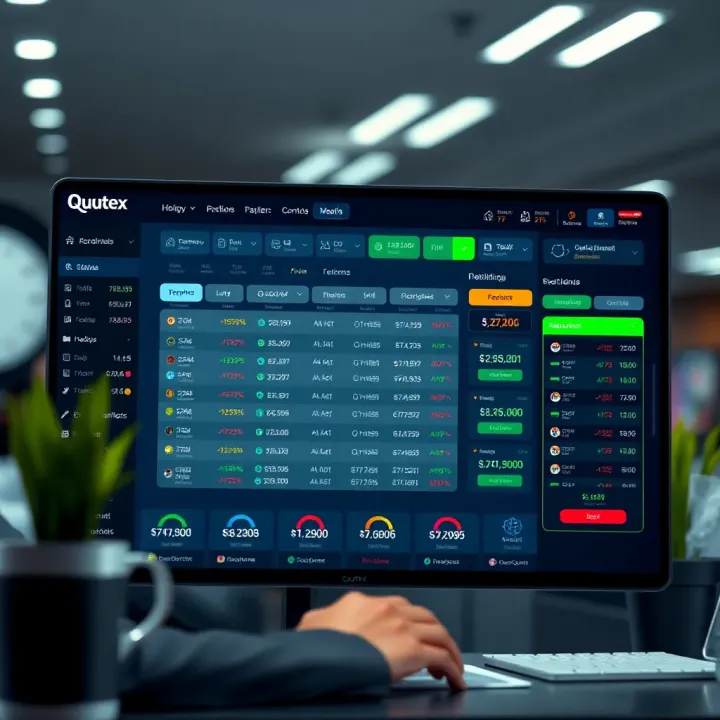
Explore Quotex's features, registration, trading tools, fees, and security 🛡️. Get tips and customer support insights for Indian traders 🇮🇳.
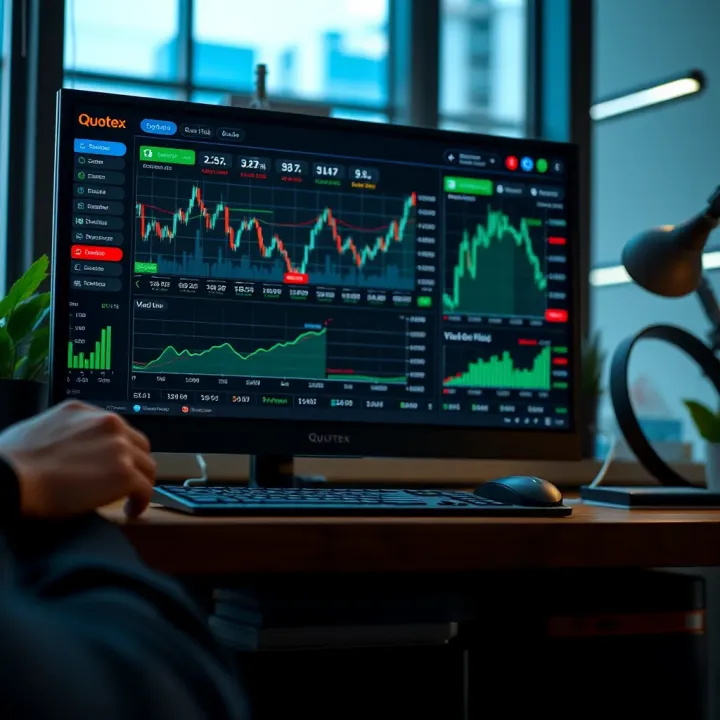
📊 Explore Quotex trading in India: platform setup, key strategies, and managing risks to trade smarter and safer in this detailed guide.
Based on 12 reviews