

Best Trading Phones for Indian Investors
📱 Find the ideal trading phone in India with top processing power, sharp display, long battery life, and reliable connectivity for seamless market updates and app performance.
Edited By
Oliver Green
Demo stock trading apps provide a practical platform for aspiring investors in India to learn stock market mechanics without risking real money. These apps simulate live market conditions, allowing you to trade with virtual funds. This setup helps understand market dynamics and test strategies before committing actual capital.
Indian investors face a learning curve due to market volatility and complex financial instruments. Demo apps remove pressure by offering a risk-free environment where you can experiment freely. For example, you might try trading shares of Tata Motors or Reliance Industries with virtual rupees to see how your decisions pan out in real-time market scenarios.
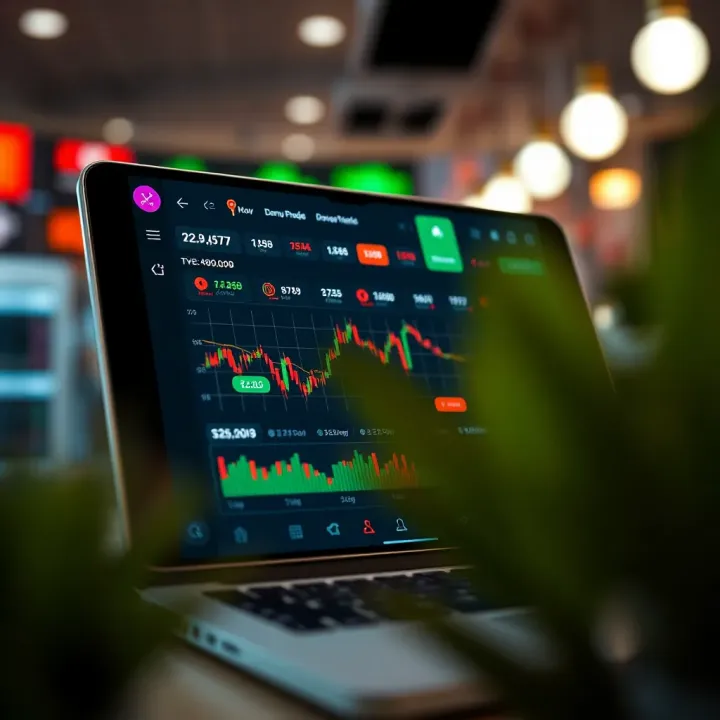
Key benefits include understanding order types like market, limit, and stop-loss orders; observing price movements; and practising portfolio management. Plus, these apps help identify trading psychology aspects such as fear and greed, which often impact real decisions.
Practising with a demo app before entering live trading enhances your confidence and sharpens your decision-making, reducing costly mistakes.
When selecting a demo trading app for Indian markets, consider features such as:
Realistic market data with updates aligned to NSE and BSE timings
User-friendly interface mimicking actual trading platforms
Access to multiple asset classes including equities, derivatives, and commodities
Support for popular investment products like mutual funds
Popular platforms like Zerodha's Kite, Upstox, and Angel Broking offer demo accounts with Indian market data, making them suitable for beginners. Make sure to pick apps that integrate well with India's trading ecosystem, such as UPI payment options or integration with SEBI-registered brokers.
To make the most of demo trading, treat it seriously: analyse each trade, note down lessons, and track your performance over time. It's equally important to move gradually towards live trading once you gain confidence and develop a consistent strategy.
In summary, demo stock trading apps serve as vital stepping stones for Indian investors looking to sharpen their skills, avoid unnecessary risks, and build a solid foundation before investing real money in the markets.
Demo stock trading apps provide a risk-free platform where investors can practise buying and selling stocks without using real money. These apps mimic the live markets, allowing users to get a hands-on feel of trading dynamics while avoiding financial loss. For Indian investors, especially those just stepping into the market, demo apps serve as a training ground to understand market behaviour and test strategies before committing actual capital.
A demo trading app creates a simulated version of the stock market that behaves much like the real one. This means prices fluctuate based on actual market trends or carefully crafted algorithms that reflect real conditions. For example, if the Sensex falls by 200 points on a given day, the demo app will adjust the virtual stock prices accordingly. This lets users experience the highs and lows of trading days without any genuine risk.
The environment is designed to teach users how to place orders, monitor their portfolio, and manage trades under conditions similar to live markets. This simulation proves especially helpful for beginners unsure about how to navigate trading platforms.
Instead of risking real money, demo apps allocate virtual funds—say, an imaginary ₹5 lakh—to your trading account. You can trade stocks, derivatives, or commodities using this balance, gaining experience on how investment decisions affect your portfolio. Since the funds aren't real, you can afford to experiment with various strategies.
This setup enables you to understand the impact of buying at different price points, setting stop-loss orders, and timing your exits, all without worrying about losing capital. The hands-on trial and error improve your comfort with trading mechanics, which often eases nervousness when switching to live trading.
To keep the simulation authentic, demo apps often use real-time or slightly delayed data from Indian markets like the National Stock Exchange (NSE) and Bombay Stock Exchange (BSE). This integration ensures that stock prices, indices, and volumes reflect current market realities.
For instance, if Reliance Industries shares surge following a quarterly earnings announcement, your demo portfolio using that stock will move up in value too. This connection to live data helps investors keep track of how news and events influence market movements.
Demo trading apps are invaluable for newcomers aiming to grasp the basics of stock markets. They provide a risk-free zone to understand order types such as market orders, limit orders, stop-loss, and more. Beginners get to observe how their trades affect portfolios while learning to read charts and follow market trends.
For example, someone new to share trading can start with a demo account on Zerodha Kite or Upstox Pro Demo to know the ropes before investing ₹1 lakh or more in real markets.
Even seasoned traders find demo apps useful. They allow testing fresh trading tactics or algorithms without endangering capital. Suppose a trader is considering a new intraday strategy for nifty futures. Running it on a demo platform first highlights strengths and flaws in practice.
This trial run can involve backtesting against historical data or live data simulation, helping experienced users refine their approaches safely.
Students, finance enthusiasts, or hobbyists use demo apps to satisfy curiosity about how stock markets function. Without real money at stake, they gain practical exposure that textbooks rarely provide.

For instance, a commerce student preparing for the CA or CFA exams benefits from demo trading to apply classroom theory. Also, hobbyists learn problem-solving related to market volatility and decision-making under pressure through these apps.
Demo stock trading apps bridge the gap between theoretical knowledge and real-world market experience, making them a must-try tool before risking actual funds.
Demo stock trading apps offer clear advantages for both new and seasoned investors eager to sharpen their skills without risking real money. By simulating market conditions and allowing virtual trading, these platforms become valuable training grounds, helping users navigate the complexities of stock markets in a risk-free environment.
Understanding order types and trading basics is the first step toward becoming a confident trader. Demo apps let you practise placing different orders—like market, limit, and stop-loss orders—without worrying about slipping up and losing money. For example, you can try executing intraday trades using limit orders on NSE stocks and see how they behave in real-time. This hands-on experience with order types builds a strong foundation before moving to live markets.
Familiarity with market terminology also comes naturally when you actively use demo platforms. Terms like "bid-ask spread," "volume," "circuit breaker," and "derivatives" can seem overwhelming at first. Demo apps expose you repeatedly to these concepts in a practical setting. Over time, you'll comfortably interpret trading jargon, making your interaction with live markets smoother and more informed.
Trying different trading approaches is where demo apps really shine. Suppose you want to test swing trading on BSE mid-cap stocks. You can experiment with entry and exit points to spot profitable trends in a simulated environment. This trial-and-error method helps figure out what works best for your style without burning capital.
Analysing outcomes without losses allows you to scrutinise your trades critically. After a series of simulated trades, you can study performance reports showing profits, losses, and patterns. This insight helps refine your strategies and avoid repeating mistakes, a process much harder to do with live funds under pressure.
Practising decision-making under simulated conditions prepares you mentally for live markets. Demo trading introduces you to the unpredictability of market moves, helping develop quick thinking and adaptability. For instance, you might face sudden volatility during a market rumour and learn how to respond calmly without panic.
Managing emotions and expectations is another vital benefit. Live trading often triggers fear, greed, or impatience, which can cloud judgment. Using demo apps, you experience these emotional swings safely, gaining the self-discipline needed to stay focused and stick to your trading plans when real money is at stake.
By leveraging demo stock trading apps, Indian investors can bridge the gap between theory and practice—building essential skills and confidence before stepping into the live market, thus enhancing their chances of long-term success.
Selecting the right demo stock trading app means focusing on key features that ensure effective learning and strategy testing. These features not only mimic live trading but also help you develop confidence before putting real money at risk. Below we explore what matters most and why.
Use of live or delayed price feeds: The heart of any demo trading app is its market simulation. Apps that use live price feeds provide real-time data reflecting actual stock prices on exchanges, ensuring your virtual trades mirror real market conditions. Though some apps operate with a slight delay, typically a few minutes, this still offers a fair chance to understand price movements and trading techniques without sudden shocks.
Using live or near-live data helps you learn how to react to fast market changes, especially during volatile moments like budget announcements or RBI rate decisions. Without this, your practice loses relevance and might not prepare you adequately for real trading.
Inclusion of major Indian stock exchanges like NSE and BSE: It’s essential that the demo app covers stocks listed on the National Stock Exchange (NSE) and Bombay Stock Exchange (BSE). These two exchanges dominate India’s equity markets and offer a comprehensive view of Indian stock performance.
Trading with an NSE/BSE focus means you practice with actual Indian market dynamics, including company stocks you might invest in later. Missing out on these exchanges would limit the app’s effectiveness, as it won’t reflect the liquidity or volatility patterns of the Indian market.
Easy navigation and order placement: Demo apps should make placing orders straightforward. Whether it’s a market order, limit order, or stop-loss order, you should be able to execute trades with just a few taps. Confusing menus or delayed responses can sabotage learning by causing frustration or errors.
A clean, intuitive interface helps beginners avoid unnecessary complexity and focus on understanding order types and trade execution. Traders new to digital platforms benefit from apps resembling the layout of popular live trading tools.
Clear display of portfolio and trade history: To track progress, your demo app must clearly show your portfolio’s status and past trades. Seeing how each transaction affects your balance or holdings helps you analyse results and spot mistakes.
Detailed trade history supports better decision-making by providing insights into your trading patterns. Without easy access to this information, it’s hard to refine strategies or build good habits.
Market news and analysis: Including relevant market news and expert analysis brings context to your trades. For instance, understanding how a corporate earnings report affects a stock price bridges theory and practice.
Apps offering integrated news feeds help you stay updated and make informed hypothetical trades based on current events. This exposure benefits those aiming to link fundamental factors with price movements.
Learning modules or tutorials: Beginners especially gain from built-in tutorials and learning material that explain concepts such as diversification, risk management, and technical indicators.
Structured lessons help bridge gaps in knowledge and guide users through progressively complex trading scenarios. This turns the demo app into more than a practise tool—it becomes an educational companion.
Variety of securities (stocks, derivatives, commodities): A good demo app should allow trading in different instruments—equity shares, futures, options, and commodities like gold or crude oil. This reflects the versatility of real markets and lets you experiment beyond basic shares.
Being able to test commodities or derivative contracts familiarises you with leverage, margin requirements, and expiry dates, which can be crucial if you plan advanced trading.
Ability to test different order types and strategies: Lastly, look for apps that let you try out various order types—not just simple buy/sell but also stop-loss, bracket orders, or trailing stops. Testing diverse strategies such as intraday scalping, swing trades, or hedging improves your adaptability.
Through repeated practice, you learn what works under different market conditions, minimising surprise when you switch to live accounts.
A well-chosen demo app brings you as close as possible to real trading, making your practice time genuinely valuable. Prioritise realistic simulation, ease of use, educational support, and customisable options to prepare confidently for the live markets.
Demo trading apps help Indian investors get comfortable with the stock market without risking real money. Knowing the popular options available in India matters because each app offers features tailored to different preferences and experience levels. These apps often connect to Indian exchanges like the NSE (National Stock Exchange) and BSE (Bombay Stock Exchange), giving users exposure to real market data. Selecting the right demo app can save time and make learning more effective.
Zerodha Varsity is known for its comprehensive educational content, combining theory with practical examples. Its Paper Trading feature within the Kite platform allows users to practise placing trades in real market conditions using virtual money. This makes it easier for learners to link lessons directly with practice, reinforcing concepts.
Integration with the live trading platform is one of Kite Paper Trading's key strengths. Users can switch between demo and real accounts with ease, using the same interface and tools. This helps in making the transition to live trading less daunting, as the user experience remains consistent. Moreover, Kite supports trading across various instruments such as equities, commodities, and derivatives, which demo users can virtually explore.
Upstox Pro Demo offers an intuitive interface that appeals to beginners and intermediate traders. It covers a wide range of market segments, including stocks listed on NSE and BSE, along with commodities. Its smooth navigation and clear charts simplify the learning curve for users trying to get to grips with market movements.
For beginners, Upstox Pro Demo provides useful tools like pre-set watchlists, alerts, and basic technical indicators. These features help users focus on key metrics without getting overwhelmed. The demo environment also simulates order types like limit, market, and stop-loss orders, making it easier for new investors to understand different trading strategies.
Trade Racer offers a competitive edge by combining demo trading with gaming elements. It organises challenges and contests, giving users a chance to practise trading while measuring their performance against peers. This format motivates users to improve and adds a social dimension to learning stock trading.
Moneybhai by Moneycontrol takes a simplified approach with a virtual portfolio that mimics real market conditions. It is especially useful for those who prefer managing investments as a long-term process rather than active trading. Moneybhai allows users to create portfolios, track performance, and understand fundamentals without the pressure of real money at stake.
Choosing a demo app that fits your style—whether educational, straightforward, or gamified—will help you build trading skills confidently before stepping into live markets.
Learning to use demo stock trading apps effectively sets a strong foundation before stepping into live markets. Starting right helps you get comfortable with the trading environment, experiment with strategies, and build confidence without risking real money. This section guides you through practical steps—from setting up your account to tracking progress—that Indian investors can follow to get maximum value from demo trading.
Opening a demo account is usually straightforward, requiring basic registration details like your name, email, and mobile number. Many brokers like Zerodha or Upstox offer free demo accounts linked to their main platform. This seamless integration helps you transition to real trading smoothly. Remember, keeping your login details safe and completing any verification steps ensures uninterrupted use.
Once registered, you receive virtual capital to trade within the app. This initial allotment varies by platform—some give ₹10 lakh, others ₹5 lakh. The amount itself matters less than treating this virtual money seriously, simulating your actual investment size and risk you’d take in real markets. For example, if you intend to start with ₹1 lakh live trading, try to use a comparable amount in the demo to practice realistic money management.
Demo trading works best when you define clear goals. Start by identifying your risk tolerance honestly. Are you comfortable with high volatility or do you prefer safer bets? Understanding this shapes your trading style and helps you stick to plans under pressure. For instance, young professionals with fewer financial liabilities might handle aggressive day trading, while others might stick to slower, delivery-based investing.
Choosing your focus area—whether intraday, swing trading, or delivery—is equally important. Each demands different strategies and time commitment. Practising intraday trading on a demo app helps hone quick decision-making, while delivery trading allows you to observe longer trends. Pick one or two styles during your demo phase to master their nuances before spreading yourself thin.
Use the app’s analytics and performance reports actively. These will show your profit-loss patterns, win rates, and even poorly performing stock sectors. Platforms like Moneycontrol’s Moneybhai or Zerodha Kite let you export trading data for review. Treat this like performance feedback—not mere numbers.
Based on what you observe, adjust your strategies. If aggressive orders consistently lead to losses, try conservative approaches or smaller trade sizes in the demo. Over time, this refining helps prepare you for live markets where emotional stakes are real. Learning from mistakes without monetary loss is the demo’s biggest advantage.
Starting with a clear head, a realistic budget, and a plan for feedback makes demo trading a smart stepping stone. It’s not just practice—it’s training tailored to how Indian markets and traders work.
By following these steps, you can transform the demo trading experience from a simple trial into meaningful preparation, readying you for your real investment journey.
📱 Find the ideal trading phone in India with top processing power, sharp display, long battery life, and reliable connectivity for seamless market updates and app performance.

💹 Explore how forex demo accounts help Indian traders practise risk-free, understand platforms, and build confidence before investing real money in the market.
Explore how real money trading apps work in India, their benefits, risks, safety tips, key features, popular choices, and regulatory guidelines 📱💰⚖️
Explore RBI-approved trading apps in India 🇮🇳 Learn why RBI approval matters, how to spot legit platforms, stay secure, and trade confidently.
Based on 5 reviews