

Demo Stock Trading Apps: A Guide for Indian Investors
📈 Explore how demo stock trading apps help Indian investors practise without risk, learn strategies, and pick the right platform before trading live markets.
Edited By
Charlotte Mitchell
Bot trading uses automated algorithms to execute financial market trades without human intervention. These software programmes analyse market data, identify trading signals, and act on predefined strategies within milliseconds. By cutting down manual decision time, bot trading aims to increase efficiency and speed, which are critical in fast-moving markets.
In India, bot trading has gained traction with growing retail participation and technological advancement. Platforms such as Zerodha and Upstox now support API access, allowing traders and developers to build customised trading bots. This shift allows investors to automate processes that were earlier manual and time-consuming, particularly when dealing with volatile assets like equities, derivatives, or cryptocurrencies.
Automated trading bots operate based on restricted rulesets programmed to react to certain triggers, helping avoid emotional trading and potential human errors.
Key advantages of bot trading include:
Faster execution: Bots can place orders instantly, preventing missed opportunities due to lag.
24/7 operation: Unlike human traders, bots can monitor and trade continuously, which is helpful in globally active markets.
Backtesting capabilities: Traders can test strategies on historical data to refine performance before live deployment.
However, bot trading is not without risks. Improperly coded bots may cause substantial losses, especially in Indian markets where liquidity and regulatory changes can be unpredictable. Sudden market swings or technological glitches may lead to unintended trades or failures.
This guide explores how these systems function, their pros and cons, and legal considerations specific to Indian investors. Understanding the technology and regulatory environment helps traders use bot trading effectively while managing associated risks.
Understanding bot trading and how it actually works plays a vital role in navigating today's fast-moving financial markets. Trading bots automate buying and selling decisions based on predefined instructions, removing the manual effort and emotion from trading. This technology helps traders execute orders swiftly, often within milliseconds, which manual trading simply cannot match. For Indian investors, especially those dealing with volatile segments like derivatives or cryptocurrencies, knowing how these bots operate can offer a practical advantage.
Bot trading, or algorithmic trading, uses software programs to automatically place trades on behalf of a user. These bots follow specific rules set by traders or developers, such as entering a trade when a particular price level is reached or selling off when loss thresholds are crossed. Instead of watching the market constantly, traders can let bots do the heavy lifting. For example, a trader using a bot on the NSE might program it to buy shares of Reliance Industries when its price falls below a set limit and sell once it hits a target.
Every bot runs on an algorithm that defines when and how trades should happen. This algorithm is crucial since it encapsulates the strategy — whether it tracks technical indicators like moving averages or executes more complex tactics like arbitrage between platforms. The bot continuously analyses market data, often from APIs provided by exchanges, and decides based on this logic.
Crafting this algorithm requires a clear understanding of trading strategies and market behaviour. A simplistic example: a bot might watch the Nifty 50 index and buy when the 5-day moving average crosses above the 20-day moving average, signalling a potential upward trend. Traders can adjust parameters like thresholds and timing to suit their risk appetite and goals.
Once the algorithm signals a trade, the bot interacts directly with the exchange's trading system to place orders. This requires real-time communication with order books to check liquidity and execute trades at the best available prices. Bots often use limit, market, or stop-loss orders depending on the strategy.
For example, a bot designed for scalping might place multiple quick orders on the BSE to capture small price movements. Its speed ensures it gets these trades done before prices change, something hard to match manually. Careful management ensures the bot doesn’t overload the market or fall prey to slippage.
Bots come in various forms, each serving different functions:
Trend-following bots: They identify and follow market trends, buying when prices are rising and selling on downtrends. This suits markets with clear directional movement.
Arbitrage bots: These look for price differences across exchanges and execute simultaneous buy and sell orders to profit from the gap.
Market-making bots: By placing both buy and sell orders, these bots provide liquidity and aim to earn from the bid-ask spread.
For instance, in India’s cryptocurrency market, arbitrage bots might buy Bitcoin on WazirX at a lower price and sell on CoinDCX where it's slightly higher.
To engage meaningfully with bot trading, familiarising oneself with terms like algorithm, latency, execution speed, backtesting, and order types is crucial. Backtesting, for example, lets traders test how a bot’s strategy would have performed on historical data, helping refine algorithms before real money is used.
Grasping these mechanics offers traders a head start in utilising bot trading effectively. It bridges the gap between manual market observation and fast-paced algorithmic responses, giving you a clear edge in India’s evolving financial ecosystems.
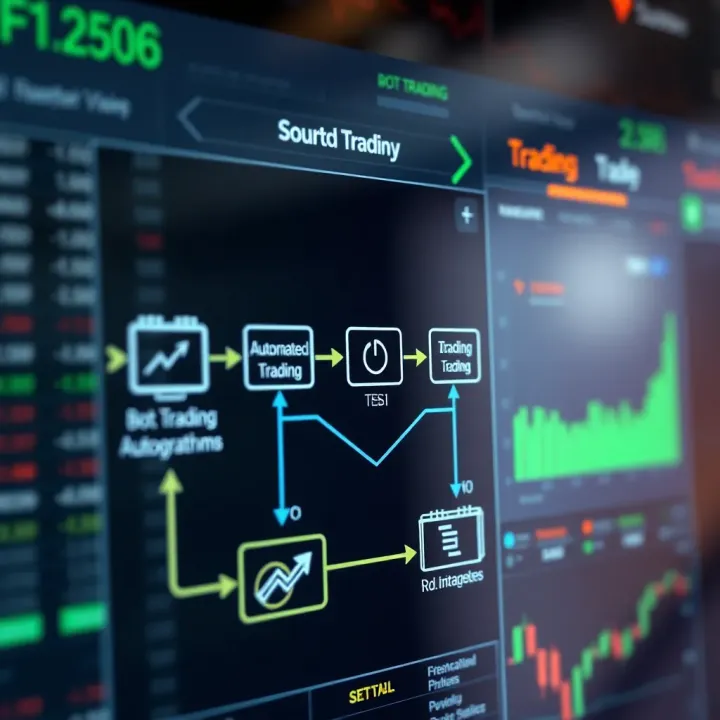
Trading bots offer significant benefits that appeal to traders and investors looking to optimise their strategies in fast-moving markets. Their primary strengths lie in speed, efficiency, and the ability to take emotion out of trading decisions. They also enable monitoring across multiple markets simultaneously, a feat that is difficult to achieve manually. Understanding these advantages helps users evaluate how automated trading fits their needs.
Trading bots operate at a speed no human can match, analysing market data and placing orders within milliseconds. For instance, in the Indian equities market, where milli-second decisions can impact profitability, bots can swiftly execute trades to capture fleeting arbitrage opportunities or react to sudden price shifts. This rapid response diminishes the risk of slippage, ensuring orders are fulfilled near intended prices. Humans, even the most experienced traders, cannot compete with bots in processing such volumes and speed.
One of the common pitfalls for traders is letting emotions dictate decisions—fear of loss or greed for gains often leads to premature selling or holding losing positions too long. Bots stick strictly to programmed rules, executing trades only when predefined criteria are met. This discipline helps prevent impulsive trades during market turbulence or overexuberance in bullish phases. For example, a bot trading in the Nifty futures may exit automatically when losses hit a set stop-loss, avoiding emotional hesitation that could worsen losses.
Manual monitoring of several financial markets or asset classes at once is exhausting and prone to oversight. Trading bots can track price movements in equity, derivatives, foreign exchange, and cryptocurrency markets at the same time. A trader using bots can thus diversify strategies across segments like the NSE equity market and international currency pairs without being overwhelmed. This multitasking boosts chances of spotting profitable trades early, a key edge in dynamic markets.
In today’s Indian market environment, trading bots provide an efficient way to maintain vigilance across fast-changing and interconnected markets, while enforcing strategy discipline and quick execution.
Trading bots offer speed and automation, but they come with risks that every trader must consider. Technical failures, market volatility, and security threats can all impact bot trading results, so understanding these challenges helps in managing risks effectively.
Bots depend heavily on software stability and connectivity. Even a minor glitch can cause the bot to execute wrong trades or hold positions longer than intended. For example, if a bot’s algorithm misreads market data due to delayed information or an error in coding, it might place large orders at unfavourable prices. Such failures often lead to unexpected losses, especially in fast-moving markets like equities or cryptocurrency. Traders using unreliable internet connections or aging hardware may experience frequent disconnections, which disrupt the bot’s performance.
Bots operate based on predefined strategies which may not always adapt well to sudden market shifts. Volatile market conditions in India’s derivatives segment or forex market can make the bot’s decisions erratic or counterproductive. For instance, during unexpected policy announcements by the Reserve Bank of India or geopolitical shocks, markets may behave unpredictably, and automated systems might struggle to keep up. This results in amplified losses if the bot does not have safeguards like stop-loss orders or dynamic strategy adjustments built in.
Trading bots require access to brokerage accounts and sensitive data, which exposes traders to hacking risks. In 2022, several Indian users reported cases of unauthorised trades due to compromised API keys that bots use to interact with trading platforms. Without proper encryption and secure authentication, bots can become gateways for cybercriminals to siphon off funds or personal information. Additionally, storing bot configuration and strategy files on unsecured devices increases vulnerability to breaches. Traders must ensure that the platforms they use follow SEBI’s data protection guidelines and use two-factor authentication (2FA) to reduce risks.
Well-configured bots reduce human errors but cannot eliminate external threats or unpredictable market behaviour. Being aware of these challenges helps traders prepare better, implement risk control measures, and choose trusted technology partners.
By recognising these potential risks, traders can balance the efficiency of bot trading with necessary caution, leading to more informed and safer investing practices in India’s financial markets.
Bot trading has gained traction in India with increasing digital adoption and market sophistication. Its application spans various segments, offering traders quicker execution and improved efficiency.
In India’s equity and derivatives markets, trading bots help execute high-frequency trades that human traders cannot match. For example, bots can swiftly place orders on the National Stock Exchange (NSE) or Bombay Stock Exchange (BSE) based on specific algorithms tracking price movements and volume trends. This is particularly useful in derivatives segments like futures and options, where markets move fast and margin requirements vary. Automated systems can adjust positions instantly to hedge risks or capitalise on arbitrage opportunities without manual delay.
Forex trading bots offer seamless access to India’s rapidly growing currency trading segment. With the rupee often exposed to global factors, bots help execute trades based on technical indicators or news feeds faster than manual methods. Meanwhile, cryptocurrency trading bots have become popular among Indian traders on exchanges like WazirX and CoinDCX. These bots scan multiple crypto pairs, placing buy or sell orders automatically, which supports continuous trading even when traders are offline. However, given crypto’s volatility, bot strategies often include strict risk management rules to minimise losses.
Many Indian brokers now support bot trading either through APIs or native automated trading platforms. Zerodha’s Kite Connect API, for example, enables traders to program bots for real-time order execution according to custom strategies. Similarly, platforms like Upstox and Angel Broking provide automation features that integrate with popular bot frameworks. This growing ecosystem allows traders to combine country-specific market knowledge with automation advantages. It also ensures compliance with Securities and Exchange Board of India (SEBI) regulations through stringent system audits and user authentication.
Bot trading in Indian financial markets combines technology and local market dynamics, helping traders improve speed, precision, and risk control.
Clearly, understanding how to harness bots in different Indian segments can give traders a competitive edge, but they must also stay aware of regulatory requirements and market risks.
Before you step into bot trading, several factors demand your attention to avoid costly mistakes and maximise your returns. Understanding the right bot for your goals, following regulatory guidelines, and managing your capital wisely all play key roles.
When selecting a trading bot, deciding between open source and proprietary options is crucial. Open source bots offer transparency since the code is available for review and customization. For instance, if you are comfortable with coding or have access to a developer, you can tweak the bot to suit your trading style, such as adjusting risk parameters or entry criteria. However, this comes with the responsibility to ensure that the modifications do not introduce vulnerabilities or errors.
On the other hand, proprietary bots are developed and maintained by companies, usually offering user-friendly interfaces and ongoing support. Traders who prefer plug-and-play solutions often choose proprietary bots like those provided by Zerodha or Upstox. The downside is less customization and reliance on the vendor for updates and bug fixes. Choose proprietary bots when you want quick deployment and reliable maintenance without diving deep into code.
Another vital choice is between customisable strategies and fixed algorithms. Customisable bots allow traders to modify parameters or even create strategies aligned with market conditions or personal risk tolerance. This flexibility proves beneficial in volatile markets like Indian equities or cryptocurrency where market behaviour changes rapidly.
Fixed algorithm bots, however, operate on preset rules. For example, a momentum-trading bot will only act when specific momentum thresholds are triggered. These bots suit beginners who prefer simplicity and do not want to juggle strategy tweaking. Yet, their inflexibility might cost opportunities during unusual market events.
Understanding the regulatory landscape is non-negotiable before starting bot trading in India. The Securities and Exchange Board of India (SEBI) oversees trading activities and has guidelines to prevent market manipulation and ensure transparency. While SEBI allows algorithmic trading, it requires brokers and traders to follow strict reporting and risk management rules.
For example, most Indian brokers integrate trading bots within their platforms but expect users to declare automated strategies and comply with margin requirements. Failure to comply can lead to penalties or suspension of trading privileges. Staying updated on SEBI circulars and collaborating with registered brokers helps avoid regulatory pitfalls.
Bot trading isn’t a get-rich-quick scheme; it requires adequate capital and disciplined risk management. To begin, understand the minimum capital your chosen platform requires—many Indian brokers ask for at least ₹50,000 to ₹1 lakh to support brokerage, margin calls, and volatile moves.
Risk management strategies such as setting stop-loss levels and limiting exposure per trade are essential. Bots can execute trades rapidly, but without sensible limits, losses can accumulate quickly. For instance, configuring your bot to not invest more than 5% of your total capital per trade can protect your portfolio from sharp downturns.
Moreover, periodic monitoring is necessary. Even automated systems can fail or behave unpredictably in unusual market conditions. Ideally, combine automated tools with manual supervision to tweak or pause trading when needed.
Starting bot trading without understanding these considerations is like sailing a ship without a compass: you may move fast, but you risk going off course.
Being clear on these aspects before you begin will improve your chances of success with bot trading in the Indian financial environment.
Technology forms the backbone of trading bots, shaping how they analyse markets, execute trades, and adapt to changing conditions. Understanding this technology is vital, especially for traders and investors who want to make informed choices and stay ahead in fast-moving markets.
Artificial Intelligence (AI) and Machine Learning (ML) actively enhance bot trading by allowing bots to learn from data patterns. Instead of relying solely on fixed rules, AI-powered bots adapt to new market trends, improving their decision-making over time. For instance, in the Indian stock market, bots using ML can detect subtle shifts in Sensex or Nifty movements and adjust strategies accordingly. This dynamic response reduces reliance on manual tweaking and helps handle complex scenarios like sudden volatility during earnings season or global events.
Algorithmic strategies have evolved beyond simple rule-based systems to incorporate complex mathematical models. Now, bots execute strategies such as statistical arbitrage, momentum trading, and market making, which require real-time computations and statistical analysis. For example, some Indian trading platforms offer APIs that let users deploy customised algorithms with specific entry and exit signals tuned to Indian market hours and liquidity patterns. Such tailored strategies allow trading bots to exploit market inefficiencies effectively, providing traders an edge.
Regulatory frameworks around bot trading have progressed rapidly, especially with authorities like the Securities and Exchange Board of India (SEBI) monitoring automated trading. Compliance now includes fair usage policies, limits on order modifications, and mandatory reporting to prevent market manipulation. These rules mean bots must be designed to adhere to local guidelines, reflecting changes like the new circulars on algo-trading activities. On top of that, Indian markets invite continuous adaptation from bots, given factors like festivity-driven volume spikes or monsoon season impacts on sectoral stocks. Traders need to watch for regulatory updates and ensure their bots remain compliant while optimising performance.
As technology advances and rules tighten, successful bot trading in India demands a strong grasp of AI capabilities, advanced algorithms, and regulatory compliance.
Together, these topics highlight how the technological landscape and regulatory environment influence bot trading strategies. For anyone involved in automated trading, keeping pace with these developments is essential to safeguard investments and capitalise on emerging opportunities.
📈 Explore how demo stock trading apps help Indian investors practise without risk, learn strategies, and pick the right platform before trading live markets.

📱 Find the ideal trading phone in India with top processing power, sharp display, long battery life, and reliable connectivity for seamless market updates and app performance.
📊 Master range markets in India with this guide! Learn to spot patterns, use technical tools, manage risks, and trade smartly within stable price bands.

Explore QX Trading 📈: Understand its core concepts, trading strategies, tech, and risk management in India's market. Get practical tips and regulatory insights 🇮🇳.
Based on 8 reviews