
Broadcom Share Price Prediction and Analysis
📈 Discover Broadcom’s share price trends, financial health, analyst outlooks, and key investment risks plus opportunities for Indian investors in upcoming quarters.
Edited By
Henry Brooks
Bitcoin's price has been a hot topic for traders, analysts, and investors across India and globally. Its volatility and potential for high returns attract attention, yet predicting its future value remains complex. To understand where Bitcoin might head, it is essential to look beyond just past price charts and examine the various factors influencing its price.
Technological advances play a major role. For instance, developments like the Taproot upgrade in Bitcoin's protocol enhance privacy and transaction efficiency, potentially boosting investor confidence. Similarly, the adoption of Bitcoin in retail and institutional spaces influences demand, thereby affecting price movements.
Regulatory decisions worldwide, including India's evolving stance on cryptocurrency, add another layer of uncertainty. Clear policies, taxation norms, and legal frameworks can encourage or deter Indian investors. The RBI and SEBI's updates often impact market sentiment significantly.
Market sentiment itself swings with global economic factors. Inflation fears, currency fluctuations, and geopolitical tensions may drive investors towards or away from Bitcoin as a store of value or speculative asset. News headlines and social media buzz also cause rapid price swings.
For investors and traders, understanding these drivers is key to making informed decisions. Technical analysis, combined with an awareness of these external factors, can offer better insights rather than relying on guesswork alone.
Bitcoin’s future price depends on a blend of technology, regulation, and market mood—knowing these helps you navigate uncertainties.
Upgrades and adoption rates in Bitcoin technology
Regulatory clarity in India and globally
Macro-economic trends influencing investor behaviour
Market sentiment driven by news and social channels
Keeping track of these areas will help Indian investors position themselves better, whether for short-term trading or long-term holding. The following sections will break down these influences, backed by expert analyses and recent trends from Indian exchanges and global markets.
Understanding how Bitcoin's market works is essential for anyone aiming to predict its future price. Market dynamics reveal why Bitcoin's price changes, allowing investors and traders to make informed decisions rather than relying on guesses. This knowledge helps in spotting trends, assessing risks, and timing investments well.
Bitcoin's supply is capped at 21 million coins, which sets a fixed upper limit unlike traditional currencies. This scarcity plays a big role because once most bitcoins are mined, demand will be the primary driver of price. For instance, if demand rises sharply due to growing adoption, but supply remains fixed, prices tend to climb rapidly. Conversely, if demand fades, prices usually drop, even if supply is steady.
The entry of institutional investors like mutual funds, hedge funds, and large corporates significantly affects Bitcoin's price. Their large-volume trades push prices up or down more sharply compared to individual retail investors. For example, when popular funds such as Grayscale Investments announced large Bitcoin holdings, the market saw an immediate uptrend. Indian investors should note that institutional interest often signals growing acceptance, influencing market confidence positively.
Bitcoin prices are heavily influenced by what traders feel and predict about the future. Positive news, technological upgrades, or endorsements by influential personalities can create bullish sentiment leading to price surges. On the flip side, regulatory warnings or security breaches can trigger fear, causing sell-offs. Remember, this speculative behaviour can create sharp price swings unrelated to fundamental value.
India’s regulatory stance keeps evolving, impacting Bitcoin's appeal locally. The government has considered various approaches, from potential bans to frameworks for regulation. For example, the introduction of the 30% tax on crypto gains from FY2022-23 altered investor strategy overnight. Regulatory clarity or stricter rules can either encourage confidence or induce caution among Indian investors, affecting demand and price.
Global regulations also sway Bitcoin markets. Countries such as the US, China, and the EU influence trends through their policies. The US SEC’s decisions on Bitcoin ETFs, or China’s strict crypto ban, have created waves in pricing worldwide. Indian investors must track these international shifts because capital moves quickly across borders, and global sentiment often reflects in the domestic market.
Grasping the interplay of supply, investments, sentiment, and regulations is key to understanding Bitcoin's price movements and shaping effective investment strategies.
Technological advances shape Bitcoin’s future by directly influencing its usability, security, and adoption. These developments matter for investors and traders since improvements in the protocol can affect the coin’s market value and long-term viability. Understanding network upgrades and competition sheds light on Bitcoin’s evolving position in the digital currency space.
Bitcoin’s underlying technology has faced criticism for slower transaction times and limited scalability. Recent network upgrades like the implementation of the Lightning Network offer a solution by enabling off-chain transactions that settle instantly with minimal fees. This makes Bitcoin more practical for everyday payments beyond just being a store of value.
Faster transaction settlement could increase user adoption, especially in markets like India where digital payments are already booming via UPI and mobile wallets. If Bitcoin transactions become comparable in speed and cost to regular digital payments, it can attract more retail and merchant users. This, in turn, may support its price growth by expanding its use case.
Bitcoin’s security derives from its decentralised blockchain, but continuous upgrades help protect against evolving threats. Improvements in cryptographic algorithms and consensus mechanisms enhance resistance to hacking attempts or 51% attacks. For instance, the Taproot upgrade boosted Bitcoin’s privacy and smart contract functionality without compromising security.
For investors, strengthened security reduces the risk of loss due to cyber attacks on the network itself, not just on exchanges or wallets. This builds confidence in holding Bitcoin long term. Moreover, well-secured transactions protect users from fraud, reinforcing the coin’s credibility in financial markets.
Bitcoin still commands the largest market capitalisation among cryptocurrencies, but projects like Ethereum, Binance Coin, and newer entrants offer alternative features that attract different user groups. Ethereum’s focus on decentralised applications and smart contracts introduces flexibility Bitcoin lacks.
Such competition sometimes pressures Bitcoin’s market share as investors diversify holdings to spread risk or tap emerging opportunities. However, Bitcoin’s first-mover advantage and brand recognition often keep it in a dominant position despite the rise of other tokens.
Rather than pure competition, some cryptocurrencies interact or integrate to enhance overall blockchain utility. For example, wrapped Bitcoin (WBTC) operates on Ethereum’s network, combining Bitcoin’s value with Ethereum’s programmability.
Collaborations like these can increase Bitcoin’s relevance in decentralized finance (DeFi) ecosystems, broadening its use cases and attractiveness to investors. Integration with global payment systems and Indian digital finance platforms could also boost Bitcoin’s practical adoption, impacting its future price positively.
Technological progress is not only about Bitcoin's growth but also how it adapts and interacts within an expanding crypto ecosystem, influencing investor confidence and market dynamics.
Technical analysis along with expert forecasts play a significant role for investors and traders trying to predict Bitcoin's future price movements. This approach relies on historical price data and trading volume to identify patterns and trends, offering practical signals on potential market behaviour. Particularly in a volatile market like cryptocurrencies, technical tools help minimise guesswork by providing data-driven insights.
Experts also use their market experience and broader economic indicators to complement technical analysis, giving investors a more well-rounded view. Analysts often weigh these predictions against real-world events such as regulatory changes or technology upgrades to adjust their outlook.
Moving averages are among the simplest yet most powerful techniques to understand Bitcoin’s price trend. By averaging prices over a certain period — say 50 or 200 days — moving averages smooth out daily price fluctuations and reveal overall direction. For example, if the short-term moving average crosses above the long-term one, it often signals the start of an upward trend, popular among traders as a buy signal.
The Relative Strength Index (RSI) helps measure whether Bitcoin is overbought or oversold at a point in time. RSI values above 70 generally indicate overbought conditions, hinting at possible price reversal or correction. Conversely, readings below 30 suggest oversold status, often seen as a buying opportunity. This indicator’s usefulness lies in spotting potential reversal points before they occur.
Volume analysis adds another layer of insight by showing the strength behind price moves. Rising prices accompanied by increasing volume suggest genuine buying interest, making the trend more reliable. On the other hand, a price rise on declining volume might signal weak momentum and a possible upcoming dip.
Price trends combined with volume also help identify breakouts or breakdowns from key support or resistance levels. For instance, if Bitcoin breaks above a resistance point with heavy volume, it may mark the beginning of a sustained upward move, attracting more buyers.
Market experts vary widely in their outlooks, with bullish analysts expecting Bitcoin to hit new highs, often driven by factors like greater institutional adoption or technological upgrades. On the flip side, bearish views focus on regulatory uncertainties or technical glitches as reasons for potential declines. Understanding both perspectives helps investors prepare for different scenarios rather than banking on one-sided optimism.
Bullish sentiment might lead to increased buying during dips, pushing prices higher, while bearish outlooks can cause sell-offs, adding to volatility. Thus, monitoring market sentiment is key for timing entries and exits.
Price predictions fluctuate based on the chosen time frame and assumptions used. Some analysts foresee Bitcoin crossing ₹1 crore within the next few years, citing institutional interest in India and abroad, as well as limited supply. Others remain cautious, projecting ranges between ₹30 lakh and ₹50 lakh due to possible regulatory hurdles.
These forecasts serve as guides rather than guarantees. Apart from technical trends, one must consider macroeconomic factors like inflation rates, currency movements, and global financial stability, which also impact Bitcoin’s valuation.
Sticking only to one technical or expert opinion often risks missing the full picture. Combining tools with diverse viewpoints offers the best chance of navigating an unpredictable market like Bitcoin.
Investing in Bitcoin comes with a unique set of risks that traders and investors must understand clearly. These risks arise from Bitcoin's inherent nature as a relatively new, digital asset prone to sharp price swings and evolving regulatory frameworks. Being aware of these risks helps manage expectations and form better strategies.
Short-term Price Volatility
Bitcoin's price can jump or drop dramatically within hours, influenced by news, market sentiment, or large trades. For example, sudden announcements from regulators or influential investors can cause steep price movements. Such short-term volatility means day traders can encounter significant gains or losses very quickly. While this volatility attracts speculators, it also requires close monitoring and risk controls to avoid unexpected losses.
Long-term Stability Challenges
Over the long haul, Bitcoin faces challenges balancing adoption growth with price stability. Factors like evolving technology, market maturity, and institutional involvement play a role here. Unlike traditional assets, Bitcoin lacks a long history to demonstrate predictable behaviour during economic downturns. Indian investors, particularly those looking for steady portfolio growth, should consider this uncertainty before allocating too large a portion of their capital.
Cybersecurity Threats
Despite Bitcoin’s underlying blockchain being highly secure, investors face risks when using exchanges and wallets. Hacks targeting platforms or phishing scams are common threats. For instance, several Indian crypto exchanges have faced cyber-attacks, leading to losses for users. Investors must choose wallets with strong security features, enable two-factor authentication, and consider hardware wallets for enhanced protection.
Potential Changes in Legal Frameworks
The regulatory landscape for Bitcoin remains fluid, especially in India where the government and the Securities and Exchange Board of India (SEBI) are still shaping laws around cryptocurrencies. Sudden policy shifts, such as changes to taxation, trading allowances, or outright restrictions, can affect Bitcoin’s price and accessibility. Staying updated on legal developments and choosing compliant platforms helps investors navigate these challenges more safely.
Given Bitcoin’s fluctuating landscape, assessing both market and regulatory risks is essential. A cautious, well-informed approach strengthens your position, especially in the unpredictable world of cryptocurrency.
Investing in Bitcoin can seem thrilling but comes with its own set of challenges, especially for Indian investors navigating regulatory uncertainties and market volatility. Practical tips help cut through the noise and focus on strategies that minimise risks and maximise potential returns. Understanding the right approach to market cycles and diversifying your portfolio are key aspects. Choosing the right platforms and ensuring security further protects your investment in this fast-evolving digital asset space.
Bitcoin’s price tends to move in cycles characterised by bull and bear phases. For Indian investors, recognising these cycles can prevent buying at peaks and panic selling at troughs. For example, during the 2017 bull run, prices soared rapidly but crashed sharply in 2018. Knowing these patterns helps you time your investments better rather than chasing hype.
Market cycles often align with external factors such as regulatory news or global economic conditions. Tracking these alongside price movement provides better insight. Investors should watch for signs like increased trading volume or major news announcements signalling a possible shift in momentum. This awareness can protect investments from sudden swings common in crypto markets.
Putting all your money into Bitcoin alone is risky due to its volatility. Diversifying across different cryptocurrencies, asset classes, or investment styles reduces exposure to sharp losses. For example, an Indian investor combining investments in Bitcoin, gold, and fixed deposits spreads risk across assets that respond differently to market events.
Within crypto, diversifying means looking beyond Bitcoin to promising altcoins or blockchain projects. However, this requires careful research—investing in unknown coins without due diligence can backfire. Use SIP (Systematic Investment Plan) like approaches to stagger purchases over time, which also averages out market volatility.
Using Indian exchanges that support direct INR deposits and withdrawals simplifies the process. Platforms such as WazirX, CoinDCX, and ZebPay offer convenient UPI or bank transfer options, reducing hassle and currency conversion costs.
These domestic platforms are also familiar with Indian regulations, which can offer some comfort against sudden changes or freezes on accounts. Checking for INR liquidity and user reviews helps ensure smooth trading and withdrawal experience.
Security is crucial when handling Bitcoin investments. Choose exchanges and wallets that offer two-factor authentication (2FA), email verifications, and withdrawal whitelist capabilities.
Look for cold storage options where user funds are kept offline to reduce hacking risks. Hardware wallets like Ledger or Trezor provide extra layers of protection for long-term holders. Regularly updating passwords and avoiding public Wi-Fi during transactions further safeguards your assets.
Strong security measures combined with reliable Indian platforms can help protect your bitcoin investment from fraud and cyber threats while ensuring ease of use and regulatory compliance.
This approach, blending informed investment timing, diversification, and secure handling, equips Indian investors to navigate Bitcoin’s future price swings with greater confidence.
📈 Discover Broadcom’s share price trends, financial health, analyst outlooks, and key investment risks plus opportunities for Indian investors in upcoming quarters.
📈 Explore Filecoin's price outlook with expert insights on market trends, tech updates & risks to guide your investment decisions in the coming years.
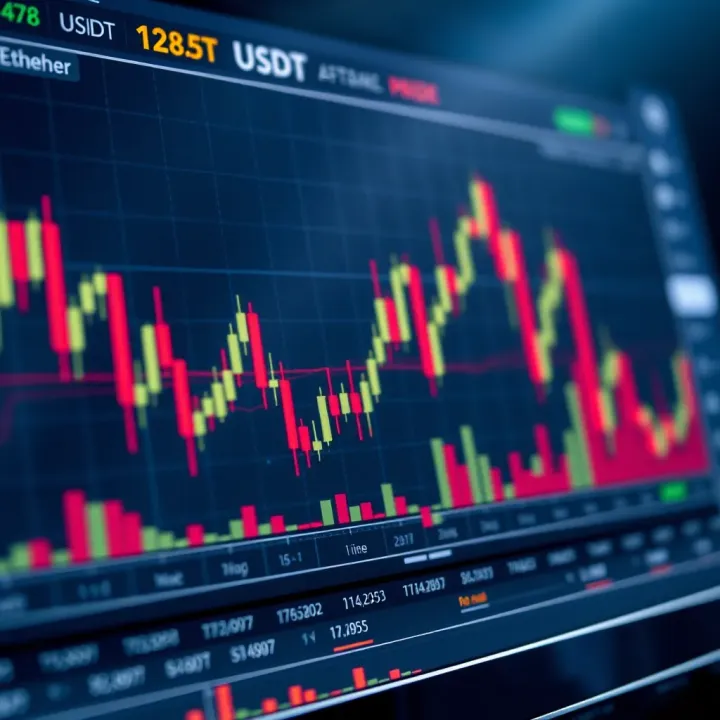
Discover expert analysis and key factors driving Ethereum (ETH) price against Tether (USDT). Get practical insights on market trends, technicals, and risk to plan smart crypto moves 📊💡
Get detailed Ripple (XRP) price prediction 📈 Explore historical trends, market sentiment, and expert views to understand XRP's future value clearly.
Based on 10 reviews