

Ripple Coin Price Prediction and Market Insights
Get detailed Ripple (XRP) price prediction 📈 Explore historical trends, market sentiment, and expert views to understand XRP's future value clearly.
Edited By
Sophie Wells
Broadcom, a major player in the semiconductor and infrastructure software industry, has caught the eye of many traders and investors worldwide, including those in India. Understanding the factors that influence its share price is key to making informed investment decisions. The share price of Broadcom reflects market sentiment shaped by its financial results, industry trends, and global economic conditions.
One crucial driver for Broadcom's stock performance is its consistent revenue growth, which stems from strong demand in sectors such as 5G technology, data centres, and cloud services. For example, the company’s latest quarterly earnings highlighted a double-digit increase in revenue, largely thanks to robust semiconductor sales. Such financial health provides investors with confidence but also raises expectations.

Market dynamics also play a significant role. Semiconductor supply shortages, geopolitical tensions affecting chip supply chains, and competition from firms such as Qualcomm and Intel often sway Broadcom’s share price. Indian investors need to watch these external factors closely, especially since global chip shortages impact manufacturing sectors domestically and abroad.
Analyst forecasts vary, but many predict moderate growth in Broadcom shares over the next year, with price targets reflecting expectations of continued innovation and market expansion. However, risks like regulatory challenges and potential disruptions in technology adoption remain. Investors should weigh these cautiously.
Maintaining a balanced perspective on both opportunities and risks in the evolving tech landscape will help Indian investors navigate Broadcom's shares effectively.
Key points to monitor include:
Quarterly revenue and profit margins
Industry trends, especially in 5G and cloud infrastructure
Geopolitical developments affecting semiconductor supplies
Competition and technological advancements
This overview sets the stage for deeper analysis of Broadcom’s share price behaviour, giving you the tools to interpret market movements and prepare your investment strategy with a clear picture of what lies ahead.
A clear grasp of Broadcom's business model and market position is essential for anyone analysing its share price. This understanding reveals how the company generates revenue, its product focus, and where it stands against competitors. Consequently, it helps investors assess the sustainability of its growth and the risks involved.
Broadcom operates mainly in the semiconductor industry, manufacturing chips that power devices ranging from smartphones and data centres to home networking equipment. Its portfolio includes chips for wired and wireless communications, enterprise storage, and broadband access. For example, Broadcom’s chips enable high-speed internet connections, which remain in demand as more Indians rely on online services during the post-pandemic digital boom.
The company also extends into software solutions, particularly enterprise security and infrastructure software, contributing a steady revenue stream alongside hardware. This diversification supports Broadcom’s resilience against market fluctuations affecting only one product category. Its acquisition strategy, such as the purchase of CA Technologies and Symantec’s enterprise security business, underlines its shift towards software and higher-margin sectors.
Broadcom operates in a fiercely competitive market with major players like Qualcomm, Intel, and Nvidia vying for market share. Each specialises in different segments; for instance, Qualcomm is strong in mobile processors, while Nvidia leads in graphics and AI chips. Broadcom’s focus on specialised chips for networking and storage equipment sets it apart but also means it must innovate constantly to stay ahead.
The semiconductor industry itself faces challenges like global supply chain disruptions and rising manufacturing costs. Competitors are investing heavily in newer technologies such as 5G, artificial intelligence, and automotive semiconductors — areas that could reshape market dynamics. Broadcom’s strategy to leverage both hardware and software places it in a decent position but also requires careful monitoring of technological trends.
Knowing how Broadcom fits into the bigger semiconductor picture helps investors predict how external shifts might impact its share price. For instance, a surge in demand for 5G infrastructure in India could boost Broadcom’s revenues, potentially making its shares more attractive.
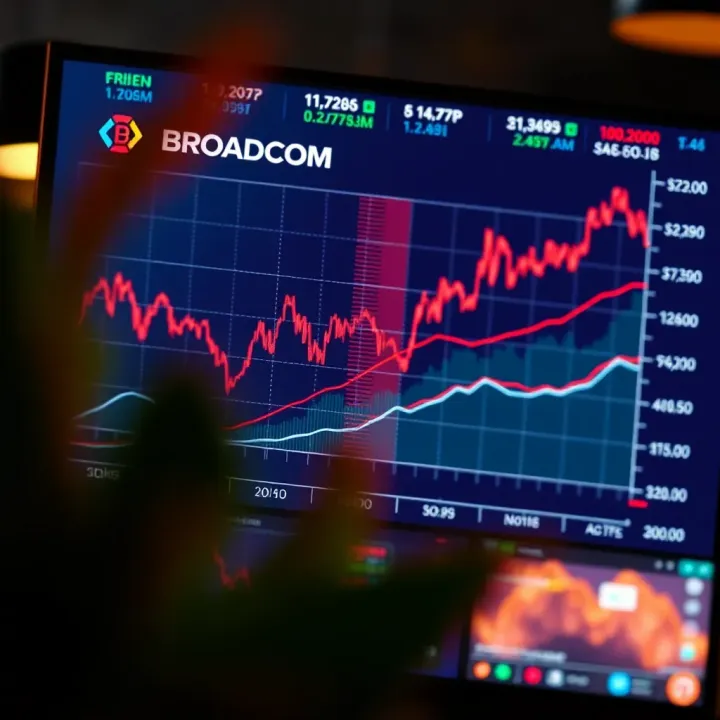
Understanding these aspects of Broadcom’s business and market provides vital context for deeper analysis of its financial performance and future outlook.
Understanding the factors impacting Broadcom's share price is key for investors aiming to make informed decisions. The stock's movement reflects a combination of the company’s financial health, industry dynamics, and broader economic conditions. Recognising these influences helps traders and analysts anticipate future trends rather than simply reacting to price swings.
Broadcom’s quarterly and annual financial results strongly shape market sentiment. Robust revenue growth, improving profit margins, and positive cash flow often boost investor confidence, pushing the share price upwards. For instance, a recent earnings report showing higher semiconductor chip sales or successful acquisitions can indicate future earnings potential, enticing buyers. Conversely, any miss on revenue or profit forecasts may prompt quick sell-offs. Analysts closely watch key metrics like earnings per share (EPS), operating income, and guidance for upcoming quarters to assess the company’s ongoing profitability.
Broadcom operates within the global semiconductor industry, which is highly cyclical and influenced by technological advancements. The demand for chips in sectors like smartphones, 5G infrastructure, and data centres directly affects Broadcom’s sales. For example, an uptick in 5G rollout across countries like India and the US often leads to higher orders for parts manufactured by Broadcom. At the same time, supply chain disruptions or overcapacity in chip manufacturing can put downward pressure on prices, impacting Broadcom’s revenues.
Additionally, industry consolidation and competitor moves—such as mergers or new product launches—alter competitive dynamics, which investors must monitor. The global chip shortage seen during the pandemic, for instance, caused swings in Broadcom’s share price depending on how well the company managed supply and demand.
Broader economic conditions influence investor sentiment and Broadcom’s operational costs. Factors like interest rates, inflation, and foreign exchange rates matter. Rising interest rates often increase borrowing costs, potentially slowing down capital expenditure in technology sectors that Broadcom serves. Inflation may raise production costs, squeezing margins if Broadcom cannot pass on these hikes to customers.
Moreover, currency fluctuations, especially between the US dollar and currencies in key markets like India or China, affect international business profitability. Trade policies and geopolitical tensions also play a part, sometimes causing sudden market jitters. For example, tariffs imposed on Chinese tech firms tend to affect the supply chain and, by extension, Broadcom’s share price.
Successful investment in Broadcom requires continuous tracking of these financial results, industry cycles, and macroeconomic signals to anticipate share price movements accurately.
By combining insights from these three areas, investors gain a clearer picture of Broadcom's future performance, enabling better-timed and more confident trades.
Analysts' forecasts and expert opinions provide vital perspectives on Broadcom’s future share price movements. These insights help investors gauge potential risks and rewards, especially as semiconductor markets witness rapid shifts. By examining predictions from seasoned analysts backed by industry data, investors can make informed decisions rather than relying solely on market rumours or short-term trends.
Current forecasts for Broadcom’s shares generally suggest a moderate upside over the next 12 to 18 months, though the range is quite broad. For example, brokerage firms like Motilal Oswal and ICICI Securities project Broadcom’s share price to reach between $900 and $1,000 during this period. Meanwhile, some global research houses consider $850–$950 as a realistic near-term target, factoring in supply chain challenges and chip demand cycles.
It’s important to note that these predictions reflect the overall sentiment that Broadcom’s diversified product portfolio and strong presence in data centre chips underpin steady growth. However, volatility remains due to macroeconomic uncertainties and fluctuating demand in segments like mobile device components.
Several common assumptions shape these forecasts:
Market demand for semiconductors will stabilise or grow moderately, supported by ongoing digital transformation trends across sectors like 5G, cloud computing, and automotive electronics.
Broadcom will maintain or expand its market share through acquisitions and R&D. Recent deals like the acquisition of VMware demonstrate Broadcom’s strategy to boost software revenue, which analysts see as a positive diversification play.
Global supply chain conditions will improve gradually, reducing production bottlenecks seen in recent quarters. This assumption influences revenue projections and profit margins significantly.
Macroeconomic factors such as inflation, interest rates, and geopolitical tensions will remain manageable without causing severe disruptions to Broadcom’s global customer base.
These assumptions guide analyst models and valuations but do carry inherent risks. For instance, if chip demand softens unexpectedly due to economic slowdown or if geopolitical tensions flare up, share price forecasts could adjust lower rapidly.
Investors should watch quarterly earnings closely, comparing actual performance against these key assumptions to decide when to buy, hold, or sell Broadcom shares.
Overall, analysts’ predictions reflect a cautiously optimistic view of Broadcom’s share price potential, encouraging investors to balance enthusiasm with awareness of market and geopolitical risks.
Investing in a global technology company like Broadcom requires Indian investors to be mindful of several factors unique to cross-border investments. Beyond analysing the company's fundamentals and market outlook, Indian investors must also evaluate currency risk, regulatory compliance, and brokerage options to ensure optimal entry and exit strategies. This section addresses the risks, growth prospects, and practical steps Indian investors can take to add Broadcom shares to their portfolio.
Investing in Broadcom carries exposure to market volatility common in the semiconductor sector. Global supply chain disruptions, fluctuating demand from tech giants, and geopolitical tensions — such as US-China trade relations — can swiftly affect share price. For Indian investors, currency fluctuations between the US dollar and the Indian rupee add another layer of risk. If the rupee weakens sharply against the dollar, investment value shifts accordingly. Besides market risks, investors should note potential regulatory changes in the US that could impact foreign ownership rules or tax treaties.
That said, political instability in India or unexpected domestic policy changes may also influence investor sentiment towards overseas equities, including Broadcom.
Broadcom's position in niche semiconductor technologies, like 5G components and data centre solutions, presents strong long-term growth drivers. With global 5G rollout gaining pace, India’s own telecom sector expansion could indirectly elevate demand for Broadcom’s products via equipment makers. Additionally, Broadcom’s strategic acquisitions have broadened its product portfolio, improving resilience against cyclical downturns.
Indian investors with a medium to long-term horizon can capture value as digital infrastructure scales worldwide. The company’s regular dividend payouts also appeal to investors seeking steady income alongside capital appreciation.
You can invest in Broadcom through Indian brokers offering international trading accounts or via global trading platforms accessible to Indian residents. Leading brokerages like ICICI Direct and HDFC Securities provide facilities to trade US stocks, including Broadcom, with competitive currency conversion rates.
Steps to invest usually include:
Opening an international trading account, which requires identity and address proof.
Funding the account in US dollars through authorized channels, considering RBI guidelines on foreign exchange.
Placing orders for Broadcom shares via the brokerage platform during US market hours.
Investors should also consider taxation aspects, including Capital Gains Tax on foreign shares and potential obligations under the Foreign Account Tax Compliance Act (FATCA) for US investments.
For Indian investors, combining awareness of global market conditions with local regulatory and tax knowledge is key to making informed decisions on Broadcom shares.
Get detailed Ripple (XRP) price prediction 📈 Explore historical trends, market sentiment, and expert views to understand XRP's future value clearly.

📈 Discover what drives Reliance Industries' share price! Analyze recent trends, market shifts, and key growth factors to make smarter investment choices.

📈 Explore Reliance Industries' share price projections up to 2050 with expert insights, market trends, and strategies for long-term investors in India.
📈 Explore Reliance Industries' share price outlook by 2030, analyzing past trends, sector shifts, and key risks & opportunities for savvy investors.
Based on 12 reviews