
Understanding Binary Bots in Trading
Discover how binary bots automate binary options trading 🤖, their tech, pros and cons, safety tips, and how to pick trustworthy bots for your trading goals 📊.
Edited By
Isabella Clarke
Binary trading has grown popular among Indian traders for its simplicity and quick market exposure, especially with platforms like TradingView offering powerful charting and analysis tools. Unlike traditional trading, binary options are all about predicting whether an asset's price will rise or fall within a preset time frame. The payoff is fixed, usually either a set profit or total loss, making it easier for traders to manage risk yet requiring precise market judgment.
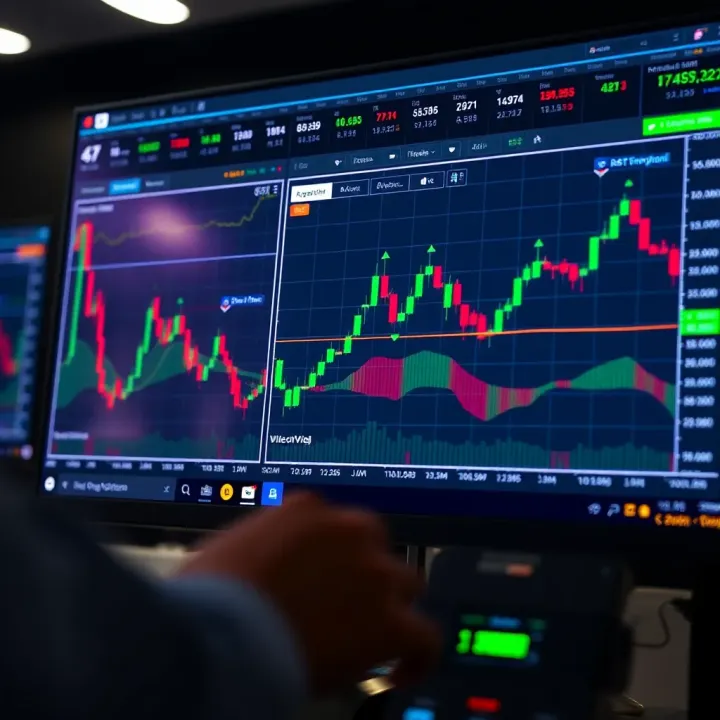
TradingView stands out due to its detailed financial charts, user-friendly interface, and vast library of indicators. Indian traders can track price movements, spot trends, and test strategies before placing real trades on binary options platforms. For example, using TradingView's candlestick patterns, RSI (Relative Strength Index), and moving averages helps assess entry and exit points more confidently.
Using TradingView isn’t about guaranteeing wins; it’s about making informed decisions based on data and market behaviour.
The platform supports multiple asset classes including stocks, forex, commodities, and cryptocurrencies, which are common underlyings in binary trading. For instance, during volatile market conditions, TradingView’s live updates and alert features enable traders to respond quickly, a key aspect when trades last just minutes.
Understanding the tools on TradingView and how they relate to binary trading strategies can improve your edge significantly. It's essential, however, to recognise that binary trading carries substantial risk due to the all-or-nothing payout structure and market unpredictability.
This section sets the stage for deeper insights into TradingView’s tools, practical strategies for binary trading, and the risks you must manage effectively to avoid losses.
Binary trading offers a straightforward approach to financial markets, where traders predict whether an asset's price will go up or down within a fixed time. For traders and analysts, understanding binary trading is the first step to using tools effectively for better decision-making. This section explains the basics of binary trading and how TradingView serves as a practical platform to support such trades.
Binary trading involves placing bets on price movements of assets like stocks, currencies, or commodities. Instead of buying or selling the asset itself, you predict if the price will be higher or lower than a specific point at the contract's expiry. If your prediction is correct, you get a fixed payout; if not, you lose the invested amount. For example, an Indian trader might predict the Nifty 50 index will close above a certain level by market close. This simple yes/no format is appealing but carries significant risk, as price swings can be unpredictable.
Charting tools
TradingView is widely recognised for its advanced charting capabilities that benefit binary traders. The platform offers a variety of chart types, including line, bar, and candlestick charts, useful for spotting trends and price patterns quickly. For instance, a trader can use candlestick patterns like Doji or Engulfing patterns on TradingView to judge potential market reversals — crucial signals in binary trading.
Moreover, TradingView allows adding multiple technical indicators such as Moving Averages and Relative Strength Index (RSI), enabling traders to confirm signals before placing trades. This mix of visual and analytical tools helps make clearer predictions on price direction, improving chances in binary options.
Market data coverage
TradingView covers a vast range of markets, including Indian indices like the Sensex and Nifty, currency pairs like USD/INR, and global commodities. This extensive data availability means traders don’t need to juggle multiple platforms to access pertinent information. Real-time data ensures traders get up-to-the-minute price updates critical for binary trades that often last minutes or hours.
Having instant access to global market movements through TradingView lets traders adjust their strategies based on worldwide economic events, such as RBI interest rate decisions or crude oil price shifts, which impact Indian markets directly.
Community and social features
TradingView also hosts a vibrant community of traders sharing ideas, strategies, and chart analyses. For beginners or those exploring binary trading, following experienced Indian traders can provide insights tailored to local market conditions. Traders can comment on charts, participate in discussions, and learn from real-time trade setups shared by others.
This social aspect helps break the isolation often faced in trading and offers peer feedback on strategies. Plus, it fosters continual learning and adaptation—important because binary markets move fast and require up-to-date information.
Using a platform like TradingView is not just about data; it’s about tapping into a network of shared knowledge while leveraging technical tools to improve binary trading decisions.
By understanding these fundamentals and features, traders can better grasp how TradingView supports binary trading practically and effectively, especially within the Indian market context.
TradingView serves as a powerful companion for binary traders aiming to make informed decisions. The platform's detailed charts and extensive indicator options allow traders to spot trends and potential price moves quickly. This edge is vital in binary trading where decisions must be timed precisely, as trades usually involve quick expiry times.

Customisable chart indicators enable traders to tailor analysis tools to their specific trading style. For instance, a trader might set up moving averages with customised periods to smooth out price data or use RSI with adjusted thresholds for better spotting overbought or oversold conditions. The ability to mix and match indicators allows for a personalised approach beyond standard pre-set tools, making it easier to identify trading signals aligned with one’s strategy.
Real-time updates on TradingView are essential to stay ahead in the fast-moving binary market. Price movements, indicator values, and volume data refresh instantly, helping traders react to market shifts without lag. For example, during a sudden spike in Nifty options, a trader relying on delayed data might miss the chance to enter or exit trade profitably. Real-time feeds ensure decisions rest on current market conditions, reducing blind spots caused by stale information.
Alerts and notifications let users keep a finger on the pulse without staring at screens constantly. Traders can set alerts for price crossing a key level, indicator signals like MACD crossovers, or completion of certain chart patterns. For example, when Nifty reaches a crucial support zone, an alert triggers, prompting traders to assess positioning. Such notifications help manage multiple assets simultaneously, improving response times while avoiding missed opportunities.
Technical indicators for direction prediction form the backbone of many binary trading strategies. Indicators like Moving Average Convergence Divergence (MACD), Relative Strength Index (RSI), and Bollinger Bands assist in guessing whether prices will rise or fall in the short term. For example, if RSI dips below 30 (oversold), it might signal a potential price bounce suitable for a 'call' binary option.
Identifying support and resistance levels is crucial for predicting price reversal or breakout points. Support acts like a floor where buying interest typically grows, while resistance acts like a ceiling that prices struggle to break. Using TradingView, traders can mark these horizontal zones by observing past highs and lows. Recognising these levels helps binary traders choose strike prices and expiry timings more effectively.
Using candlestick patterns offers visual clues about market sentiment and potential reversals. Patterns such as Doji, Hammer, or Engulfing provide insights into buyer-seller battles within short intervals. For instance, spotting a Hammer candlestick forming near a support level could hint at a bullish turn, guiding traders to consider 'call' options. Since binary trading often involves short expiry windows, quick recognition of these patterns on TradingView can sharpen entry timing.
Effective use of TradingView’s tools—custom indicators, real-time data, alerts, and pattern recognition—can significantly improve the decision-making process in binary trading. It narrows guesswork, enabling more confident trades aligned with market behaviour.
Binary trading demands clear strategies since it depends heavily on correctly predicting price direction within a short timeframe. TradingView offers versatile charting tools and indicators that suit these strategies well, enabling traders to spot actionable patterns quickly. Knowing common strategies can help you avoid guesswork and make calculated decisions.
Trend following is among the simplest yet effective approaches. The idea is to identify an ongoing price trend and place trades that align with that movement. For instance, if the price of Nifty futures is steadily climbing and moving averages confirm an uptrend, you might decide to buy a call option anticipating prices will keep rising. TradingView’s moving average convergence divergence (MACD) or simple moving averages (SMA) help confirm such trends visually. This strategy works well for markets that show sustained momentum rather than choppy sideways behaviour.
Reversal trading looks for signs that a price trend is about to change direction. For example, spotting a classic candlestick pattern like a hammer or shooting star near support or resistance levels on TradingView’s charts can indicate an imminent reversal. Breakout strategies, on the other hand, depend on price moving decisively through key levels, such as the upper boundary of a trading range. You might look for volume spikes in TradingView’s charts to confirm these breakouts before making your trade. Both reversal and breakout methods require close attention to timing, as false signals can be common, especially in highly volatile markets.
Effective risk management is critical when binary trading because of the inherent all-or-nothing payoff.
Setting stop-loss levels involves predefining the maximum loss you're willing to take on a trade. While binary options themselves have fixed loss limits, using stop-loss concepts applies when combining binary trades with other instruments or when using TradingView to time entries. For example, if an asset drops below a key support level, it might be wise to exit or avoid trading, thus limiting potential losses. This practice guards your capital and prevents emotional decisions during fast market movements.
Position sizing means deciding how much money to commit per trade based on your overall capital and risk tolerance. Avoid staking large amounts on a single binary trade simply because the potential payout looks tempting. Instead, use a fixed percentage of your trading capital — say, 1-2% — for each position. This approach ensures that even a string of losses won't severely harm your portfolio. On TradingView, you can simulate various position sizes and outcomes using their tools before applying real money.
Calculation and discipline in strategy execution separate successful binary traders from amateurs. Using TradingView’s visual cues along with sensible risk approaches can significantly improve your chances in this challenging trading format.
By combining these strategies and adhering to sound risk management principles, Indian traders can use TradingView not just for analysis but as a practical platform to make better binary trading decisions.
Binary trading promises quick returns but carries a high level of risk that traders must acknowledge. Understanding these risks is vital to avoid significant losses, especially in an environment as volatile and fast-paced as financial markets on platforms like TradingView. By staying aware of the key limitations and inherent dangers, traders can better plan their strategies, control emotional decisions, and manage expectations.
Price swings are common in binary trading, often influenced by unexpected news, geopolitical events, or shifts in market sentiment. For example, an unexpected RBI policy change or global oil price surge can cause sudden market jolts, making predictions unreliable. Traders relying heavily on short-term price movements may find their trades invalidated within seconds, leading to losses.
Unlike traditional investing, binary options have fixed expiry times, so even if the overall market trend favours a position, short-term volatility can cause an option to expire out of the money. This makes volatility a double-edged sword — it opens opportunities but increases the chance of losing the entire stake.
Volatility means that even detailed TradingView analysis cannot guarantee success; it's about managing risk, not avoiding it.
Selecting a reliable broker is crucial in binary trading. Many platforms operating in India are international and may not follow local regulations fully, making it hard to enforce rights if disputes arise. For instance, a trader might deposit ₹50,000 on an overseas site offering binary options but face delays or difficulties withdrawing profits due to unclear procedures.
It is wise to prioritise brokers with established credibility, transparent fee structures, and positive reviews from genuine users. Additionally, platforms integrated with TradingView analysis tools offer a more seamless execution experience, reducing the risk of slippage or technical issues during trade execution.
In India, the Securities and Exchange Board of India (SEBI) regulates securities and derivatives markets but has been cautious about binary options trading. Currently, binary options are not recognised as legal instruments in India, and many domestic brokers do not offer them.
Trading binary options through unregistered overseas brokers exposes Indian traders to risks like lack of regulatory protection and possible legal grey areas. Moreover, SEBI has issued warnings advising investors to be careful about such platforms. Indian traders should be aware of these legal perspectives and favour regulated instruments like futures and options contracts traded on recognised exchanges such as NSE and BSE.
By understanding these risks, traders can focus on risk management and avoid pitfalls. Although TradingView offers strong tools to analyse markets, recognising the unpredictability of markets and legal realities will help in making informed, safer trading choices.
Indian traders often face unique challenges when trading binary options due to market hours, broker regulations, and local economic factors. Practical tips tailored for this context help bridge the gap between TradingView’s powerful tools and the realities of Indian markets. Knowing how to adjust settings and coordinate TradingView with local brokerage services not only saves time but improves the accuracy of trading decisions.
Adjusting TradingView settings to reflect Indian market specifics is essential. For instance, syncing charts with Indian Standard Time (IST) ensures trades align with local market hours, especially when trading indices like the Nifty 50 or Bank Nifty. Traders should also select relevant currency pairs with the Indian Rupee (INR) or commodities like gold and crude oil, which impact the local economy.
Customising alerts is another key aspect. Setting alarms for support and resistance breaks during NSE trading hours helps traders react swiftly. Using indicators that suit short-term movements—like the Relative Strength Index (RSI) or Bollinger Bands—fine-tuned for Indian market volatility can aid in spotting entry and exit points.
Remember, Indian markets can be influenced by monsoon developments or RBI announcements, so integrating these factors into TradingView’s news and event calendar widget helps keep strategy relevant.
Indian brokers supporting binary options often lack seamless integration with external platforms. Therefore, traders need to manually translate TradingView insights to their broker’s interface. Choosing brokers with reliable order execution during NSE hours is critical for timely trades.
Moreover, some Indian brokers provide APIs or plugins compatible with TradingView scripts—leveraging these can automate strategy signals directly into the trading platform. For example, a trader using ICICI Direct or Zerodha Kite might benefit from custom TradingView alerts for predefined price movements, improving reaction speed.
Lastly, confirm that your broker complies with Securities and Exchange Board of India (SEBI) guidelines on derivatives trading. Trading options through recognised stock exchanges like NSE and BSE ensures legal safety and capital protection.
Aligning TradingView’s capabilities with your specific needs as an Indian trader optimises decision-making and reduces risk in binary option trading.
Adopting these tips not only makes TradingView a smoother tool for the Indian context but also strengthens discipline and precision in trading strategies.
Discover how binary bots automate binary options trading 🤖, their tech, pros and cons, safety tips, and how to pick trustworthy bots for your trading goals 📊.

📈Know binary trading hours for Indian investors! Understand global market times, trading windows, regulations, and tips to trade smart within India's framework.
📈 Discover effective Quotex trading strategies tailored for better results! Access detailed PDFs to enhance your trading skills and boost success rates.

Find the ideal iPad for trading with our guide covering performance, display, app compatibility, and portability. Perfect for Indian traders looking to invest smartly 📈📱
Based on 14 reviews