

Bitcoin, KPEX and AI: Enhancing Crypto Trading
Explore how AI boosts Bitcoin trading and management on KPEX platform 🔍, revealing benefits, challenges, and future prospects for crypto investors and tech enthusiasts 🚀.
Edited By
Charlotte Hughes
Virtual mounts, widely popular in gaming and simulation platforms, are getting a major boost with Battle Steed AI. Essentially, Battle Steed AI applies artificial intelligence to these virtual creatures, making them smarter and faster in responding to player commands and in-game scenarios. For traders and analysts who follow the gaming industry, understanding these AI advancements can hint at shifts in game design preferences and player engagement trends.
This AI-driven evolution transforms mounts from mere movement tools to tactical partners. Instead of just following commands blindly, Battle Steeds can evaluate battlefield conditions, predict threats, and adapt their behaviour dynamically. For example, an AI-enabled steed may automatically dodge an incoming attack or position itself advantageously without explicit instructions. This heightened autonomy directly boosts a player's strategic options.
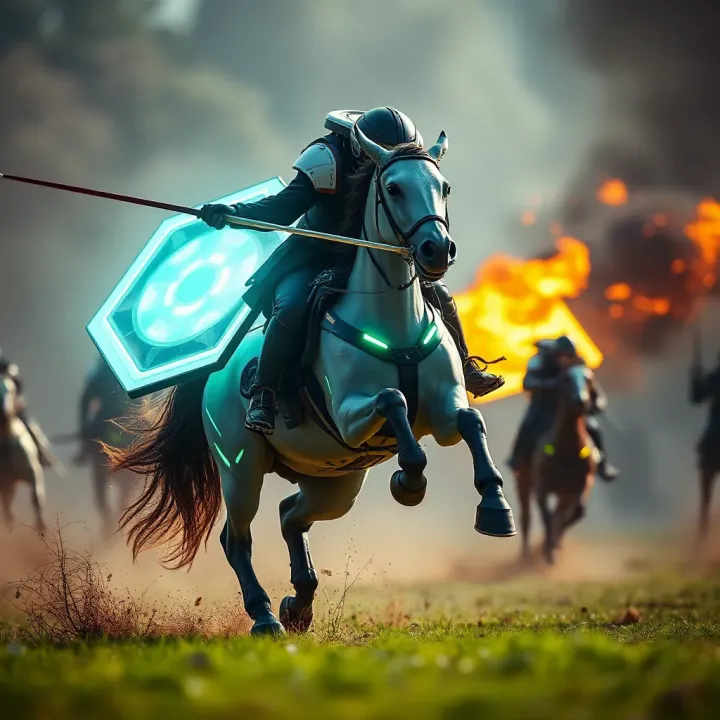
Battle Steed AI typically builds on several technologies, including machine learning, pathfinding algorithms, and real-time decision-making modules. Game developers train these AI systems using large data sets of player behaviour and battlefield scenarios, often through simulations. This training helps the AI identify patterns and adjust its tactics accordingly.
The key advantage is that Battle Steed AI enriches player immersion, offering a more challenging and realistic gaming environment. This creates deeper engagement, which can impact gaming revenues and platform loyalty.
Applications go beyond simple combat: Battle Steeds can assist in exploration, resource gathering, and even in puzzle-solving within virtual worlds. For instance, in a popular MMORPG, a Battle Steed may learn shortcuts or safer routes after repeated player use, effectively remembering the terrain.
However, developing such AI isn't without challenges. Balancing AI autonomy with player control is delicate—too much independence might frustrate users, while too little reduces AI usefulness. Plus, high processing demands can affect game performance, especially on lower-end mobile devices popular in India.
Looking ahead, integrating Battle Steed AI with augmented reality (AR) and virtual reality (VR) promises immersive experiences in both gaming and training simulations. For investors tracking the virtual gaming market, these AI innovations signal growing sophistication and opportunities for monetisation.
Understanding Battle Steed AI thus helps stakeholders gauge future game design trajectories, technology investments, and consumer engagement trends in the rapidly evolving digital entertainment space.
Grasping the concept of Battle Steed AI is essential to appreciate its impact on virtual mounts within games and simulations. These AI systems do more than move the mount; they add layers of tactical thinking, responsiveness, and realism that players expect. For professionals analysing game development trends or investors eyeing gaming tech, understanding Battle Steed AI highlights how advances here can affect user engagement and market potential.
Definition and basic concept of battle steed AI: Battle Steed AI refers to specialised artificial intelligence designed specifically for virtual mounts in digital environments. Unlike regular AI agents, these systems mimic the behaviour, instincts, and combat skills of steeds—horses, dragons, or other creatures used for transport and warfare in games. The AI controls how the mount moves, reacts to the player’s commands, and navigates complex terrain while also making tactical decisions during fights.
For example, in a medieval open-world game, the Battle Steed AI allows the horse to dodge attacks or position itself strategically while carrying the player, rather than just running in a straight line. This enhances the game’s realism and strategic depth.
Difference between standard AI and battle steed AI: Standard AI in games often controls NPCs (non-player characters) like enemies or civilians with basic goal-directed behaviour. Battle Steed AI, however, merges pathfinding with adaptive combat tactics linked closely to the rider’s inputs. It considers not only the environment but the fluid interaction with the player’s commands and the mount’s physical limits.
Where typical AI might blindly attack or patrol, Battle Steed AI adapts swiftly to changing battle conditions, such as switching from a charge to evasive manoeuvring. This dynamic nature makes it vastly more complex and player-centric than regular AI routines.
Enhancing player interaction with mounts: The AI significantly improves the way players and virtual mounts interact. Instead of feeling like a detached tool, mounts respond naturally to commands, anticipate threats, and even offer tactical advice through subtle behaviours. For instance, a dragon mount could hover automatically when the player signals caution, or a warhorse might instinctively avoid obstacles during a chase.
These interactions deepen player immersion and satisfaction, which is critical for retaining users in competitive gaming markets.
Contribution to immersive gameplay: Immersive gameplay hinges on believable worlds where virtual elements behave in expected ways. Battle Steed AI brings mounts to life with behaviours that display awareness and decision-making. This contributes to the overall game atmosphere and supports strategic playstyles, such as flanking opponents or retreating intelligently.
In simulation training, realistic mount behaviour trains users for real-world scenarios, making Battle Steed AI valuable beyond entertainment.
Battle Steed AI transforms virtual mounts from simple transport into active partners, raising the bar for realism and strategic depth in gaming and simulations.
By focusing on these AI advancements, stakeholders can foresee the evolving standards in virtual mount technology and its broader implications in digital experiences.
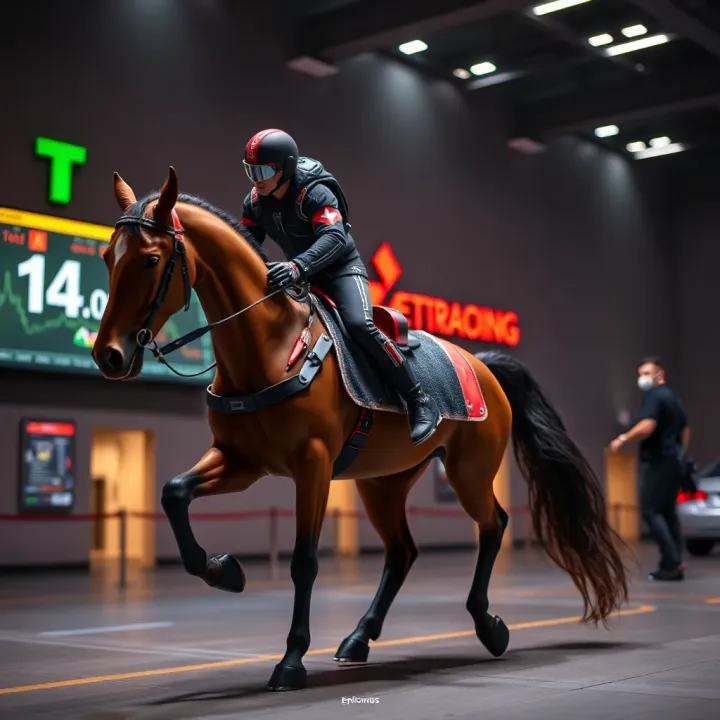
Battle Steed AI relies heavily on advanced technology to mimic realistic behaviour and intelligent responses, enhancing virtual mounts' performance in gaming and simulations. Two major areas drive this intelligence: machine learning paired with behavioural modelling, and sensor integration combined with environmental awareness. Together, these technologies allow virtual steeds to react adaptively and navigate complex game environments effectively.
Training AI for adaptive responses involves feeding the AI countless scenarios so the steed can learn how to respond dynamically rather than following fixed patterns. For example, in a battle situation, a mount trained with such AI might instinctively dodge attacks or reposition strategically upon detecting threats. This adaptive learning ensures mounts don’t behave mechanically; instead, they adjust their actions based on players' moves and surrounding challenges, boosting the overall immersion.
These training models use reinforcement learning techniques where the AI tests various moves and receives rewards for effective strategies. Over time, this approach refines the steed’s decision-making, making its responses smarter and more fitting to unpredictable gameplay situations. This adaptability is key in open-world games where variable player tactics and environments are common.
Predictive analysis for manoeuvres takes this a step further by enabling the AI to anticipate upcoming player inputs or enemy actions. By analysing patterns in real-time, the AI can plan ahead—for instance, initiating a swift charge before an enemy can counterattack or prepping for a sharp turn to navigate tricky terrain.
This forward-looking capability prevents lag in AI reactions, creating smoother and more believable movement. It works like a chess player forecasting an opponent’s next move, making mounts feel like genuine partners in battle rather than mere tools. Such predictive skills are particularly useful in strategy games where positioning and timing affect success significantly.
Using data inputs to guide steed movement means the AI continuously gathers information from the virtual environment—such as terrain type, nearby objects, and player instructions—to adjust the mount’s pace, direction, and stance. Sensors in the game engine simulate vision and touch, helping the steed judge distances and navigate accordingly.
Practical examples include a mount slowing down automatically when approaching a river or speeding up on open ground. These data-driven movements reduce player micromanagement, letting them focus on broader strategy while the AI takes care of nuanced control.
Obstacle detection and terrain adaptation are critical for enabling virtual mounts to handle complex environments seamlessly. The AI identifies barriers like rocks, walls, or uneven ground and chooses appropriate paths around or over them. It also adapts its gait and balance to terrain, such as tripping less on rough patches or cautiously stepping on slippery surfaces.
For instance, in a hilly battlefield, the mount might avoid steep climbs or navigate through safer trails, enhancing player confidence in using virtual steeds during combat. This technology improves immersion by preventing frustrating missteps and reinforcing the idea that the steed truly ‘knows’ its surroundings.
Core AI technologies make virtual mounts smarter and more reliable, ensuring they perform efficiently while reacting genuinely to in-game challenges.
These elements collectively help Battle Steed AI push the limits of realism and tactical advantage in virtual gaming, offering players not just a mount but a trusted companion on the digital battlefield.
Battle Steed AI plays a significant role in making virtual mounts more efficient and realistic in modern gaming. This technology enhances how mounts react and perform during gameplay, contributing better tactical advantages and immersion. Practical benefits include smoother combat handling and improved co-ordination with team dynamics.
Improving mount responsiveness during combat involves enabling the steed AI to react swiftly and correctly to combat scenarios. For instance, in popular open-world titles like The Witcher 3 or Red Dead Redemption 2, smart AI allows mounts to dodge attacks, adjust speed and direction instantly, and protect the rider during hostile encounters. This responsiveness not only enriches player experience but also supports strategic decision-making in fast-paced battles.
Beyond individual combat, tactical positioning is a vital part of Battle Steed AI. When mounts are part of larger strategy games, AI ensures they align themselves appropriately with squads, avoiding collisions and positioning in advantageous spots. For example, in games such as Total War: Warhammer, mounts with AI actively maintain formation and adjust stance based on battlefield conditions, improving team coordination and execution of complex manoeuvres.
Adding realism to virtual mounts is critical in VR environments, where immersion depends heavily on authenticity. Battle Steed AI achieves this by simulating natural movements, responding to terrain variations and rider commands with fluidity, and exhibiting behaviours like fatigue or hesitation realistically. VR games like "The Walking Dead: Saints & Sinners" incorporate similar AI models to boost player engagement with virtual mounts, offering a convincing riding experience.
Training and educational uses of Battle Steed AI extend beyond gaming. Military and police training centres employ simulators where AI-driven virtual mounts help trainees practise mounted combat, navigation, and quick decision-making safely. Similarly, equestrian schools leverage such simulators for beginners to develop riding skills without physical risk or resource constraints. These practical applications show AI’s potential in reducing training costs while enhancing effectiveness.
Battle Steed AI not only sharpens in-game strategy but also bridges gaming technology with real-world training and education, promising wider implications beyond entertainment.
In summary, integrating Battle Steed AI in modern gaming boosts performance, realism, and strategic depth. Its use both in open-world and VR labels mounts as active participants rather than passive assets, enriching the player’s control and overall experience.
Developing effective Battle Steed AI involves navigating several technical and design challenges that impact how realistically and responsively virtual mounts behave. Tackling these issues matters because gamers and simulation users expect smooth, natural reactions from their steeds, which can influence strategic decisions and immersion. Below, we examine key obstacles faced during development, focusing on balancing realism with computation and handling complex, dynamic environments in multiplayer settings.
Managing hardware limitations places strict constraints on the complexity of AI algorithms running in real time. Most gaming devices, including consoles and PCs common in India, have finite processing power and memory. Developers must optimise AI routines to run smoothly without hogging system resources. For example, instead of overly detailed physics simulations for every movement, modular AI approaches condense decision-making to maintain performance. This optimisation ensures that a steed’s behaviour remains convincing without causing lag or crashes.
Maintaining smooth gameplay experience is closely linked to hardware management. Lag or stutters while controlling a mount can frustrate users and break engagement. Efficient code and prioritising essential AI functions help strike the right balance. For instance, AI can prioritise threat detection and pathfinding over secondary behaviours like idle animations when system load is high. This selective processing keeps mounts responsive and the game playable even under resource pressure.
Synchronising AI with diverse environments presents a big hurdle since virtual mounts must adapt to varied terrain features like uneven ground, water bodies, or obstacles. Implementing dynamic terrain awareness involves integrating sensor data and environmental mapping, letting the AI adjust footing and movement in real time. Say, in an open-world RPG, the steed must detect slippery mud sections or fallen logs and modify speed or gait accordingly. Proper synchronisation prevents unnatural behaviour that would spoil immersion.
Adapting to multiple players’ actions adds another layer of complexity in multiplayer games. Battle Steed AI needs to react not just to the terrain but also to rapidly changing player commands and unpredictable behaviours of other players in the vicinity. This requires real-time data integration from all active participants and quick decision updates. For example, when several players converge in a combat zone, the steed must respond to sudden directional changes, team tactics, or emergency retreats. Managing these concurrent inputs without lag demands smart prioritisation and robust AI design.
Developers focusing on these challenges create Battle Steed AIs that are more dependable and enjoyable, directly influencing the strategic depth and realism of virtual mount experiences.
These difficulties emphasise the fine balance between technological limits and user expectations that developers must maintain to craft compelling AI-driven mounts in modern gaming and simulation.
Battle Steed AI is set to evolve with advances in artificial intelligence and computing power. These improvements will translate into faster decision making for virtual mounts and more natural, lifelike behaviour. Such developments not only benefit gaming but promise wider applications beyond entertainment.
AI decision making for battle steeds is expected to improve significantly as algorithms become more sophisticated and hardware capabilities expand. Instead of reacting only to immediate player input or environment cues, future AI will predict player strategies and potential threats more accurately. This helps the virtual mount adjust tactics proactively, enhancing performance during complex battles or missions.
For example, rather than waiting for a player's command to dodge an opponent's attack, the mount could anticipate the move based on prior patterns and terrain layout, improving survivability and responsiveness. This kind of foresight is practical not just for enhancing gameplay but also for more realistic training simulations.
Moreover, increased computing power will allow AI models to process larger datasets in real time, enabling swift adaptation to dynamic multiplayer environments without lag. This will make gaming smoother and more immersive, even in vast open-world settings.
The potential for more lifelike steed behaviour lies in integrating AI with detailed animation and physics engines. Future battle steeds will express nuanced emotional and physical states—like fatigue, fear, or eagerness—that affect their performance realistically.
Imagine a virtual mount that slows down when visibly tired or becomes cautious near unfamiliar terrain, just like a real animal would. This depth adds tactical layers for players, who must manage not only their own stamina but also that of their mounts.
Such realism boosts immersion and player engagement, especially in role-playing and virtual reality games where every detail counts.
Military training is one promising area for battle steed AI outside gaming. Simulating mounted combat or reconnaissance missions with intelligent virtual steeds allows soldiers to practice tactics safely and cost-effectively.
These AI-driven mounts can mimic real horse behaviour under different stress levels, providing trainees with a more authentic experience. This reduces reliance on live animals and enables training in varied environments that might be otherwise inaccessible.
In addition, the principles behind battle steed AI are influencing autonomous vehicle design, particularly in navigation and adaptive control.
Self-driving systems are learning from AI models that manage movement across unpredictable terrains and crowded scenarios similar to those faced by virtual steeds. For instance, obstacle detection and route optimisation techniques developed for battle mounts help improve decision making in autonomous cars or delivery robots in urban Indian cities.
The crossover between battle steed AI and real-world systems shows how innovations in gaming technology can contribute practical solutions to transportation and defence sectors.
In summary, future advancements will deepen both the strategic complexity and realism of battle steed AI, benefiting games and extending its impact to crucial real-life applications.
Explore how AI boosts Bitcoin trading and management on KPEX platform 🔍, revealing benefits, challenges, and future prospects for crypto investors and tech enthusiasts 🚀.

Start forex trading in India with this easy guide 🇮🇳: learn to pick brokers, analyse currency pairs, manage risks & apply smart strategies for better profits 💹.

🛠️ Explore the current strike movements in Canada, their causes, key sectors involved, impact on economy and life, plus government responses and future labour ties. 🇨🇦

Discover how to pick the best binary options brokers for Indian traders. Learn about regulation, platform features, trading conditions, support, and safety. 📊💹
Based on 9 reviews