
Understanding Quotex's Role in the OTC Market
Discover how Quotex operates within India's OTC markets 📈, its features, benefits, risks, and what traders need to know before diving into OTC trading.
Edited By
Emily Clarke
Gold, designated by the code XAU in international markets, holds a distinct position as both a treasured metal and a reliable financial asset. Unlike most commodities, gold has served as a store of value for centuries, making it particularly significant for traders and investors seeking stability in volatile markets.
In India, gold carries not only economic but also cultural importance, often regarded as a safeguard during uncertain times. This emotional attachment partly explains the strong domestic demand, alongside its recognised role in wealth preservation.
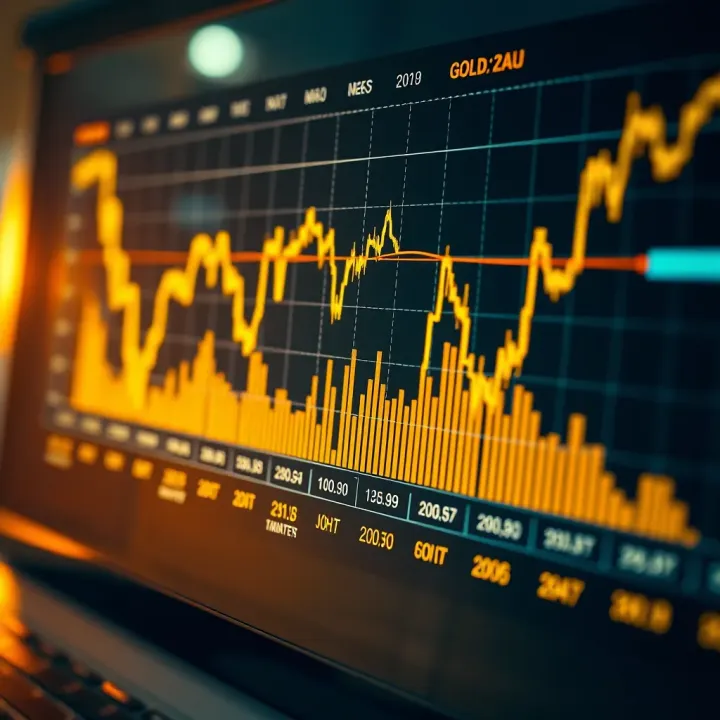
From a financial perspective, XAU is the ISO 4217 currency code representing one troy ounce of gold. It appears on global exchanges and pricing platforms to standardise gold trading. Understanding XAU helps investors interpret real-time gold price movements, which are influenced by factors like global economic trends, currency fluctuations, and geopolitical events.
Investors commonly compare gold’s behaviour against other commodities and traditional assets. Gold often moves inversely to stock markets and currencies such as the US dollar, offering diversification benefits. For example, during periods of inflation or currency depreciation, gold prices usually rise, providing a hedge against loss of purchasing power.
Gold’s valuation isn’t random but shaped by demand and supply dynamics, jewellery and industrial usage, central bank policies, and speculative trading. Moreover, physical gold in India often trades at a premium due to local market conditions, making awareness of spot prices versus retail rates important for buyers.
Gold's dual role as an investment and cultural asset makes it central in portfolio strategies, especially for those aiming at long-term wealth protection.
To navigate gold investments effectively, traders and investors should familiarize themselves with XAU as a benchmark, keep an eye on global cues, and understand differences among various investment options like physical gold, gold ETFs, and sovereign gold bonds.
This section sets the stage for a deeper look into how gold markets operate and the practical ways to engage with this timeless asset.
Understanding XAU is fundamental for anyone engaging with gold as an asset in financial markets. XAU stands as the international code that represents one troy ounce of gold. This identification helps traders, investors, and analysts speak a common language across different markets, making it easier to track, trade, and invest in gold worldwide. In practical terms, when you see XAU quoted on trading platforms or in market reports, it reflects the current price per troy ounce of gold in US dollars.
XAU is a standardised abbreviation used globally to denote one troy ounce, which equals approximately 31.1 grams, of pure gold. Unlike regular ounces used in everyday measurements, the troy ounce is specific to precious metals. This metric is crucial because gold is typically priced and traded internationally using this unit, ensuring consistency across markets.
For example, if an investor in Mumbai sees a price of XAU at $1,950, it means each troy ounce of gold is valued at that amount in US dollars. This lets traders globally, including Indian investors, easily compare prices without confusion over weight standards.
In forex and commodities trading, XAU is paired with currencies, most notably the US dollar (USD), forming pairs like XAU/USD. Such pairs enable traders to speculate on gold prices relative to currencies, much like currency pairs themselves. This is particularly useful for hedging currency risk or diversifying investment portfolios.
For instance, a forex trader in Delhi might observe the XAU/USD rate to time gold purchases as a safety measure against a depreciating rupee. This use of XAU facilitates seamless trading of gold as a commodity among brokers and financial markets worldwide, with its price movements influenced by demand, geopolitical events, and economic data.
While XAU reflects the price of pure gold per troy ounce, gold exchange-traded funds (ETFs) and physical gold represent different investment formats. Gold ETFs track the price of gold but allow investors to buy shares without holding physical metal. Physical gold, like jewellery or bars, involves actual ownership but comes with storage and purity considerations.
XAU serves as a benchmark for ETFs and physical gold prices, but investing in an ETF means exposure to gold's price without dealing with logistics. In contrast, purchasing physical gold in India often includes premiums over XAU prices, reflecting purity tests, making charges, and local demand.
India is one of the largest consumers of gold, with pricing heavily influenced by both XAU rates and domestic factors such as import duties, GST, and local demand for festivals or weddings. Although XAU provides the base international price, Indian gold prices tend to carry a premium sensitive to rupee fluctuations and government policies.
For instance, a rise in the US dollar against the rupee makes imported gold costlier in India, even if the XAU price remains stable. Thus, Indian investors must consider both the international XAU rate and local market dynamics when evaluating gold purchases or investments.
Understanding XAU is not just about grasping a price code; it's about navigating the complex relationship between global gold valuation and local market realities, especially for Indian investors dealing with gold in various forms.
This clarity on XAU and its role helps finance professionals, traders, and investors make more informed decisions, ensuring they know what they are buying or trading at any given moment.
Gold prices represented by XAU (one troy ounce of gold) depend on intricate global mechanisms. Traders and investors track these prices closely because they affect trading decisions and portfolio allocations directly. Precise knowledge of how XAU pricing works helps in understanding price trends and market movements.
The London Bullion Market Association (LBMA) and the Commodity Exchange (COMEX) dominate gold pricing globally. LBMA sets the benchmark through its twice-daily Gold Price Fixing, which involves major bullion banks agreeing on the reference price. This serves as a pricing guide for many financial products and physical gold transactions worldwide. Meanwhile, COMEX in New York offers futures contracts that reflect market expectations about future gold prices. These exchanges together create a transparent price discovery process essential for traders and investors.
Transactions at LBMA are primarily over-the-counter, facilitating bullion trade for large institutions, while COMEX caters more to speculative and hedging needs through futures contracts. For example, an Indian trader watching COMEX futures can anticipate global price trends impacting domestic prices closely.
The United States Dollar (USD) heavily influences XAU pricing. Since gold is priced globally in USD, any fluctuations in the dollar’s value affect gold’s international cost. A weaker USD makes gold cheaper for holders of other currencies, typically increasing demand and pushing prices up. Conversely, a strong dollar often results in lower gold prices.
For Indian investors, this means watching the USD-INR exchange rate is also crucial. If the rupee weakens against the dollar, gold priced in INR can rise independently of global XAU movements. Understanding these dynamics helps in timing buys or sales effectively.
Physical demand for gold influences XAU differently from paper gold trading. Physical gold involves jewellery, coins, and bars, with India being one of the largest consumers especially during festivals or wedding seasons. Paper gold includes futures, ETFs, and derivative contracts that may not correspond one-to-one with physical holdings. Sometimes, excess speculative trading causes price swings unrelated to the actual demand for physical gold.
An investor must distinguish between these: high physical demand often supports price stability, while volatile paper trading can cause sharp price movements. For instance, during geopolitical tensions, physical buying spikes as a safe haven, while paper markets might react faster to sentiment changes.
Geopolitical events and economic factors act as important catalysts for gold prices. Conflicts, trade disputes, and sanctions can drive investors to seek gold as a secure asset, pushing XAU prices higher. Additionally, inflation rates, interest rate decisions by central banks, and economic data releases shape market sentiment.
A clear example is when inflation in major economies like the US rises faster than anticipated; investors tend to flock to gold, causing XAU to climb. Indian investors tracking such global cues can anticipate price movements and use them to adjust their portfolios accordingly.
Understanding how the global price mechanisms interact with demand dynamics and external shocks gives investors a sharper edge in navigating gold markets effectively.
Gold prices, indicated by the XAU code, fluctuate based on a variety of factors ranging from economic indicators to political events. Understanding these influences helps traders and investors make informed decisions about when to buy or sell gold-related assets.
Impact of Inflation, Interest Rates, and Currency Fluctuations
Inflation plays a key role in gold pricing. When inflation rises, the purchasing power of currencies like the Indian Rupee or US Dollar declines, prompting investors to turn to gold as a store of value. For example, during high inflation periods in India, such as 2013-2014 when inflation peaked around 10%, gold prices usually rose as people sought safe-haven assets. Interest rates also affect gold demand; higher rates offer better returns on fixed-income assets, making gold less attractive since it yields no interest. Conversely, lower interest rates tend to increase gold’s appeal.
Currency fluctuations, especially the strength of the US Dollar, impact gold prices globally as gold is priced in dollars (XAU/USD). A weakening dollar often correlates with higher gold prices. If the US Dollar weakens against the Indian Rupee, for instance, it could make gold more expensive in India even if global demand remains steady.
Gold as a Hedge in Volatile Markets
Gold is widely viewed as a hedge against economic or market uncertainty. When equity markets fall sharply, or geopolitical tensions rise, investors flock towards gold to protect capital. For instance, during the 2008 global financial crisis and the recent 2020 pandemic turmoil, gold prices surged as stock markets faltered. Indian investors, aware of gold’s historical safety, often increase their holdings during such times to reduce portfolio risk.
This hedging nature means gold typically maintains or increases its value when other asset classes struggle. However, timing is critical since gold’s correlation to market volatility can vary.
Effect of Conflict, Trade Wars, and Policy Changes
Global conflicts, trade disputes, and major policy announcements directly impact gold prices. For example, tensions between the US and China in recent years led to gold price spikes due to fears of supply-chain disruptions and economic slowdown. Similarly, geopolitical conflicts like the Russia-Ukraine war influence market sentiment, pushing investors towards gold for safety.
Trade wars also create uncertainty about global growth prospects, prompting speculative gold buying. Indian markets react accordingly, as foreign investors adjust their exposure. Policy changes, such as changes in India’s import duties on gold or restrictions, can affect domestic demand and prices despite global trends.
Role of Central Bank Reserves and Purchases
Central banks hold gold as part of their foreign exchange reserves to diversify risk beyond fiat currencies. When central banks increase gold purchases, it signals confidence in gold’s value, lifting prices. For instance, RBI's strategic buying of gold in past years helped bolster gold demand in India.
Central banks sometimes buy gold during periods of currency instability or geopolitical risk. Their behaviour shapes market expectations, knowing that large official buys or sells can move global prices. Traders watch central bank activity closely as it offers clues on future gold price directions.
Gold’s price is never dictated by a single factor but a mix of economic trends and evolving global scenarios. Keeping track of inflation, currency movements, political events, and central bank actions helps investors navigate the fluctuating XAU market effectively.
By focusing on these concrete influences, investors and traders can better anticipate gold price movements and tailor their investment strategies accordingly.
Investors and traders keep a close eye on XAU data because it offers a clear picture of gold's price movements in global markets. Since XAU represents one troy ounce of gold, watching its fluctuations helps investors time their purchases or sales effectively. For those involved in derivatives or commodities trading, XAU provides the benchmark for contracts and options. In India, where gold is a trusted store of value, understanding XAU data can also help in making informed decisions about physical and digital gold purchases.
Gold Exchange-Traded Funds (ETFs) track the price of gold linked to XAU, allowing investors to buy gold exposure without physical delivery. These ETFs are traded on stock exchanges like NSE and offer liquidity at lower transaction costs compared to buying gold jewellery or bars. Futures and options contracts based on XAU enable traders to speculate on gold price movements with leverage. For instance, a trader expecting a rise in gold prices might buy gold futures on MCX to benefit from price gains without immediate full payment. These financial instruments suit those looking for short to medium-term positions in gold.
Physical gold—jewellery or coins—has been India's traditional choice. It provides tangible ownership but often includes making charges and lacks price transparency. Digital gold platforms like Paytm Gold or Google Pay’s gold feature, meanwhile, let investors buy gold linked to XAU prices without handling the metal physically. These platforms store gold securely on behalf of buyers and offer easy liquidity. They suit investors keen on small investments and hassle-free trading. However, keeping an eye on XAU prices helps decide when to buy or redeem digital gold for maximum advantage.
Technical analysis of XAU price charts involves studying past price patterns and indicators like Moving Averages, Relative Strength Index (RSI), and Bollinger Bands. Traders use these tools to identify trends, momentum shifts, and potential reversal points. For example, a rising 50-day moving average crossing above the 200-day average (a golden cross) often signals a bullish phase for gold prices. Combining such insights with XAU data helps traders plan entry and exit points that align with market sentiment.
Fundamental analysis looks at macroeconomic factors impacting XAU valuations. Inflation rates, interest rate changes by the Reserve Bank of India (RBI), US dollar strength, and geopolitical risks shape gold demand. For instance, when inflation rises faster than interest rates, gold often becomes more attractive as a hedge, pushing XAU prices higher. Similarly, sudden geopolitical tensions can spike demand instantly. Integrating such economic data with XAU price trends enables investors to understand the bigger picture beyond charts.
Keeping track of XAU data combined with a mix of technical and fundamental analysis equips investors and traders with deeper insights, improving decision-making in the gold market.
Gold holds deep cultural significance across India, especially during festivals and weddings. For instance, during Diwali and Akshaya Tritiya, families often buy gold jewellery or coins as a part of traditional rituals and to invite prosperity. Weddings rely heavily on gold ornaments, not just as adornments but as symbols of social status and marital blessings. This consistent demand keeps gold prices buoyant even when markets fluctuate.
Beyond tradition, these cultural practices create a reliable gold market cycle in India. Sellers and traders anticipate increased buying during festive seasons, much like how retailers prepare for big sales. Understanding this pattern is crucial for investors aiming to time gold purchases or sales effectively in the Indian context.
Gold in India is often regarded as a safe store of value, passed down through generations. Many families hold gold as ancestral wealth, sometimes as jewellery or coins kept at home. This form of wealth acts as a hedge against inflation and currency fluctuations. When other assets may lose value, gold tends to retain purchasing power, a benefit especially relevant during economic instability.
Inheritance of gold creates both emotional and financial security. It serves as a low-risk asset that can be liquidated in emergencies or leveraged as collateral for loans. Many rural and semi-urban households depend on this kind of wealth preservation, highlighting gold’s practical role beyond investment portfolios.
Since the introduction of GST, gold jewellery attracts a tax rate of 3%, which is lower compared to many other luxury items. This tax simplification replaced multiple indirect taxes, making gold purchases more transparent for buyers. However, GST applies only on making charges for jewellery, not the gold's actual value, which helps keep costs relatively affordable for consumers.
For investors and traders, understanding GST’s impact is important when assessing the net cost and potential returns from gold transactions. GST compliance also ensures clarity in supply chain tracking, reducing the risks associated with black-market dealings.
Gold import policies heavily influence domestic prices. India imposes customs duties on gold imports, which have fluctuated between 7.5% to 12.5% in recent years. These duties affect the rupee price of gold, linking it closely to global gold rates and trade regulations.
The government also enforces import quotas and licensing policies to manage the trade balance and support the rupee. Traders must keep an eye on these changes since they can cause sudden price spikes or drops. For example, during periods of increased duty, smuggling tends to rise, impacting market purity and investor confidence.
Understanding these regulations helps investors and traders navigate the Indian gold market smarter, balancing cultural interests, taxation, and policy influences effectively.
Discover how Quotex operates within India's OTC markets 📈, its features, benefits, risks, and what traders need to know before diving into OTC trading.

📊 Explore how Quotex Market works, its features & trading strategies. Learn risks, regulatory info & tips for Indian traders to trade smart & safely!

📈 Understand how forex gold rate affects prices in India. Learn to track gold rates, their link with the rupee, and tips for smart investing in gold today.

🧐 Explore AFIRM stock insights including business model, financial health, market reach, and investment factors to make well-informed decisions amid current economic trends.
Based on 15 reviews