
ApeCoin Price Prediction: Trends and Market Outlook
📈 Explore ApeCoin price trends and market outlook with insights on factors influencing value, risks, and tech-fundamental analysis for informed investing decisions.
Edited By
Sophia Mitchell
Gold has always been more than just a shiny metal in India. It’s a store of value, a symbol of wealth, and a hedge against economic uncertainty. Forecasting gold prices accurately helps traders, investors, and financial analysts make well-informed decisions amid the market’s fluctuations.
Understanding how gold prices move requires observing several interlinked factors, from global events to domestic economic signals. Unlike stocks or bonds, gold does not generate interest or dividends. Instead, its price depends heavily on supply-demand dynamics, currency movements, inflation, and geopolitical tensions.
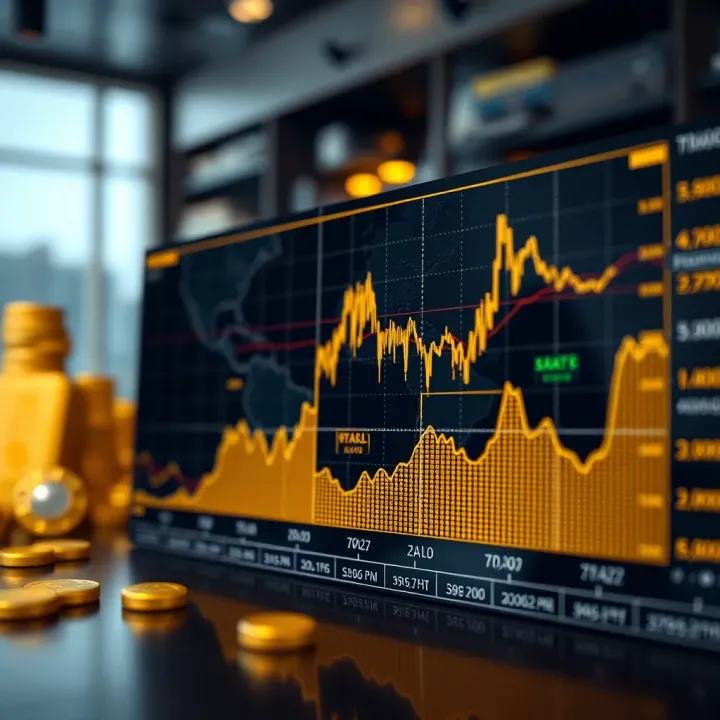
In recent years, the trend has shown that gold often reacts sharply to economic instability, such as during currency depreciation or inflationary pressures. For instance, when the Indian rupee weakened against the US dollar by nearly 10% in a few months in 2022, gold prices rose as investors sought safer assets. This pattern illustrates how exchange rates directly influence domestic gold prices since bullion is internationally priced in dollars.
“Gold often moves inversely with major equity indices and currencies, serving as a risk-off asset during uncertain times.”
Global economic indicators: Interest rates set by the US Federal Reserve and data like inflation and employment impact gold demand globally. When rates rise, gold may lose appeal as it yields no interest.
Currency fluctuations: A weakening rupee tends to push up gold prices in India, making it costlier for consumers but more attractive as an investment.
Geopolitical tensions: Conflicts or trade disputes increase market uncertainty, prompting investors to turn towards gold as a safe haven.
Physical demand: In India, festivals and weddings spur demand sharply, influencing short-term price trends.
Market sentiment and speculation: Investor mood and futures trading volumes can cause price swings beyond fundamentals.
Traders and investors should watch key economic releases and geopolitical developments closely. Staying updated on RBI policies, US interest rate decisions, and rupee trends can provide critical clues for price movements. Employing a mix of technical analysis and fundamental understanding usually offers better price forecasting.
Additionally, diversifying portfolios by including gold through Sovereign Gold Bonds or ETFs can help manage volatility without the hassle of physical storage.
Overall, predicting gold prices requires balancing multiple economic signals with market behaviour. This article will unpack these factors further, guiding you toward making smarter gold investment choices.
Understanding current trends in gold prices is essential for anyone involved in trading, investing, or analysing the market. Gold prices reflect a complex interplay of global supply and demand, economic indicators, and geopolitical events. Keeping abreast of recent movements helps investors make informed decisions about when to buy or sell, while analysts can better predict near-term price trajectories.
Gold prices worldwide tend to move in tandem, but variations arise due to local market forces. For instance, the price of gold in London’s bullion market sets a global benchmark, which then adjusts when it reaches domestic markets like India. Local demand and supply, import duties, and taxes affect these adjustments. Recently, if global gold prices rise due to geopolitical tensions, Indian prices may reflect the increase but at a slightly higher premium because of import costs.
Investors and traders in India should watch both global and domestic rates closely. For example, during 2023, when the US dollar weakened, global gold rates climbed, and Indian prices followed suit but with an additional hike caused by a depreciating rupee. This divergence shows the importance of looking beyond just the global benchmarks.
The Indian rupee’s strength or weakness strongly influences local gold prices. Since gold is priced internationally in US dollars, any depreciation in the rupee makes gold costlier for Indian buyers. Consider a situation where the dollar rises against the rupee due to RBI policy changes or foreign capital outflows; gold prices in rupees typically surge even if international dollar prices remain stable.
This linkage means currency traders and investors in Indian gold must watch the USD/INR exchange closely. For example, if the rupee falls from ₹75 to ₹78 against the dollar, the rise in gold prices often outpaces global increases. Traders who ignore currency influence might misjudge timing for entry or exit in the Indian market.
In India, festivals like Diwali and wedding seasons create spikes in gold demand. Buyers often purchase gold jewellery or bars as gifts or investments during this period, pushing prices upward temporarily. Jewellery retailers usually report higher sales volumes from September to December, which translates into noticeable price upswings in the domestic market.
For traders and investors, recognising these cycles helps in strategising procurement and sales. Buying gold just before festive demand surges can be smart, while selling during peak demand may yield better returns. For example, gold prices before and during Dhanteras often trend higher due to increased buying.
Seasonal demand is not limited to festivals. Various Indian states also have traditional months considered auspicious for gold purchases, like Akshaya Tritiya in April-May. These consistent seasonal trends cause predictable price variations annually.
Awareness of these seasonal patterns assists market participants in timing their trades and managing inventory. For example, post-festival gold demand usually dips, potentially leading to softer prices in January or February. An investor planning to offload gold holdings may wait for these periods to avoid selling at peak prices and vice versa.
Tracking current trends, including currency effects and seasonal demand, gives you a practical edge whether you trade gold daily or hold it as a long-term asset. Ignoring these factors can lead to missed opportunities or unexpected losses.
Monitor both international benchmarks and Indian prices for a complete picture
Follow rupee-dollar movements closely to anticipate price shifts
Align buying and selling decisions with festival and season-driven demand cycles
Economic factors play a decisive role in shaping gold prices globally and within India. Investors, traders, and analysts closely watch these indicators to gauge likely price movements and adapt their strategies. The interplay between inflation, interest rates, currency fluctuations, and geopolitical conditions often drives demand and supply dynamics of gold, influencing both short- and long-term pricing trends.
Inflation tends to erode the purchasing power of currency, pushing investors toward assets that can preserve value over time. Gold is traditionally viewed as a reliable hedge against inflation. For example, during periods when US inflation rose to above 5%, investors flocked to gold, leading to price surges. When inflation is high or expected to rise, gold often attracts more buying, as it does not yield interest but maintains real value.
Higher interest rates increase returns on fixed-income assets, making them relatively more attractive compared to gold, which does not pay interest. Conversely, when central banks cut interest rates—as seen in several economies during economic slowdowns—gold prices often find support. Currency strength, particularly of the US dollar, also influences gold rates. A stronger dollar makes gold costlier in other currencies, potentially lowering demand and prices. Traders watching the Federal Reserve's rate moves and dollar trends adjust gold investments accordingly.
In times of geopolitical uncertainty—such as conflicts, trade wars, or pandemics—investors seek safe-haven assets like gold. For instance, gold prices spiked during the 2008 global financial crisis and the 2020 Covid-19 pandemic as uncertainty soared. This safe-haven demand adds upward pressure on prices even if economic fundamentals remain unchanged.
The Reserve Bank of India (RBI) indirectly influences gold prices through monetary policy and foreign exchange management. For instance, when the RBI intervenes to stabilise the rupee or adjusts policy rates, it affects the rupee-dollar exchange rate, impacting gold's domestic price. A weaker rupee makes imports costlier, pushing up local gold prices. Additionally, RBI’s stance on gold reserves and import regulations can signal market expectations.
India levies import duties and a Goods and Services Tax (GST) on gold, which adds a significant cost layer. Currently, the import duty on gold is around 7.5%, plus an 3% GST, increasing the landed cost for jewellers and consumers. Changes in these taxes affect demand volumes and can cause price fluctuations. For example, when import duty was raised in the past, domestic gold prices rose sharply, dampening short-term demand.
Gold remains deeply rooted in Indian culture, especially for weddings and festivals, generating strong cyclic demand each year. Local demand spikes during Diwali and the wedding season, often driving prices up temporarily. The jewellery sector, which constitutes a major share of gold consumption, responds sensitively to price changes and consumer sentiment. Rising prices may delay purchases or shift buyer preference to smaller denominations or gold jewellery designs.
Understanding these economic factors helps traders and investors anticipate gold price trends and make timely decisions suitable to the prevailing market environment.
Inflation data from major economies
RBI’s monetary policy statements
Currency movement, especially INR-USD exchange rate
Changes in import duties or GST
Seasonal demand cycles linked to Indian festivals and weddings
This knowledge equips market participants with the essentials to interpret gold price shifts in both the global and Indian contexts effectively.
Forecasting gold prices relies on a mix of techniques that help investors and traders understand potential future movements. These methods integrate economic data, market behaviour, and investor sentiment, which together offer a clearer picture of where gold prices might head. Practical forecasting isn't just about guessing; it's about interpreting patterns and signals from various sources.
Economic reports and global data monitoring are critical in fundamental analysis. For instance, inflation figures from the US or China often signal shifts in gold demand since gold is viewed as a hedge against inflation. Trade balances, interest rate announcements, and GDP growth data also influence gold prices by hinting at the health of the economy and currency strength. An Indian trader tracking RBI policy changes alongside US Federal Reserve statements can gain valuable insights on gold rate movements.
Tracking central bank gold purchases and sales presents another practical aspect. Central banks, including the Reserve Bank of India and others worldwide, regularly buy or sell gold to balance reserves or hedge risks. For example, if several central banks increase gold holdings simultaneously, it generally points to rising demand and a potential price increase. Conversely, large sales might lead to downward pressure on rates. Observing these actions gives investors an edge in anticipating market shifts ahead of broader price movements.
Charts, moving averages, and resistance levels form the backbone of technical analysis. By studying price charts over time, traders spot patterns like support levels where gold prices bounce back or resistance levels where prices struggle to rise above. Moving averages smooth out price fluctuations, helping reveal underlying trends. For example, a 50-day moving average crossing above the 200-day average, known as a "golden cross," often signals bullish momentum in gold prices.
Speculative trading and futures markets add another layer of complexity. Traders and hedge funds frequently buy gold futures contracts based on expected price changes. Heavy speculative activity can drive prices up or down rapidly, sometimes decoupled from fundamental factors. Monitoring open interest and volume data in futures markets enables analysts to gauge market sentiment and potential short-term price swings. For instance, a surge in futures buying ahead of festive seasons in India might indicate higher physical demand and a price uptick.
Combining fundamental and technical tools improves forecast accuracy, allowing investors to make informed decisions rather than relying on guesswork.
By understanding these forecasting techniques and models, you position yourself better to anticipate gold price movements in both global and Indian contexts, aligning your trading or investment strategy with real market signals.
Forecasting gold prices offers valuable insights for investors, traders, and analysts looking to navigate the market wisely. Understanding future movements helps in making informed decisions, whether for short-term trading or long-term investment strategies. This section breaks down the expected price trends and key risks in the immediate months ahead, as well as broader prospects shaped by economic shifts and evolving market dynamics.
Expected price movements in the next few months
Recent indicators suggest a cautious optimism for gold prices in the short term. Factors such as ongoing geopolitical tensions and moderate inflation continue to support gold as a safe haven. For example, if inflation data from India’s Retail Price Index continues to hover above 6%, gold could see upward pressure in the near months as investors seek to preserve wealth. On the flip side, if global central banks, including RBI, signal tighter monetary policies, it might cap significant rises.
Traders should closely watch key resistance levels around ₹50,000 per 10 grams, as breaking this could trigger sharp movements. Seasonal demand ahead of festivals like Diwali and the wedding period could also push prices mildly higher due to increased jewellery buying. Still, swift shifts in currency rates, especially the rupee against the dollar, remain a vital influencer on gold prices domestically.
Risks that could alter the near-term forecast
Despite these indicators, several risks may disrupt the short-term outlook. Sudden policy rate hikes by the US Federal Reserve or RBI could strengthen their currencies, lowering gold’s appeal. Additionally, unexpected positive developments in global trade can dampen safe-haven demand.
On the other hand, fresh geopolitical conflicts or economic slowdowns in key markets like China and the US could lead to sudden jumps in gold prices. Investors should also be wary of speculative trading in futures markets that can amplify price swings beyond fundamental factors.
Trends shaped by inflation, demand, and technological changes
Over the long haul, inflation trends will remain a major driver for gold prices. Persistent inflation erodes fiat currency value, increasing gold's appeal as a store of value. India’s growing middle class and rising jewellery demand will sustain a steady baseline for domestic consumption.
Technological advances in mining, recycling, and even digital gold platforms are changing how gold is accessed and traded. For instance, platforms like Nippon Gold or digital sovereign gold bonds are making investment easier and more transparent, potentially broadening demand in new investor segments.
Gold’s role as a hedge and asset diversification tool
Gold continues to hold a unique position as a hedge against inflation and currency volatility. In portfolios, it reduces overall risk and provides a buffer during stock market slumps. For Indian investors who often face a volatile equity market, maintaining 5-10% allocation in gold-related assets can offer stability.
Moreover, gold’s limited correlation with other asset classes makes it valuable for diversification. It also has cultural significance in India, which helps maintain steady demand even when prices fluctuate. Having a mix of physical gold, sovereign gold bonds, and ETFs can balance liquidity with safe harbour benefits.
Understanding both immediate price projections and long-term trends equips investors to plan better and navigate uncertainties thoughtfully.
Investors and consumers must carefully evaluate several factors before engaging in gold transactions. Understanding market dynamics, product authenticity, and alternative investment routes can help avoid pitfalls and improve returns. This section breaks down crucial aspects to guide informed decision-making in gold dealings.
Gold prices are sensitive to global economic shifts, currency fluctuations, and local demand patterns. Timing becomes critical; for instance, prices often rise during festive and wedding seasons in India but may dip shortly after as demand wanes. An investor buying gold just before a festival may see immediate price appreciation, but selling immediately after can reduce gains.
Market sentiment also drives short-term price moves. If geopolitical tensions escalate, gold tends to spike, serving as a safe haven. However, when economic data shows steady growth and higher interest rates, gold might fall as investors shift to equities or fixed income. Monitoring these trends ensures buyers and sellers avoid locking in unfavourable prices.
Gold quality directly affects its value. Indian consumers often look for 22-karat gold, but verifying purity via hallmarking is essential. The Bureau of Indian Standards (BIS) hallmark guarantees authenticity, protecting buyers from adulterated jewellery or coins.
Purchasing from reputable jewellers or authorised dealers reduces risks of counterfeit or substandard products. Certification documents and proper billing not only assure quality but also assist in resale or insurance claims. For example, TrustGold and PC Jeweller are known for certified jewellery, giving buyers more confidence.
Beyond physical gold, investors can opt for Gold Exchange Traded Funds (ETFs) and Sovereign Gold Bonds (SGBs) issued by the government. ETFs trade like stocks on exchanges and represent gold owned by the fund, allowing investors to buy or sell without storage concerns.
SGBs offer interest alongside capital appreciation, making them attractive for those wanting steady income plus gold exposure. Digital gold platforms like Paytm Gold or PhonePe allow buying small quantities at current market rates with instant liquidity. These options reduce risks linked to purity, theft, and storage costs.
Gold should form a balanced part of an investment portfolio rather than being the sole asset. Typically, 5–10% allocation in gold helps hedge against inflation and currency risks while providing diversification.
Combining gold with equities, fixed deposits, and mutual funds enables better risk management. For example, during stock market downturns, gold often maintains or increases value, cushioning portfolio losses. Investors must assess their risk appetite and financial goals before deciding the right balance.
Considering these factors allows investors and consumers to approach gold with clarity and confidence, leading to sounder financial decisions in an often volatile market.
📈 Explore ApeCoin price trends and market outlook with insights on factors influencing value, risks, and tech-fundamental analysis for informed investing decisions.
🔎 Explore Avalanche's future price trends, market potential, tech strengths & risks to make informed investment decisions in India's dynamic crypto scene.
Explore Ethereum's price outlook 📈 covering market trends, regulation impact, blockchain advances, and expert views for savvy investors in India and beyond.
Explore Ethereum price trends, factors like tech advances, market demand & regulations influencing its future. Get expert insights for short and long-term outlooks 📈🔍
Based on 12 reviews