
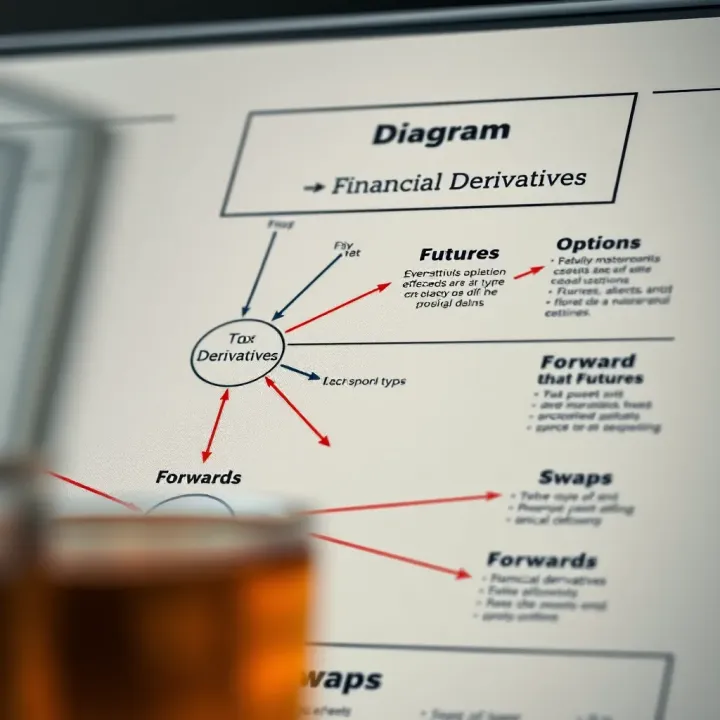
Understanding Derivatives: Basics and Uses
📈 Understand derivatives like futures, options, swaps & forwards. Learn their uses, risks, and how Indian investors can navigate this key financial tool with confidence.
Edited By
Isabella Reed
The term EQL appears in various fields, notably in technology and finance, where it holds distinct meanings and practical applications. Understanding what EQL stands for and how it is used can help traders, investors, analysts, and brokers make informed decisions and communicate clearly.
At its core, EQL is an abbreviation that often stands for Equal or Equality in many contexts. However, its specific meaning and use depend on the industry or technology it relates to. For example, in finance, EQL might refer to equalisation in mutual funds or indicate a comparison operation in coding and data handling.
Consider technology: many programming languages and databases use EQL as a shorthand for equality checks — where two values are compared for being the same. This simple function underpins complex algorithms in trading platforms and data analysis software.
In investment and trading, EQL can relate to equal distribution of assets, equal weighting in portfolio management, or equalisation of returns across different financial products. Investors often aim for equal weighting to reduce risk by balancing investment proportions.
Understanding EQL precisely is essential because misinterpreting its use can lead to incorrect data handling or flawed financial strategies, impacting outcomes directly.
Some practical points on using EQL:
Finance: EQL is used to describe equalisation mechanisms, such as distributing dividends or balancing returns across units in a fund.
Technology: EQL commonly appears in coding as a comparison operator (== or EQL in specific languages) or in query languages to filter data.
Portfolio Management: Traders use EQL concepts to assign equal weights to stocks, balancing exposure and managing volatility.
This section aims to give you a straightforward foundation on EQL’s meaning and typical uses. With this clarity, you can better follow its applications in your field and communicate more effectively in reports or discussions.
Understanding the full form of EQL is essential because this abbreviation appears in various professional fields with different meanings. Clarification helps avoid confusion, especially when interpreting technical documents, reports, or conversations where the term is used. For traders, investors, and analysts, being precise about EQL's full form ensures accurate comprehension and communication.
At its simplest, EQL is often a phonetic abbreviation for the word "equal." This usage appears frequently in casual notes, computer code comments, or shorthand writing where space is limited. For instance, a trader might jot down "EQL" in place of "equal" when noting two prices or quantities that match. This kind of abbreviation speeds up communication but requires awareness to interpret correctly.
Apart from the phonetic use, EQL can represent specific technical phrases depending on the industry. In computing, it might stand for "Event Query Language," relating to how systems query data streams. In finance, EQL sometimes refers to "Equity," connected to ownership stakes or shares. Knowing which full form applies depends on context, so professionals must link the abbreviation to their field's common parlance.
Accurate interpretation of EQL within documents affects decision-making and clarity. Misreading EQL can lead to errors, such as misunderstanding financial reports or technical specifications. For instance, confusing EQL as "equal" instead of "equity" in balance sheets can skew analysis or reporting. Ensuring precise recognition of the term saves time and prevents costly mistakes.
In everyday professional exchanges, using the right meaning of EQL builds credibility and smooth communication. Whether discussing software features or financial portfolios, correctly using EQL avoids misunderstandings. For brokers negotiating deals or analysts preparing reports, clarity in abbreviations like EQL strengthens trust and efficiency.
Takeaway: Always clarify the full form of EQL by considering the document's context and industry jargon to maintain accuracy and professionalism.
In technology and computing, EQL commonly stands for expressions like Equal or Equivalent, depending on the context. Its usage helps streamline coding, data queries, and quality testing by offering a shorthand way to represent equality or equivalence conditions. This clarity improves efficiency when dealing with complex codebases or large datasets.
Within programming and databases, EQL often relates to equality checks—a fundamental aspect of querying. For instance, when filtering rows in a database table, a query will frequently include conditions that test whether a field's value is equal ('=') to a specific input. This concept might be abbreviated as EQL when discussing code or technical documentation. Its practical relevance lies in enabling precise extraction of data matching exact criteria, such as retrieving customer records where the status is 'Active'.
Structured Query Language (SQL), used widely in databases, relies heavily on equality checks to filter or join tables. For example:
sql SELECT * FROM users WHERE country = 'India';
Here, the '=' operator fulfils the EQL function of testing equality. Other systems, such as programming languages like JavaScript or Python, also perform equality comparisons crucial for logical flows and conditional statements. In Python, an equality check might appear as:

```python
if user_age == 18:
    print("User is adult")
Understanding this simple but vital role of EQL helps programmers write more readable and effective code.
In software testing, EQL often refers to 'Equivalent', particularly when discussing equivalence partitioning—a testing technique that divides input data into partitions expected to be treated similarly. The main benefit here is reducing the number of test cases while maintaining coverage. EQL indicates that different inputs within a partition should yield equivalent behaviour, which simplifies planning and execution of tests.
Automation testing tools use EQL principles when validating outputs. For example, if a payment gateway accepts various card types, testers group card numbers into equivalent classes, assuming each behaves like the others within the same category. Automated scripts then run a test on a representative from each class rather than every single number, saving time. Tools like Selenium or JUnit integrate these concepts to improve test efficiency and reliability.
Using EQL as equality or equivalence shorthand allows developers and testers to focus on essential logic, reducing unnecessary repetition and speeding up both coding and validation cycles.
Overall, EQL in technology and computing serves as a key concept for expressing equality and equivalence, making workflows smoother and more understandable across programming, data handling and testing fields.
Understanding the term EQL in business and finance is key for professionals dealing with equity, shares, and investment analysis. In this context, EQL often relates to equity, which is the ownership stake shareholders hold in a company. Recognising EQL's use helps interpret financial documents and investment communications correctly, avoiding costly misunderstandings.
In finance, EQL typically stands for equity, referring to the value that shareholders hold in a company after liabilities are deducted from assets. For instance, when investors buy shares in a public company, they acquire equity, giving them rights over profits and voting power in shareholder meetings. Understanding EQL as equity is practical because it reflects the real ownership in a firm, crucial for making informed investment decisions.
Alongside EQL, financial documents use related abbreviations such as EPS (Earnings Per Share), NAV (Net Asset Value), and ROC (Return on Capital). Recognising EQL's role alongside these helps traders and analysts assess a firm’s financial status comprehensively. For example, when analysing a company’s balance sheet, spotting EQL amidst these terms clarifies which figures represent shareholders’ stakes rather than liabilities or assets.
Balance sheets routinely show equity as a separate section, pinpointing shareholder investments, retained earnings, and reserves. EQL in these reports summarises the net worth belonging to owners. For example, ₹50 crore listed under EQL in a company's financials indicates the cumulative value shareholders hold. This clarity supports analysts in evaluating company stability and growth potential.
Tracking EQL over time helps identify shifts in ownership or investment returns. When a company issues new shares or buys back existing ones, EQL figures adjust accordingly, signalling changes in shareholder equity. Similarly, profits added to retained earnings contribute to rising EQL values. Analysts use these trends to understand a firm’s health and the effectiveness of financial strategies.
Knowing how EQL appears in reports aids investors in separating ownership value from liabilities, ensuring clearer financial insights and smarter decisions.
By grasping EQL's role in business and finance, professionals can better interpret financial documents, track equity movements, and evaluate investment opportunities with precision.
EQL finds practical applications beyond technology and finance, especially in engineering and education. Understanding its role in these industries helps professionals grasp its versatility and improves accuracy in communication and documentation.
Definition in manufacturing standards: In engineering, EQL often represents 'equivalence' or 'equal' within manufacturing standards. For example, when machines or components meet certain predefined criteria, they are considered EQL compliant, meaning they adhere to similar performance or quality benchmarks. This ensures that replacements or alternate materials don't compromise the system's safety and efficiency.
EQL's role in measuring equivalence: EQL is crucial when assessing whether products from different batches or suppliers maintain consistent quality. Quality control teams use EQL measurements to compare parameters like tensile strength, dimensions, or material composition. For instance, if two batches of steel rods have equivalent load-bearing capacity, they meet EQL standards, allowing their use interchangeably without risk.
EQL as an abbreviation for evaluation or equivalence: In academic contexts, EQL sometimes abbreviates 'evaluation' or denotes equivalence between qualifications. For example, educational boards might use EQL to indicate that a certification from one institution matches the standards of another. This helps institutions and employers recognise credentials accurately, especially when students transfer or apply for jobs across regions.
Examples in academic grading and certification: EQL is useful when equating grades from different examination systems. Suppose a student moves from a state board to a national board; EQL helps establish comparable performance metrics. Similarly, professional certification bodies may use EQL to clarify that a course completed abroad meets local standards, simplifying admissions or hiring decisions.
Knowing how EQL operates in engineering and education ensures clear equivalence standards. This clarity aids smooth operations, fair assessments, and consistent quality across diverse sectors.
By recognising EQL's practical roles here, professionals can avoid confusion and communicate more effectively across industries.
Understanding the correct meaning of EQL depends largely on recognising the context in which it appears. Since EQL serves different purposes across industries — from finance to technology and quality control — identifying the right interpretation prevents costly miscommunication and errors. For traders, analysts, or brokers, accurate understanding influences investment decisions and reporting accuracy.
The immediate context always gives the best clue to decode EQL accurately. For example, in financial statements, EQL commonly refers to equity, indicating ownership or shares. However, in software testing, it might refer to equivalent operations or data. Suppose an analyst reads EQL in an investment report; it mostly relates to equity holdings, while a developer encountering EQL in code might interpret it as a query language or logical condition.
By aligning the abbreviation with its industry, professionals avoid confusing similarly abbreviated terms. Traders dealing with financial reports should look for accounting or investment-related keywords around EQL, while IT professionals focus on technical jargon or programming terms nearby.
Consulting authoritative glossaries and official publications safeguards against wrong assumptions about EQL. Bodies like SEBI (Securities and Exchange Board of India) or RBI (Reserve Bank of India) publish standardised financial terminology that clarifies abbreviations like EQL within legal and reporting frameworks.
Similarly, tech professionals can refer to official documentation from database providers or software development platforms to confirm terms. Using credible sources reduces the risk of misinterpretation that can creep in from informal or outdated uses.
Confusing EQL between equity in finance and equivalent in testing is common. For instance, a financial analyst might mistake EQL in a tech document for an equity figure, skewing their analysis. In reports about manufacturing quality, EQL may mean equivalence related to measurement standards, which is altogether different.
Clarifying the context early on avoids such mix-ups. For example, if an analyst sees EQL within a financial balance sheet, they know it points to ownership. If it appears in a test case description, it likely indicates an equivalence class or condition.
Clear communication depends on explicitly defining abbreviations at the outset, especially in reports shared across departments or industries. Professionals should avoid using EQL without explanation unless the audience is certain to understand the context.
Besides spelling it out once, adding a glossary section or footnotes can help readers grasp the intended meaning quickly. In oral discussions or presentations, paraphrasing EQL's meaning prevents ambiguity. These practices ensure everyone is on the same page and reduce the chance of costly errors due to misunderstanding.
Taking a moment to confirm EQL’s meaning based on context only costs seconds but saves hours of confusion later.
Identifying the correct meaning of EQL is essential for accuracy, especially when stakes are high in investment or technical environments. Approach the abbreviation with attention to the field, verify with reliable sources, and use clear communication to avoid pitfalls. This discipline makes interpretations precise and actionable across sectors.
📈 Understand derivatives like futures, options, swaps & forwards. Learn their uses, risks, and how Indian investors can navigate this key financial tool with confidence.
Explore the Quotex logo's unique design 🎨, its meaning in trading platforms 💹, and why it stands out to users, especially in India 🇮🇳.
Explore Qutoex's features, real-world uses, and key security tips 🔐. Learn how to use Qutoex effectively while staying safe in today's digital world.

Explore Qutex: its key features, technology insight, benefits, and diverse applications across industries 🚀💻 A clear guide for practical uses and user tips.
Based on 14 reviews