
Understanding Qutex: Features and Real-World Uses
Explore Qutex: its key features, technology insight, benefits, and diverse applications across industries 🚀💻 A clear guide for practical uses and user tips.
Edited By
Sophia Mitchell
Derivatives are financial contracts whose value depends on the performance of an underlying asset, index, or rate. These instruments allow traders and investors to manage risk, speculate on price movements, or gain exposure to assets without owning them outright. In India, derivatives play a significant role in markets such as equities, commodities, currencies, and interest rates.
Unlike traditional assets like stocks or bonds, derivatives do not provide direct ownership. Instead, they derive their worth from the price changes of something else—be it shares on the National Stock Exchange (NSE), crude oil prices, or foreign currency rates. For example, a futures contract on the Nifty 50 index lets investors agree today on buying or selling the index at a specific price on a future date, helping them hedge against market swings.
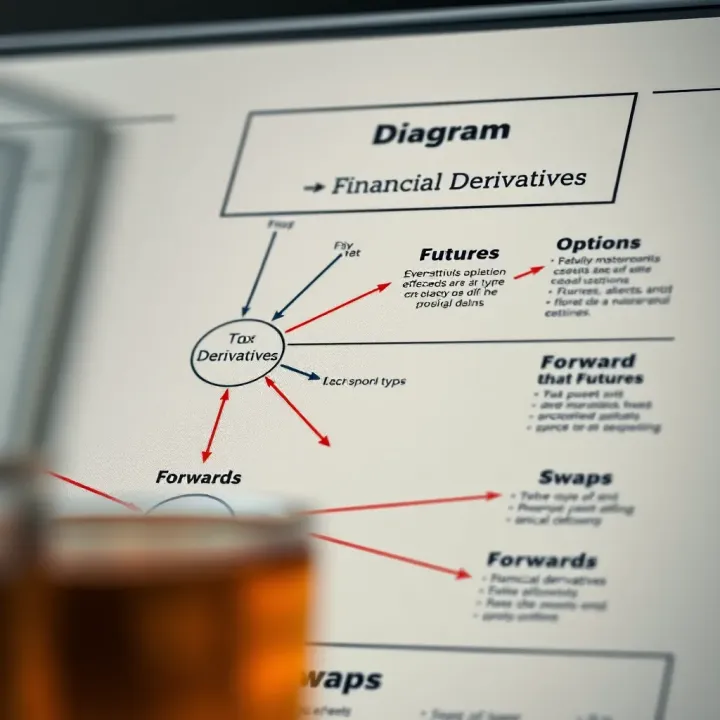
Understanding derivatives requires knowing their main types and how each functions:
Futures: Standardised contracts to buy or sell assets at a predetermined price and date. Widely used for hedging and speculation.
Options: Contracts granting the right, but not the obligation, to buy or sell at a set price before expiry. Indian investors often use options on stocks or indices to limit risk.
Swaps: Agreements to exchange cash flows or financial instruments, common in interest rate or currency management.
Forwards: Customized contracts similar to futures but traded over-the-counter, often used in currency or commodity dealing.
These instruments have become critical for Indian companies to manage costs and exposure, especially with increased market volatility and global economic uncertainties. They also provide opportunities for traders to profit by anticipating price shifts without locking in large capital upfront.
In India, the Securities and Exchange Board of India (SEBI) regulates derivatives trading, ensuring transparency, protecting investors, and maintaining market integrity.
Besides their benefits, derivatives come with risks like leverage amplification and counterparty defaults. Hence, a clear grasp of their mechanics, market conditions, and regulatory environment is vital before engaging in such trades.
This article will explain derivative concepts in depth, explore the popular types used in Indian markets, and discuss their practical applications and risks, helping professionals and investors navigate this complex but essential financial tool.
Derivatives are financial contracts whose value depends on the price of an underlying asset. These instruments play a key role in today's markets, helping investors and businesses manage risks or take advantage of price changes. Understanding derivatives means getting to grips with how they work, their structure, and what drives their pricing.
At its core, a derivative is a contract between two parties that derives its value from an asset like stocks, commodities, currencies, or indexes. For instance, a farmer can use a derivative to lock the selling price of wheat before harvest to protect against price drops. Similarly, an investor may use derivatives to speculate on a stock’s future price without owning the actual shares.
Derivatives serve two main purposes: hedging risks and speculating. Hedging involves reducing potential losses from price swings, while speculation aims to profit from those swings. Unlike buying or selling direct assets, derivatives allow control of larger positions with relatively small capital.
The underlying asset is what the derivative is linked to. This could be anything from shares of a company like Reliance Industries to the Nifty 50 index or even crude oil. The contract spells out the terms — such as quantity, delivery date, and price — agreed upon by the counterparties.
Take, for example, a futures contract on crude oil. It obligates the buyer to purchase a set quantity at a fixed price on a future date. Contracts can be standardised and traded on exchanges like NSE or customised in the over-the-counter (OTC) market. The structure ensures clarity on obligations and helps reduce disputes.
Derivative prices depend directly on movements in the underlying asset. For instance, if the Sensex rises, a futures contract linked to it will generally increase in value. Factors like time to expiry, volatility, interest rates, and expected dividends also influence pricing.
Settlement can be either physical or cash-based. In physical settlement, the actual asset changes hands, as seen in commodity futures. Cash settlement means the difference between contract price and market price gets paid, often used in index derivatives. Daily mark-to-market practices help manage risk by adjusting gains and losses daily, preventing large surprises at expiry.
Knowing how derivatives work and what drives their price is essential before trading. It helps you choose the right contracts and manage risks effectively.
In the Indian context, SEBI regulates these instruments to ensure fair trading and protect investors. Understanding the basics prepares you for how derivatives can fit into your trading or risk management strategy.
Derivatives play a vital role in India’s financial markets, offering traders and investors tools to manage risk and seek opportunities. Understanding the common types of derivatives helps professionals make informed decisions and use these instruments effectively. Key derivatives widely traded in India include futures contracts, options, swaps, and forwards, each serving specific purposes and offering unique features.
Futures contracts are agreements to buy or sell an asset at a predetermined price on a future date. In India, futures are commonly used on stock indices like the Nifty 50 and Sensex, as well as on individual stocks and commodities such as gold and crude oil. One key feature of futures is standardisation—contract sizes, expiry dates, and settlement procedures are fixed by exchanges like NSE and BSE.
Futures help investors hedge against price fluctuations or speculate on market movements. For example, an exporter expecting payment in dollars may use currency futures to lock in exchange rates and avoid losses if the rupee appreciates. Additionally, futures offer liquidity and transparency due to their presence on recognised exchanges.
Options give the buyer the right, but not obligation, to buy (call option) or sell (put option) an asset at a set price before or at expiry. In India, options are available on indices, individual stocks, and commodities. A call option benefits a trader expecting prices to rise, while a put option is useful if prices may fall.
Options bring flexibility. For instance, a farmer might use put options on agricultural commodities to guard against price drops during harvest, paying only a premium upfront. For traders, options strategies like spreads and straddles help manage risks or capitalise on volatility without full exposure like futures.
Swaps and forwards tend to be more customised, making them popular in over-the-counter (OTC) markets. Swaps involve exchanging cash flows, such as interest rate or currency swaps. Indian companies often use swaps to convert floating-rate loans into fixed-rate liabilities or hedge forex risks in cross-border deals.
Forwards are agreements to buy or sell assets at a future date, similar to futures but not standardised or traded on exchanges. They’re widely used in currency and commodity markets for tailored hedging. For example, an importer might enter a forward contract to buy dollars at a fixed rate in six months, securing costs despite currency swings.
In India, regulatory oversight ensures derivatives trading remains transparent and fair, but understanding each type’s features is key before engaging. Futures, options, swaps, and forwards each suit different needs—from standardised exchange trading to bespoke risk management.
This knowledge helps Indian traders, investors, and analysts employ derivatives smartly and with confidence, balancing opportunities with risks inherent to these financial tools.
Derivatives provide powerful tools for investors and businesses to manage risks and pursue profits. Their relevance lies in offering ways to hedge against price fluctuations or capitalise on market movements without owning the underlying assets. This section explains how derivatives fit into hedging, speculation, and price discovery.
Hedging means protecting against unwanted price swings. For example, a wheat farmer worried about a drop in prices may sell wheat futures contracts to lock in today's price for delivery later. Similarly, an Indian importer expecting to pay $1 million in three months can buy currency futures to fix the exchange rate, avoiding rupee volatility. Hedging reduces uncertainty and helps businesses plan costs and revenues with more confidence.
In the Indian stock market, institutional investors often use options and futures to hedge portfolios. For instance, a mutual fund holding IT stocks might buy put options on the Nifty IT index to secure downside protection during market downturns. This strategic use of derivatives limits losses while maintaining exposure to potential gains.
Speculation is betting on price changes to make profits. Traders speculating on Nifty futures may take a long position anticipating a rally or short-sell anticipating a correction. The high leverage offered by derivatives lets traders control large values with limited capital, but it comes with amplified risk.
Speculative activity adds liquidity and depth to markets, enabling smoother trading. However, for retail investors, speculative trading requires discipline and understanding to avoid heavy losses. Using stop-loss orders and position sizing are common risk controls in speculative strategies.
Derivatives markets play an essential role in revealing information about future price expectations. For example, the prices of crude oil futures traded on Indian exchanges reflect global supply-demand outlooks and geopolitical risks. Traders base their decisions on this forward-looking information.
This price discovery aids producers and consumers in planning. If the futures indicate rising commodity prices during the festival season, retailers may stock more inventory in advance. Conversely, falling interest-rate futures can signal easing monetary policy, helping borrowers time their loans better.
Proper use of derivatives promotes market efficiency by balancing risks and providing price signals that reflect broader economic realities.
In short, derivatives serve both as safety nets for risk avoidance and as opportunities for profit. Understanding their usage ensures better decision-making in India's dynamic financial landscape.
Understanding the regulatory and market framework is key to navigating derivatives trading confidently in India. The regulatory environment ensures market integrity, protects investors, and promotes fair trading practices. Meanwhile, the market environment set by exchanges like the National Stock Exchange (NSE) and Bombay Stock Exchange (BSE) provides the necessary infrastructure and liquidity for efficient derivatives trading.
SEBI plays a crucial role as the regulator of the Indian derivatives market. It formulates rules covering product listings, contract specifications, margin requirements, and disclosure norms. For instance, SEBI mandates margins for futures and options to limit excessive risk-taking. Its guidelines require brokers to maintain transparency about risks and costs involved, helping retail investors make informed decisions.
SEBI also monitors unusual trading patterns to curb market manipulation and insider trading. After the 2020 market volatility, SEBI tightened norms on position limits and set stricter reporting for large traders. These measures have reinforced confidence in the derivatives market and promote fair pricing.
Investor protection remains at the heart of SEBI’s regulations, making sure that the derivatives market operates within a strong legal and ethical framework.
Both NSE and BSE offer a wide range of derivative contracts on equities, indices, commodities, and currency pairs. NSE’s Nifty 50 futures and options are among the most heavily traded instruments, offering liquidity and tight spreads crucial for active traders and institutional investors.
Trading takes place on electronic platforms with real-time price feeds, making it accessible across India, including tier-2 and tier-3 cities. These exchanges also provide robust risk management tools like margin calculators and order types—stop-loss, limit orders—to help traders control their exposures.
Risk management in Indian derivatives markets rests on stringent margin systems and the clearinghouse mechanism. Exchanges require upfront margins which act as collateral against potential losses. This reduces the risk of default by any party involved.
Clearing corporations backed by NSE and BSE guarantee the settlement of trades, reducing counterparty risk. Additionally, investor protection funds are in place to compensate against broker defaults, offering an extra layer of security to retail investors.
Brokers must also conduct client risk profiling before allowing derivatives trading, ensuring only suited investors enter this high-risk market.
In summary, India’s regulatory and market framework for derivatives balances growth with caution. SEBI’s oversight, coupled with sound exchange practices, helps investors participate in derivatives with greater safety and confidence.
Trading derivatives is attractive for many due to the possibility of high returns and flexibility. However, this market comes with its own set of risks that investors and traders should understand well before stepping in. Recognising these pitfalls helps in managing them better and ensuring your strategies are sound.
Derivatives amplify market movements because they often involve leverage, meaning a trader can control a large position with a relatively small amount of capital. While this can boost profits, it also magnifies losses. For example, if an investor buys futures contracts on Indian equities during a volatile period, even a small adverse price change could wipe out their margin and then some. This is why margin calls are common—brokers demand additional funds to cover losses instantly.
Leverage works like a double-edged sword; without proper risk management, positions can go underwater fast. Retail traders in India sometimes dive into leveraged trading without fully grasping its implications, which leads to rapid losses. One must know their risk tolerance clearly and use stop-loss orders or hedging to limit downside.
Counterparty risk arises when the party on the other side of the contract defaults. This concern is particularly relevant in over-the-counter (OTC) derivatives where trades happen outside regulated exchanges. In India, though, most derivative trades occur on platforms like the National Stock Exchange (NSE) and Bombay Stock Exchange (BSE), which mitigate this risk by requiring margin and using clearing corporations to ensure settlement.
Liquidity risk happens when it becomes difficult to buy or sell a derivative contract without causing significant price changes or delays. Thinly traded contracts on less popular underlying assets can trap investors, forcing them to sell at unfavourable prices. For instance, certain currency or commodity derivatives might not have enough daily volume, making exit difficult during crises or sudden market shifts.
A widespread myth is that derivatives are only for speculators or professionals. While that’s partly true, derivatives can also be useful for ordinary investors—especially those running businesses—to hedge risks like currency fluctuations or commodity price changes.
Retail investors, however, should not enter derivative trading expecting easy profits. Many misunderstand the complexity and risks involved, especially with options where strategies can be quite elaborate. Additionally, some believe derivatives trading requires little capital upfront, ignoring that margin requirements and potential losses can be substantial.
Before trading derivatives, especially futures and options, it’s essential to educate yourself, use small positions at the start, and consider the advice of brokers or analysts. Recognising risks and managing them is what makes derivative trading sustainable, rather than guessing or chasing quick gains.
Understanding these risks sets traders on a better path, helping sustain their portfolios amid the ups and downs of financial markets.
Explore Qutex: its key features, technology insight, benefits, and diverse applications across industries 🚀💻 A clear guide for practical uses and user tips.
Explore Qutoex's features, real-world uses, and key security tips 🔐. Learn how to use Qutoex effectively while staying safe in today's digital world.
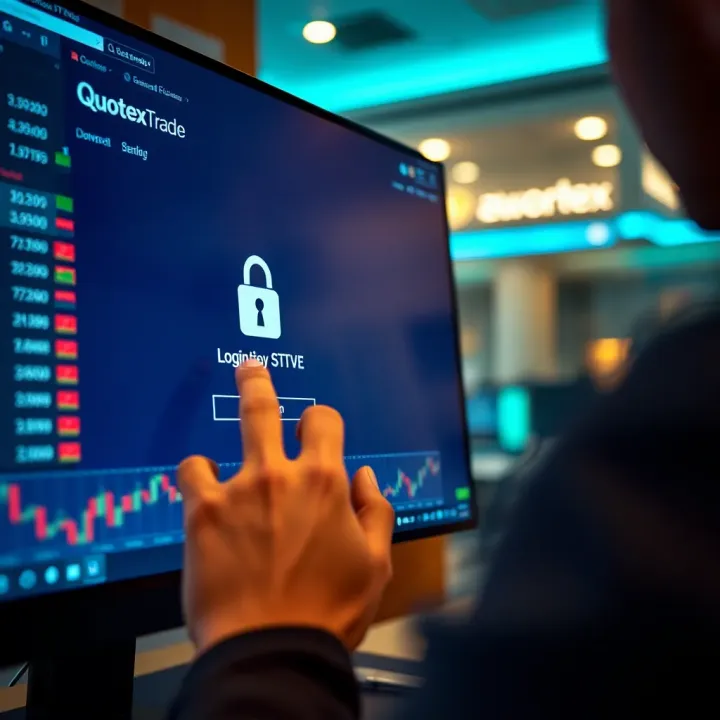
🔐 Learn how to easily log in to Quotex with step-by-step tips, secure account access, and quick fixes for common login problems to keep your trading smooth.
Explore Rifa FX in forex trading 💹: key concepts, tools, strategies, risk management, and challenges to help Indian traders make smarter decisions.
Based on 9 reviews