

Understanding Qutex: Features and Real-World Uses
Explore Qutex: its key features, technology insight, benefits, and diverse applications across industries 🚀💻 A clear guide for practical uses and user tips.
Edited By
Amelia Scott
The term dervi has recently attracted attention among finance professionals, traders, and analysts due to its emerging relevance in market discussions. At its core, 'dervi' refers to a specific concept combining derivative instruments with volatility indicators—a hybrid tool designed to measure and manage financial risk more precisely.
Understanding dervi is crucial for investors looking to optimise portfolios and for brokers advising clients amid fluctuating market conditions. Unlike traditional derivatives, which derive their value from underlying assets such as stocks, indices, or commodities, dervi factors in the volatility dimension directly, offering a dynamic measure of risk exposure.

Dervi is not just another buzzword; it provides a nuanced lens through which market swings and their impact on investment positions can be understood and managed effectively.
Historically, concepts blending derivatives and volatility have evolved in response to increasing market complexity post-global financial changes in the 2000s. Indian markets, especially through avenues like the National Stock Exchange (NSE) and Bombay Stock Exchange (BSE), have seen growing adaptation of such instruments, reflecting a shift towards more sophisticated risk controls.
Practically, traders use dervi-based strategies to hedge portfolios during volatile periods, identifying optimal entry and exit points with better precision. Investors may employ it to balance risk-return ratios, particularly in sectors sensitive to economic cycles like banking, real estate, or technology.
Key applications include:
Adjusting exposure in derivatives markets by quantifying volatility risk.
Designing option strategies that benefit from expected market swings.
Enhancing algorithmic trading models with volatility-sensitive inputs.
For analysts, grasping dervi dynamics helps in forecasting price movements and advising clients on timing and risk mitigation. Brokers relatedly find it useful in tailoring customised solutions that factor in both market trends and underlying asset volatility.
In summary, dervi represents a strategic advancement in financial tools, blending derivatives and volatility insights. Appreciating its nuances enables market participants in India and beyond to navigate uncertainty with informed confidence.
Understanding the origins of the term 'dervi' is essential for grasping its applications in trading, finance, and analysis. Knowing where it comes from clarifies its fundamental purpose and sets a foundation for more complex discussions. For professionals dealing with market data, accurate interpretation of such terms prevents misreading signals and supports stronger decision-making.
The word 'dervi' traces back to an old regional dialect, originally denoting a type of measurement or indicator. Over time, its meaning evolved, but its focus remained on representing a quantitative gauge often tied to volatility or momentum. In practical terms, traders might consider 'dervi' akin to an index value that helps identify shifts in market behaviour. For example, if a stock’s 'dervi' reading spikes unusually, it could signal upcoming price movement, prompting traders to adjust their positions.
Historically, 'dervi' found use in commodity markets where swift changes demanded quick readings to guide trading actions. Early brokers relied on it as a shorthand in trade reports, helping them react faster. With the rise of digital platforms, the term adapted to represent algorithmic indicators embedded in trading software. This evolution shows how 'dervi' shifted from manual calculations to automated tools, reflecting broader technological trends in financial markets.
Recognising the etymological and historical roots of 'dervi' allows investors and analysts to appreciate its reliability and contextual relevance in modern trading, rather than treating it as a vague or abstract concept.
The practical benefit lies in applying this understanding to current market conditions. By knowing how 'dervi' originated and evolved, professionals are better equipped to interpret its signals, integrate it into risk management strategies, and anticipate shifts more confidently. This clarity proves particularly useful for brokers advising clients or investors designing portfolios with dynamic market trends in mind.
Understanding the core characteristics of Dervi is essential for traders and investors looking to grasp its practical significance in various markets. These features help define Dervi's unique role and assist professionals in distinguishing it from related concepts or instruments. Grasping these attributes enhances decision-making and aids in better leveraging Dervi's potential.

Dervi is primarily identified by a set of consistent traits that enable market participants to recognise it accurately. One such attribute is its adaptability — Dervi tends to function effectively across different market conditions, presenting opportunities in both bullish and bearish phases. For instance, in commodities trading, Dervi-based strategies may adjust quickly to shifting supply-demand dynamics, allowing traders to capitalise on emerging trends.
Another key characteristic is its transparency. Market data related to Dervi often carry clear indicators, making analysis straightforward for analysts and brokers. This clarity reduces ambiguity in risk assessment and portfolio management, thereby streamlining investment decisions.
Moreover, Dervi exhibits a balance between volatility and stability. While it can generate significant returns due to market fluctuations, it also shows an inherent resilience that cushions extreme swings, which is particularly valuable in risk-sensitive investment strategies.
It’s common to confuse Dervi with other financial or market instruments that share some surface-level features. However, Dervi stands apart mainly due to its structural framework and application scope. Unlike derivatives, which primarily derive value from underlying assets, Dervi integrates both asset-backed and non-asset elements, providing a hybrid approach that better aligns with diverse investment needs.
Additionally, while some terms in finance reflect purely speculative tools, Dervi often combines speculative elements with concrete fundamentals, making it more than just a short-term gambit. For example, compared to futures contracts, Dervi involves longer-term strategic positioning, often incorporating socio-economic factors that influence asset values indirectly.
In summary, the core features of Dervi—adaptability, transparency, and balanced volatility—make it a distinct and valuable option for finance professionals. Its clear differences from similar instruments allow for tailored applications in trading and investment strategies, especially when nuanced market insight is necessary.
The practical applications of dervi extend across several domains, making it a versatile and valuable concept in both industry and daily life. Its relevance lies not only in theoretical understanding but in its tangible benefits that drive efficiency and innovation.
In the industrial sphere, dervi plays a significant role in optimising operational workflows and enhancing product quality. For example, in manufacturing, dervi-based algorithms help automate quality checks by identifying anomalies that the human eye might miss. This capability reduces defects and boosts output consistency. Similarly, in the field of information technology, dervi informs data structuring methods that improve database retrieval speeds, which is vital for large-scale enterprises managing vast amounts of data. Its use in predictive maintenance systems—tools that forecast machine failures before they happen—saves industries considerable downtime and repair costs.
Moreover, tech startups in Bengaluru have adopted dervi principles to design smarter AI-driven chatbots that understand customer needs more intuitively, improving user experience. These implementations show how dervi’s analytical approach directly benefits technological advancements.
Beyond technology, dervi influences social and cultural frameworks by aiding in community development and cultural preservation. In social work, dervi helps in mapping social networks which assists organisations in targeting resources more effectively during disaster relief or community health drives. This application has been especially useful during epidemic outbreaks like dengue or COVID-19, where understanding social interactions helps contain spread.
Culturally, dervi supports the digital archiving of folk traditions and languages at risk of disappearing. For instance, institutions in Kerala are using dervi-guided methods to catalogue oral histories and local songs, making them accessible to younger generations.
Harnessing dervi in such varied contexts highlights its adaptability and impact, providing tools that improve productivity, social well-being, and cultural heritage preservation.
In essence, dervi's practical applications have proven valuable for traders, investors, analysts, and professionals who look to integrate new methods that enhance data management, decision-making, and social initiatives. Understanding these facets deepens appreciation of dervi's role in contemporary life and industry.
Understanding the challenges and limitations of Dervi is vital for traders, investors, and analysts aiming to use this concept effectively. While Dervi offers considerable potential, recognising its pitfalls helps avoid costly mistakes and better leverages its applications.
One recurring criticism is that Dervi can sometimes oversimplify complex market scenarios. For instance, relying solely on Dervi indicators may neglect broader economic or geopolitical factors, leading to misjudged investment decisions. Traders who focus heavily on Dervi signals without considering macroeconomic news often find their forecasts less reliable.
Another issue is the inconsistent performance of Dervi-based models under volatile market conditions. During sudden market shocks—like unexpected monetary policy changes—the predictive strength of Dervi tends to weaken. This volatility sensitivity questions its use as a stand-alone tool and suggests that Dervi should form part of a diversified analytical approach.
From a regulatory standpoint, there are occasional concerns about transparency associated with complex Dervi algorithms. Since some proprietary Dervi models operate as black boxes, users struggle to validate or challenge their outputs, creating mistrust among investors and auditors.
A common misunderstanding is treating Dervi as a guaranteed profit mechanism rather than a decision-support tool. This leads some traders to overtrade or take excessive risks based on Dervi projections alone. For example, during the 2023 market rally, certain investors placed blind faith in Dervi signals and ignored warnings from fundamental analysis, resulting in significant losses when the market corrected.
Misuse also appears when Dervi data are interpreted without context. Using Dervi metrics out of sync with other financial indicators, like ignoring underlying cash flows or balance sheet health, can mislead investors about an asset's true value.
Successful utilisation of Dervi requires combining it with comprehensive market research, risk management practices, and prudent judgement.
Additionally, lack of training or proper understanding often leads to misapplication of Dervi in smaller firms or among freshers. They might misread patterns or neglect Dervi's assumptions, resulting in flawed analyses.
In summary, while Dervi presents useful insights, its limitations and common pitfalls highlight the need for balanced use. Incorporating multiple perspectives and continual learning helps professionals in finance avoid these traps and make better-informed decisions.
Examining the future prospects and trends related to Dervi is essential for traders, investors, and analysts. As markets evolve, understanding upcoming developments enables stakeholders to make informed decisions, reduce risks, and capitalise on opportunities. This section highlights the key advancements shaping Dervi's trajectory and its expected impact on various sectors.
Recent years have seen important innovations that broaden the scope of Dervi applications. For example, technology integration through data analytics and machine learning is enhancing Dervi's predictive capabilities in financial markets. These tools enable better detection of subtle patterns and anomalies, offering analysts a sharper edge when identifying market shifts.
Another promising development lies in the use of blockchain for Dervi-related transactions. By ensuring transparency and security, blockchain can address trust issues often encountered in complex Dervi operations. Startups in Bengaluru and Mumbai are already experimenting with these features to streamline workflows.
Furthermore, interactive platforms providing real-time Dervi metrics are gaining popularity. These systems allow brokers and investors to monitor trends live, facilitating timely reactions amid volatile markets. Such tools improve agility, especially for those relying on short-term strategies.
The evolving landscape of Dervi carries significant implications across the board. Investors can benefit from improved risk assessment models powered by recent innovations, allowing more precise portfolio adjustments. For traders, access to live Dervi analytics means quicker execution and reduced lag.
Analysts gain from enriched datasets and automation, freeing time to focus on deeper insights rather than routine calculations. However, they must also upskill continuously to handle these advanced tools effectively.
Regulators need to anticipate changes as well. With emerging technologies influencing Dervi-based operations, regulatory frameworks will require updates to continue safeguarding market integrity. Clear guidelines will help maintain balanced participation while encouraging innovation.
Staying updated on Dervi’s future trends is not optional but necessary. It equips each participant with the tools to navigate a competitive marketplace with confidence.
In summary, the future of Dervi involves steady technological progress alongside expanding applications. Stakeholders who engage with these trends early will likely gain a distinct advantage. Keeping an eye on practical innovations and their wider effects will support better strategic choices in the years ahead.
Explore Qutex: its key features, technology insight, benefits, and diverse applications across industries 🚀💻 A clear guide for practical uses and user tips.
Explore the core of ????? ????? 📚, understand its key principles, vital applications, and real-world impact, tailored for readers keen to grasp every aspect clearly.

🔐 Learn how to easily log in to Quotex with step-by-step tips, secure account access, and quick fixes for common login problems to keep your trading smooth.
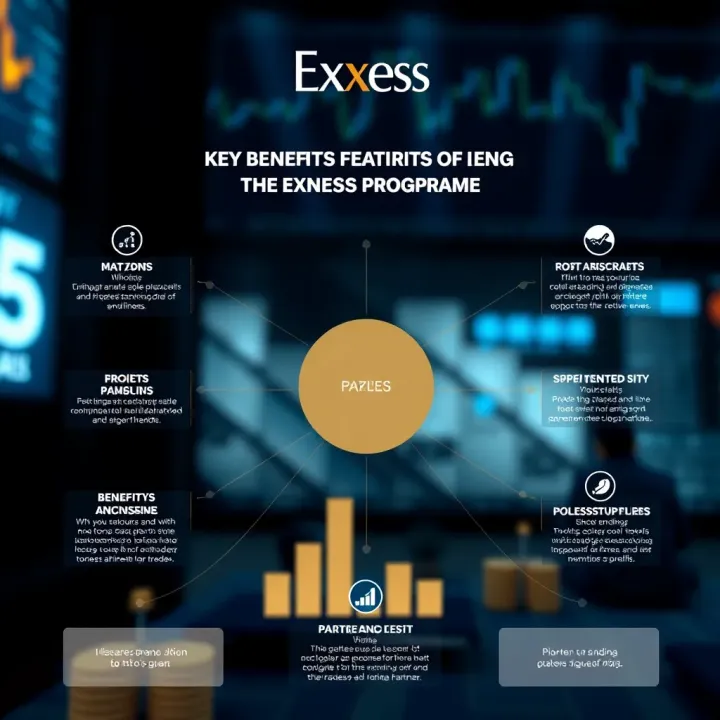
Explore how becoming an Exness partner helps traders and entrepreneurs earn through forex partnerships. Learn about registration, benefits, types, and promotion tips 💼💰
Based on 9 reviews