

Understanding ????? ?????: Essential Insights
Explore the core of ????? ????? 📚, understand its key principles, vital applications, and real-world impact, tailored for readers keen to grasp every aspect clearly.
Edited By
Daniel Hughes
Aqua funding refers to the financial support directed towards projects focused on water management, aquatic ecosystems, and sustainable usage of water resources. This type of funding plays a vital role in tackling challenges like water scarcity, pollution, and climate change impacts affecting water bodies. For traders, investors, and analysts, understanding aqua funded initiatives opens avenues to back projects aligned with environmental goals while securing long-term returns.
In India, where water demand often surpasses supply in many regions, aqua funding addresses crucial gaps in infrastructure and innovation. Investments channelled into advanced irrigation systems, water recycling technologies, and conservation efforts improve both agricultural productivity and ecosystem health. This sector captures interest from banks, government schemes, non-governmental organisations (NGOs), and private investors alike.
Sustainability Focus: Funding ensures projects are designed to preserve water quality and availability.
Economic Impact: Enhanced water management supports sectors such as agriculture, industry, and urban development.
Social Benefit: Access to clean water improves public health and livelihoods, especially in rural areas.
Government Grants and Subsidies: Central and state-level schemes offer financial assistance for water conservation technologies.
Private Equity and Venture Capital: Startups innovating in water purification and management attract investments.
International Agencies: Organisations such as the World Bank support large-scale water infrastructure projects.
Corporate Social Responsibility (CSR): Companies channel CSR funds into local water initiatives.
Aqua funded projects often drive sustainable development goals, making them attractive not just for their financial returns but their broad societal impact.
Understanding the streams and mechanisms of aqua funding equips finance professionals to evaluate project viability and risks effectively. This knowledge is particularly relevant as global climate concerns intensify, pushing water management higher on investment priorities.
In the sections ahead, we will explore key players, instruments, challenges, and emerging trends shaping aqua funded programmes both in India and internationally.
Grasping what 'Aqua Funded' means and its scope sets the foundation for understanding how aquatic projects get financed and managed. This clarity helps traders, investors, and analysts recognise funding patterns and opportunities in the water sector. Simply put, defining aqua funded outlines which types of projects attract financing and the boundaries of these investments.
Key terminology related to aqua funding centres on funds allocated explicitly for projects involving water resources. This includes investment in water conservation, irrigation channels, aquaculture, and pollution control in freshwater and marine environments. Terms like “aqua funding”, “water project financing”, and “aquatic sustainability grants” often occur in this context. For example, a company receiving aqua funding might be developing a technology to conserve groundwater in drought-prone areas.
The practical relevance lies in distinguishing these financial flows from general environmental funding which can be broader, covering air quality, forestry or biodiversity. Aqua funding narrows in on water-specific needs and solutions, critical in a country like India that faces water scarcity and pollution issues. Knowing this allows investors to focus on projects with tangible returns linked to water management.
Distinguishing aqua funding from other environmental funding is essential because the problems addressed and the stakeholders involved differ. While environmental funding may focus on forest conservation or renewable energy, aqua funding prioritises water resource management and aquatic ecosystems. For instance, a CSR initiative targeting river rejuvenation would fall under aqua funding but funding for solar energy projects would not.
This distinction matters practically; investors and policymakers tend to track water-related projects separately due to their unique challenges and funding cycles. It also guides compliance and eligibility for schemes offered by government ministries like Jal Shakti.
Water conservation and management forms the backbone of many aqua funded initiatives. It includes building check dams, rainwater harvesting systems, and modern irrigation techniques like drip or sprinkler systems. Such projects make a direct impact on managing the scarce water resources India faces in many regions.
For example, several rural districts in Maharashtra have benefited from government-funded water conservation schemes improving agricultural yields and livelihoods. Investing in these projects represents both social impact and growth potential.
Aquaculture and fisheries development covers funding to boost fish farming, sustainable harvesting, and infrastructure like hatcheries or cold storage. With demand for fish rising in India, this sector attracts funds aiming to increase production efficiently while maintaining ecological balance.
Projects promoting integrated fish farming or cage culture in reservoirs often receive aqua funding. They not only generate economic returns but help meet nutritional needs in many parts of the country.
Pollution control in water bodies addresses the serious challenge of water contamination by industrial effluents, sewage, and agricultural runoff. Funding goes towards setting up treatment plants, cleaning rivers, or developing bio-remediation techniques.
An example is the massive government-backed clean-up effort for the Ganges, where a chunk of the budget is dedicated to installing sewage treatment and preventing pollutants from entering water bodies. Such efforts require sustained investment and attract funding from multiple sources.
Aqua funding zeroes in on the vital elements of conserving, utilising, and protecting water resources—a sector crucial for India’s environmental and economic future.
By defining aqua funded and its scope, traders and investors gain insight into focused opportunities within the broader environmental finance space. This understanding also aids in evaluating risks and long-term benefits associated with water-centric projects.
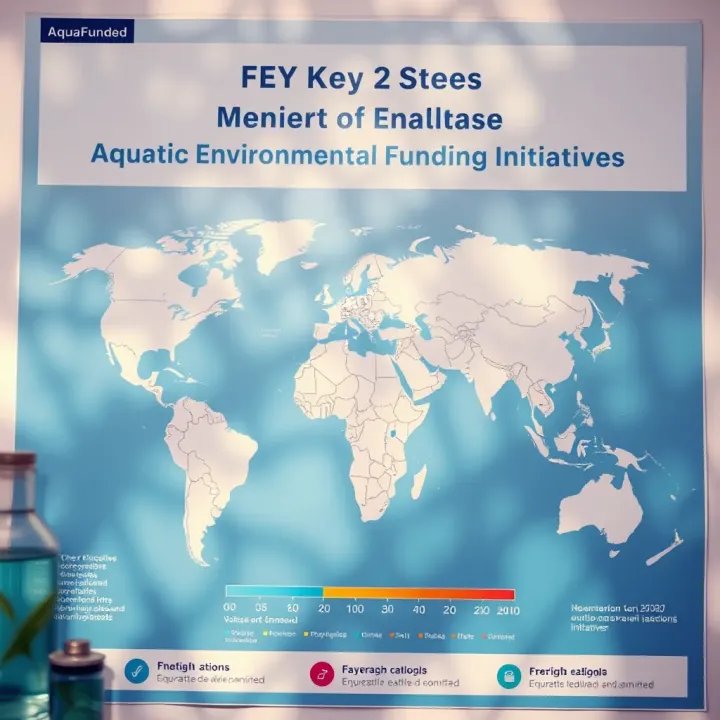
Understanding the various types of aqua funded initiatives offers a clearer picture of how water-related projects get financial backing and move forward. These initiatives range from government efforts to private sector and NGO activities, as well as international support. Each plays a distinct role in protecting and managing our water resources.
Central and state government programmes form the backbone of aqua funding in India. Schemes like the Jal Jeevan Mission aim to provide safe and adequate drinking water to households, especially in rural areas. States also launch their own water conservation projects, tailored to regional needs—Maharashtra's Jalyukt Shivar is a good example that focuses on drought-prone areas. Such schemes channel substantial funds directly into resource management, infrastructure development, and awareness campaigns.
The Ministry of Jal Shakti, along with environment departments, oversees these programmes. They set policy frameworks, approve budgets, and monitor progress. Their role goes beyond funding — they also coordinate between various agencies to ensure projects comply with environmental standards. For instance, the National Water Mission under the Jal Shakti ministry promotes integrated water resource management, combining funding with technology and regulation.
Corporate social responsibility (CSR) initiatives are pivotal for aqua funding, especially since the Companies Act 2013 made CSR spending mandatory for large firms. Many companies, like Tata Group and Infosys, run water sustainability projects that include rainwater harvesting and waste-water treatment plants. CSR-driven funding adds innovation and scale, supplementing government efforts.
NGOs specialised in water sustainability, such as WaterAid India and the Centre for Science and Environment, focus on grassroots implementation and community engagement. They mobilise local stakeholders, conduct impact assessments, and often act as intermediaries between governments and communities. Their expertise helps channel funds effectively while ensuring projects are socially inclusive and environmentally sound.
Bilateral and multilateral aid agencies like the World Bank, Asian Development Bank, and UNDP provide crucial financial support for large-scale water projects in India. These funds often come with a technical assistance package, helping to improve project design and execution. For example, ADB-funded projects in Maharashtra have aimed to improve irrigation efficiency and groundwater management.
Global funds dedicated to water and climate action, such as the Green Climate Fund and Global Environment Facility, also play a significant role. They prioritise projects that link water management with climate adaptation, offering grants to pilot innovative technologies or scale up successful models. These funds support India’s commitments under international environmental agreements, ensuring sustainability at the core of aqua funded initiatives.
In all, these diverse funding types contribute different strengths. While government schemes provide scale and policy leadership, private and NGO contributions offer agility and local reach. International funds bring in resources and technical expertise necessary for India’s water challenges.
Stakeholders are at the heart of any aqua funding initiative. Their roles shape how funds are allocated, projects are monitored, and results are achieved. Understanding who these players are—and what drives their involvement—is central for anyone aiming to grasp the funding ecosystem of water management and aquaculture projects.
Government agencies, such as the Ministry of Jal Shakti and state water departments, often serve as primary channels for releasing funds. These bodies assess proposals, allocate grants or subsidies, and monitor compliance with fund utilisation conditions. For example, the National Bank for Agriculture and Rural Development (NABARD) plays a key role in financing water conservation projects through loans or subsidies. Their decisions strongly influence which aqua projects get off the ground, particularly in rural and semi-urban areas.
Besides disbursing funds, government bodies formulate policies to ensure the sustainable use of water resources. Regulations govern water pollution control, aquaculture licensing, and environmental impact assessments, which set the framework within which projects operate. Oversight agencies then supervise adherence to these policies, helping prevent misallocation or misuse of funds. This layer ensures accountability and aims to improve the long-term sustainability of aqua-funded ventures.
Private sector players invest with an eye on returns that could range from financial profit to enhanced corporate social responsibility (CSR) credentials. Water treatment firms, fisheries businesses, or agri-tech startups might channel funds into aqua projects that promise steady revenue or brand value. For instance, companies like Tata Chemicals or ITC have contributed to water sustainability through CSR initiatives, expecting both social impact and goodwill among consumers.
Private investors also back innovation in water management technologies—like IoT-based monitoring sensors or biofloc fish farming systems. This infusion of capital speeds up technological adoption and scales projects faster than government initiatives alone. Startups pioneering such innovations benefit from venture funding that supports high-risk but potentially lucrative breakthroughs.
Local governance institutions, notably panchayats, act as grassroots anchors for aqua funding schemes. They identify community needs, facilitate project implementation, and often manage funds locally. Their involvement ensures that projects suit ground realities, such as water availability and local species for aquaculture. For example, in villages around Madhya Pradesh, panchayats have overseen rainwater harvesting projects funded under state schemes.
Communities themselves drive sustainable water management through groups focused on conservation or fisheries. When supported by appropriate funding and training, these groups maintain water bodies, regulate fishing activities, and promote awareness. Such bottom-up efforts tend to have better acceptance and longevity since locals take ownership. An example would be self-help groups in Kerala running community ponds for fish farming, which boost livelihoods and conserve water simultaneously.
In aqua funding, collaboration among government, private investors, and communities forms the backbone of project success. Each stakeholder brings unique strengths and responsibilities that together shape impactful water management solutions.
Securing and managing funds for aqua projects comes with its own set of challenges that can make or break their success. Identifying viable projects, navigating the maze of approvals, ensuring sustained operations, and linking funds to impact are some hurdles stakeholders regularly face. Understanding these obstacles helps investors, government agencies, and project managers strategise better and increase the chances of meaningful water resource improvements.
Assessing project viability and impact is critical for funders who want assurance that their money delivers tangible results. For instance, a water conservation initiative in Rajasthan’s arid zones must demonstrate measurable recharge of groundwater or improved irrigation efficiency to warrant investment. However, many projects struggle to provide robust evidence of potential or realised impact due to limited baseline data and ambiguous success indicators. This uncertainty makes funders cautious, often leading to fewer projects receiving support.
Data gaps in water resource management further complicate project evaluation. Reliable and updated data on water availability, usage patterns, and pollution levels is rare in many parts of India. For example, without precise information on river pollution in industrial areas near Bengaluru, it becomes difficult to gauge the effectiveness of cleanup projects seeking funding. Such gaps increase risks for investors and may delay funding decisions or reduce the scale of disbursed funds.
Approval processes for fund allocation involve multiple government departments and regulatory bodies. This tends to slow funding flow and discourage private and NGO participation. At times, projects that initially seem promising hit roadblocks due to unclear guidelines or shifting policy priorities by ministries like Jal Shakti or environment departments. For traders and investors, these hurdles translate to increased wait times and uncertain commitments.
Delays caused by administrative procedures are common, as paperwork, meetings, and compliance verification can drag on for months. For example, state-level water management schemes often face hold-ups when coordination between departments is weak or when approvals get stuck due to high caseloads. Such delays not only slow project rollouts but also inflate operational costs, thereby affecting overall returns.
Ensuring continued maintenance and operation post-installation is a recurring challenge. Many projects receive funding only for initial execution, leaving upkeep in the hands of local agencies or communities who may lack resources or technical know-how. In aquaculture ventures in Kerala, for instance, maintenance funding gaps have led to equipment failure and reduced productivity after initial grants ended.
Linking funding to performance metrics remains underdeveloped but is gaining traction. Investors and governments increasingly demand measurable outcomes like groundwater levels rising by X% or biodiversity indexes improving within Y months. This data-driven approach helps ensure accountability and promotes continued support. Yet, setting these metrics and collecting reliable data requires groundwork that is often absent in rural or underdeveloped regions.
Tackling these challenges head-on can improve fund allocation efficiency and the impact of aqua projects, making investments more secure and beneficial in the long run.
The future of aqua funded projects in India holds significant importance for managing the country's water resources effectively. With increasing water scarcity and pollution challenges, these projects aim to support sustainable usage, enhance freshwater availability, and improve aquatic ecosystem health. Understanding emerging trends, government policies, and private sector roles equips investors and analysts to identify growth opportunities and risks.
Technological advancements in water management are transforming how India addresses its aquatic challenges. For instance, drip irrigation systems now use precision sensors to optimise water use in agriculture, reducing wastage by up to 40%. Similarly, advanced wastewater treatment plants employing bio-reactors increase recycling efficiency, helping conserve freshwater. These innovations improve project viability and attract funding by promising measurable environmental benefits.
Data analytics and Internet of Things (IoT) applications are increasingly pivotal in monitoring aqua funded projects. Real-time sensors track water quality and usage, sending data through IoT networks to central dashboards. This allows stakeholders to detect contamination or leaks quickly and ensure proper maintenance. For example, smart meters installed in urban water supply systems help manage demand and prevent losses. Data-driven insights also assist regulators and funders in evaluating project performance effectively.
The Ministry of Jal Shakti has launched flagship initiatives such as the Jal Jeevan Mission, aiming to provide tap water to rural households by 2024. These programmes receive substantial budget allocations and technical support, making aqua funded projects more feasible at the grassroots level. Such policies encourage innovations in water supply and management, fostering a better environment for private investment.
At the state level, schemes like Maharashtra’s Jalyukt Shivar and Tamil Nadu’s Per Drop More Crop have been instrumental in piloting water conservation techniques tailored to local needs. States allocate special funds and provide incentives to support such projects, enhancing community participation and scaling up impact. Understanding these schemes helps investors pinpoint promising regional ventures.
Startups and social enterprises focusing on water tech solutions find growing opportunities in India's aqua funding ecosystem. Companies developing sensors for groundwater monitoring or affordable water purification devices can tap into government grants and CSR funds. These enterprises bring agility and innovation, complementing large-scale government efforts.
Public-private partnerships (PPP) serve as effective models for implementing aqua funded projects. Collaborations between municipal bodies and private firms, such as the Hyderabad Metropolitan Water Supply & Sewerage Board’s partnership with private operators for water distribution, demonstrate successful service delivery improvements. PPPs combine public oversight with private efficiency, offering investors a structured environment with reduced risks.
The blend of technological progress, supportive policies, and private involvement shapes India’s aqua funded projects’ future, presenting promising avenues for sustainable growth and investment.
Explore the core of ????? ????? 📚, understand its key principles, vital applications, and real-world impact, tailored for readers keen to grasp every aspect clearly.

🔐 Learn how to easily log in to Quotex with step-by-step tips, secure account access, and quick fixes for common login problems to keep your trading smooth.

Explore how becoming an Exness partner helps traders and entrepreneurs earn through forex partnerships. Learn about registration, benefits, types, and promotion tips 💼💰

💰 Explore money beyond currency — its history, psychological impact, social role, and practical value in daily life. Understand what money truly means for you and society.
Based on 5 reviews