

Ripple Coin Price Prediction and Market Insights
Get detailed Ripple (XRP) price prediction 📈 Explore historical trends, market sentiment, and expert views to understand XRP's future value clearly.
Edited By
Isabelle Bennett
Algorithmic (algo) price prediction has become a fundamental tool in financial markets for estimating future price movements of stocks, commodities, currencies, and other assets. Unlike traditional methods based on intuition or basic technical analysis, algo price prediction involves coding mathematical models that process historical and real-time data to generate forecasts.
At its core, the process relies on algorithms—these are sets of rules and computations programmed to detect patterns, trends, and correlations across vast datasets. Traders and financial firms leverage these algorithms to gain an edge by making data-driven decisions faster than manual analysis allows.
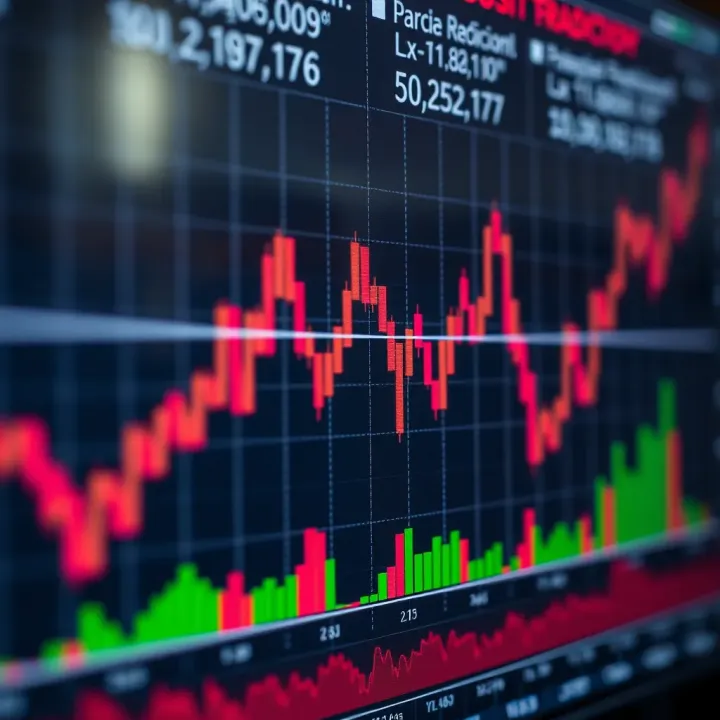
Common approaches include statistical models like moving averages, machine learning techniques such as support vector machines (SVM), and deep learning models like recurrent neural networks (RNN). For example, an SVM model might analyse past price changes and volume data to classify whether the price will rise or fall. Meanwhile, deep learning can capture complex time-dependent features that simpler models miss.
Remember, no model can guarantee perfect accuracy; markets are influenced by countless unpredictable factors like geopolitical events, policy changes, and investor sentiment.
Effective algo price prediction also requires quality data inputs including historical prices, macroeconomic indicators, and news sentiment. Access to reliable data ensures the algorithms train on realistic scenarios. India’s growing focus on digital exchanges and market data platforms supports this demand.
For traders and investors in India, understanding how these algorithms work can help them interpret signals, manage risks, and develop more robust trading strategies. Whether through direct algorithmic trading or by using tools powered by these models, the influence of algo price prediction on decision-making is only set to expand.
In the following sections, we’ll explore the specific methods employed, factors affecting their accuracy, challenges faced by algorithmic models, and the overall impact on financial markets.
Algorithmic price prediction uses computer programmes to forecast how asset prices will move based on historical and real-time data. This approach is now crucial for traders, investors, and analysts dealing with fast-evolving markets where quick decisions often determine success or losses. It helps in sifting through huge data volumes and identifying patterns that human analysis might miss.
At its core, algorithmic price prediction applies mathematical models and algorithms to estimate future price trends of stocks, commodities, or cryptocurrencies. The algorithms process inputs such as past price movements, volume, market news, and macroeconomic indicators to generate forecasts.
For example, a trader using algo prediction might program a system to scan the Nifty 50 stock index daily and estimate which stocks are likely to rise based on price momentum and sector trends.
This differs from traditional forecasting, which often relies on fundamental analysis, expert judgement, and slower manual calculations. Traditional methods typically examine company financials, industry outlook, and economic factors to form long-term views. Algo price prediction, in contrast, can adapt quickly to short-term signals and react to live market data almost instantly. This speed and scale are especially helpful in volatile markets where rapid price swings are common.
Algorithmic price prediction finds application across different markets such as stocks, commodities, and cryptocurrencies. On the Bombay Stock Exchange (BSE), traders use algorithms to identify arbitrage opportunities or predict market direction within minutes of trading hours. In commodities like crude oil and gold, algo models incorporate seasonal demand, geopolitical news, and inventory data to anticipate price changes.
The crypto market is particularly suited for algorithmic prediction given its 24/7 trading and high volatility. Algorithms track sentiment from social media, blockchain analytics, and technical indicators to forecast coins’ short-term price moves.
Fast decision-making is a major benefit of algo prediction. Algorithms can execute trades within milliseconds based on the predicted price trends, well before a human trader could react. This speed advantage enables high-frequency trading firms to profit from small price differences repeatedly during the day.
Equally, algo price prediction aids investors by providing data-backed signals that help in reducing emotional bias and improving the consistency of trading decisions. However, it requires continuous tuning and integration with fundamental insights to avoid pitfalls like overfitting or reacting to noise.
Algorithmic price prediction accelerates market analysis and execution, shaping modern trading strategies across asset classes and empowering faster, more informed decision-making.
Algorithmic price prediction relies on a variety of techniques that range from traditional statistical methods to sophisticated machine learning (ML) models. Each has its strengths and challenges, shaping their use in financial markets for forecasting price movements. Understanding these techniques helps traders and analysts apply the most suitable approach for their specific needs.
Time series analysis and regression models are foundational tools in price prediction. They analyse historical price data over time to identify trends and seasonal patterns. For instance, autoregressive integrated moving average (ARIMA) models can capture past behaviour to forecast near-future prices. Regression models relate asset prices to various explanatory variables, such as interest rates or economic indicators. This predictability makes them practical for markets with relatively stable trends, like government bonds or certain commodities.
Moving averages and indicators simplify price data to smooth out short-term fluctuations. Traders commonly use simple moving averages (SMA) or exponential moving averages (EMA) to spot trends and generate buy or sell signals. Indicators such as the Relative Strength Index (RSI) help identify overbought or oversold conditions. These tools are accessible and widely implemented in India’s stock markets by both retail and institutional investors. While they lack the complexity of AI models, their interpretability keeps them valuable.
Supervised learning algorithms use labelled historical data to train models on recognising patterns. Techniques like random forests and support vector machines help predict future prices by learning from past examples. These algorithms adjust their parameters as new data comes in, offering dynamic adaptability. For example, a supervised model might predict whether the Sensex will rise or fall based on data inputs like volume, volatility, and macroeconomic signals.
Neural networks and deep learning mimic human brain processes to handle complex, non-linear relationships in data. Deep learning models, including recurrent neural networks (RNNs) and long short-term memory (LSTM), are particularly suited for sequential data like price charts. They have been applied in cryptocurrency markets, where volatility and data complexity demand advanced modelling. Though powerful, these models require large datasets and significant computing power, often limiting their use to well-funded trading firms.

Combining statistical and AI approaches brings the strengths of both worlds. For example, a moving average filter might preprocess data to reduce noise before feeding it into an LSTM network. This integration improves model stability and prediction accuracy by handling both linear and non-linear trends. Such hybrids have found favour in Indian markets where data quality can vary.
Ensemble methods for better accuracy involve combining multiple models to reduce individual biases and errors. Techniques like bagging, boosting, and stacking create composite predictions. An ensemble might merge outcomes from ARIMA, random forests, and neural networks, resulting in a more reliable forecast. Indian traders using algorithmic strategies often rely on ensembles to navigate market uncertainties and improve confidence.
Utilising a mix of statistical methods and AI enhances prediction capabilities, especially in volatile or data-scarce markets. This multi-pronged approach helps traders balance accuracy with computational efficiency.
Algorithmic price prediction relies heavily on the accuracy of input data and the conditions of the market. Understanding what influences prediction accuracy helps traders and analysts judge the reliability of these models and avoid costly mistakes.
Historical data forms the backbone of any forecasting model. If this data is inaccurate or incomplete, predictions falter. For instance, a model trained on faulty stock prices or missing trade volumes will struggle to capture true market trends. In the Indian stock market, data discrepancies sometimes arise from delays in official reporting or inconsistencies in older records. Therefore, sourcing clean, verified data from exchanges like NSE and BSE improves reliability substantially.
In live trading, the market produces a constant stream of data, often with high noise—random price movements that don't reflect meaningful changes. Algo models must filter out this noise to avoid false signals. For example, in volatile sessions around budget announcements, real-time prices can swing erratically due to large orders or rumours. Continuous data updating helps models react quickly, but too much noise can cause erratic predictions. Balancing responsiveness and noise reduction is key.
Scheduled economic indicators like RBI policy decisions, inflation reports, or GDP numbers cause significant short-term price movements. Algos must factor in these events to avoid mispredictions. For example, a sudden interest rate cut by RBI can push banking stocks upward rapidly. Models built without incorporating event calendars or sentiment analysis might miss such turning points, leading to losses.
Unlike scheduled data releases, geopolitical shocks such as conflicts or diplomatic tensions come without warning and have immediate market impact. The Russian-Ukraine conflict affected global commodity prices, including crude oil. In India, such events can alter currency and equity markets overnight. Algorithms struggle to adapt since these incidents defy historical patterns, making predictions less dependable during crises.
A common pitfall is overfitting—when a model captures noise or anomalies unique to past data instead of general trends. Such a model may perform perfectly on training data but fail in real market conditions. For example, a model that perfectly predicts 2019 Sensex movements might falter in 2024 due to changing dynamics. Avoiding overfitting requires techniques like cross-validation and regularisation.
Markets shift through different phases: bullish runs, bear phases, or sideways trends. Models trained on one regime often struggle when conditions change. For instance, a trading algo optimised during low-volatility periods may behave poorly during sudden crashes or booms. Regular recalibration and adaptive algorithms help, but sudden structural shifts, such as new regulations by SEBI or technological disruptions, pose challenges difficult to predict or model precisely.
Accurate algo price prediction depends on fine-tuning data quality, understanding market events, and recognising model limits. Traders must combine algorithmic insights with market awareness to make well-informed decisions.
With these factors in mind, users of algorithmic models can better evaluate where predictions hold and where caution is necessary for effective investment strategies.
Algorithmic price prediction offers valuable tools for traders and investors, changing how decisions are made on markets like stock exchanges, commodity platforms, and crypto networks. Understanding its implications helps market participants use predictions smartly while being aware of the pitfalls. This section highlights the benefits, risks, and practical advice on integrating these models into trading strategies.
Algorithms can analyse price movements and execute trades in milliseconds, which human traders can rarely match. This speed lets investors seize fleeting opportunities, such as arbitrage in volatile markets like cryptocurrency. For instance, during sudden price swings in Bitcoin, algo-driven trades can capture profits before manual action is possible. It improves efficiency by automating routine checks, freeing traders to focus on strategy rather than constant monitoring.
Unlike manual traders, algorithms digest massive datasets, including historical prices, volumes, news feeds, and social media sentiment. For example, an algo may process millions of data points across NSE stocks and macroeconomic indicators to forecast price trends. This capability uncovers patterns invisible to human analysis alone, especially useful for institutional investors handling large portfolios or multi-market investments.
Placing too much trust in algorithmic forecasts can backfire. Markets often behave unpredictably when affected by sudden policy changes or black swan events. For example, during the COVID-19 onset in 2020, many models failed as markets reacted to unprecedented conditions. Traders relying solely on algos without a human check risk significant losses.
Algorithms typically learn from historical data, so they might misjudge price movements in conditions unlike the past. Flash crashes or sudden liquidity drops can confuse models, leading to wrong buy or sell signals. Such mispricing can result in unexpected portfolio losses for investors if they do not spot these anomalies early enough.
Merging algo outputs with traditional fundamental analysis keeps decision-making balanced. While an algorithm might flag a stock as undervalued based on price trends, cross-checking company financials or sector health can confirm this insight. For example, if an algo suggests buying a banking stock, verifying RBI policy shifts or asset quality reports adds a vital layer of understanding.
Markets evolve, so periodic model reviews are essential. Regularly updating inputs, revalidating assumptions, and testing against recent market data help avoid decay in prediction accuracy. Active traders might backtest algo predictions monthly or quarterly, ensuring models perform well amidst changing trends and events. This steady upkeep safeguards against overfitting and maintains reliability.
Algorithmic price prediction is a powerful but not infallible tool. By recognising both its strengths and limits, traders and investors can use it to complement their market approach effectively.
Algorithmic price prediction continues to evolve rapidly, driven by innovations in technology and shifts in regulatory frameworks. Staying ahead in this field means adapting to new data sources and ensuring algorithms remain transparent and fair. For traders and investors, understanding future trends is not just about gaining an edge but also managing risks tied to automation and market fairness.
While traditional models rely mainly on historical price and volume data, newer algorithms increasingly tap into alternative data sources to enhance prediction accuracy. These include social media sentiment, news feeds, satellite images, and even weather patterns. For example, monitoring tweets about a company or tracking crop health via satellite images can help predict commodity prices more precisely. This broadens the scope of market signals and helps algorithms respond better to real-world events that traditional data might miss.
Alternative data comes with practical challenges, such as ensuring data quality and filtering noise. However, its ability to offer fresh insights, especially during volatile or unprecedented market conditions, is growing indispensable. Financial firms in India and globally are investing in technologies that can process such diverse data streams in real time, reflecting a shift towards more dynamic and context-aware price prediction models.
AI models, particularly deep learning, often behave like "black boxes," making it hard to understand how they arrive at specific predictions. Advances in AI explainability aim to open up this black box, allowing traders and regulators to see the underlying reasoning. Methods like SHAP (Shapley Additive Explanations) and LIME (Local Interpretable Model-agnostic Explanations) help identify which features influence predictions most.
Explainability is crucial for building trust and aiding decision-making, especially in regulated markets like India’s. It allows investors to check if an algorithm’s forecast aligns with fundamental factors or if anomalies suggest caution. Brokers and analysts can use these insights to improve model design and spot potential biases before they impact trades.
The Securities and Exchange Board of India (SEBI) has set clear norms around algorithmic trading to ensure market integrity. These guidelines cover registration requirements, risk controls, testing protocols, and monitoring mechanisms. SEBI mandates that algorithmic trading systems must not create unfair advantages or disrupt market operations.
For market participants, adhering to SEBI’s rules means regular model audits and transparency about algorithms used. This safeguards against risks like flash crashes and market manipulation, promoting a safer trading environment for all. Understanding these guidelines helps traders design compliant strategies that minimise regulatory issues.
Transparency in how algorithmic predictions and trades are executed boosts market fairness. When all participants have equal access to information and algorithms operate without hidden biases, the market operates more efficiently. Unfair advantages or opaque systems can lead to mispricing and distrust among investors.
Practically, this translates to firms adopting robust governance around data sourcing, model validation, and audit trails. Exchanges and regulators worldwide, including in India, push for increased disclosure and controls to detect and prevent discriminatory or manipulative algorithmic practices. For traders, embracing transparency means enhanced credibility and reduced chances of legal or reputational damage.
Greater openness about algorithms and responsible use of data are shaping the future of price prediction — not just in technology but in trust and market stability.
Looking ahead, the blend of smarter technologies and tighter regulations will shape how algorithmic price prediction reshapes trading strategies in India and beyond.
Get detailed Ripple (XRP) price prediction 📈 Explore historical trends, market sentiment, and expert views to understand XRP's future value clearly.

🔐 Learn how to easily log in to Quotex with step-by-step tips, secure account access, and quick fixes for common login problems to keep your trading smooth.
Explore Rifa FX in forex trading 💹: key concepts, tools, strategies, risk management, and challenges to help Indian traders make smarter decisions.
📊 Master range markets in India with this guide! Learn to spot patterns, use technical tools, manage risks, and trade smartly within stable price bands.
Based on 11 reviews