
Understanding Quotex: A Clear Guide
Discover how Quotex works, its key features, trading options, and registration process in India. Get a clear view of benefits and risks 📈💡
Edited By
Benjamin Clarke
Al Brooks is a respected name among technical analysts, especially for those who focus on price action trading. Unlike many who rely heavily on indicators, Brooks studies market behaviour primarily through price movement on charts. His approach is detailed and requires careful observation of candlestick patterns, price bars, and the overall market context.
Brooks’ trading philosophy centres on the idea that markets reflect collective human psychology, which reveals itself clearly in price action. He emphasises the patience needed to wait for high-probability setups rather than chasing every move. For instance, his method often involves analysing trend lines, support and resistance levels, and specific bar patterns such as pin bars and inside bars to make trading decisions.
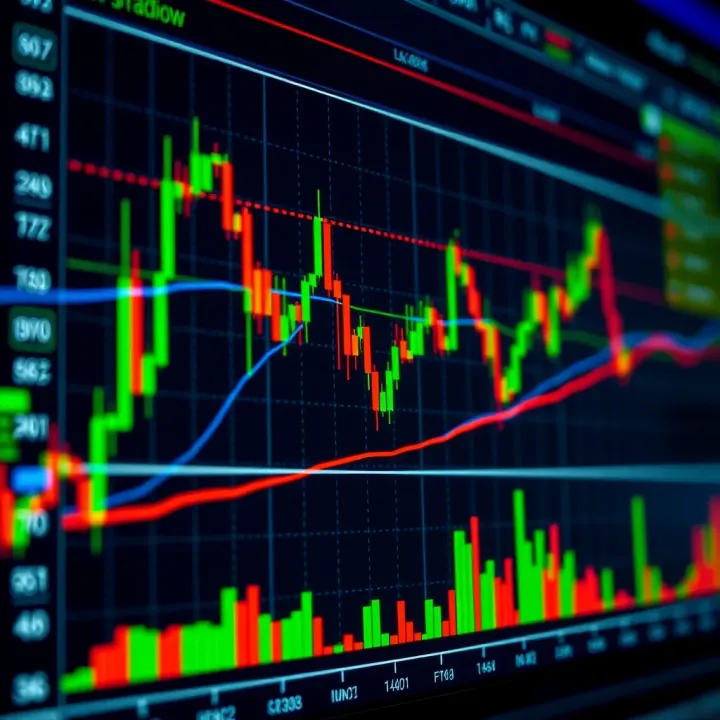
A key concept in Brooks' system is the categorisation of price movements into trends, trading ranges, and breakouts. Understanding these market phases helps traders decide when to enter or exit trades. His work breaks down complex price structures into manageable parts, which allows traders to anticipate potential reversals or continuations more effectively.
Active traders find Brooks' method particularly useful thanks to its focus on smaller time frames and detailed bar-by-bar analysis. This differs from traditional technical analysis that may look at daily or weekly charts without delving into the nuances within each bar.
"Price action itself tells the story; understanding that story is the crux of effective trading," he often reiterates.
Brooks also offers practical tips on risk management and trade entries, stressing the importance of context. For example, a pin bar appearing at a strong support zone during an uptrend might signal a good buying opportunity, but the same pattern in a choppy market needs more caution.
In India, where retail trading is growing rapidly, Brooks’ teachings have found a dedicated following. His books and courses are available locally, and traders integrate his approach alongside platforms like Zerodha and Upstox. Beginners often start with his simpler concepts before moving on to advanced price action strategies.
To sum up, Al Brooks’ approach demands discipline and in-depth study but offers a clear framework for interpreting price and making informed trading decisions. It remains relevant not only globally but also for the Indian trading community aiming to refine their technical analysis skills.
Al Brooks stands out as a significant figure in the field of technical analysis, especially for traders interested in price action strategies. His approach focuses on interpreting market movements directly from price charts without relying on traditional indicators. This method appeals to many traders who seek clarity in markets often clouded by conflicting signals.
Early career and financial market experience
Al Brooks began his professional journey as an ophthalmologist before gradually shifting his focus to financial markets. This unique background adds to his analytical eye, allowing him to observe minute details in price movement much like inspecting fine details in eye examinations. He started trading futures in the late 1990s and developed an interest in purely reading price action rather than depending on complex tools.
Transition to technical analysis and price action focus
Over time, Brooks moved away from conventional methods, dedicating himself to studying candlestick bars, price trends, and patterns. His work centres on understanding supply and demand forces by analysing how price bars develop in real-time. For instance, instead of waiting for moving averages or oscillators to signal, Brooks teaches traders to read bar patterns that indicate potential price direction shifts.
Notable publications and teachings
Brooks is best known for his comprehensive book series titled Reading Price Charts Bar by Bar. These volumes break down his method into detailed segments, explaining how to interpret every price bar and market condition step by step. He also conducts webinars and coaching sessions globally, helping serious traders adopt his techniques. These resources provide practical frameworks, enabling traders to time entries and exits based on observed price changes.
Reception of his work among traders and analysts
Within the trading community, Brooks’ work has earned respect for its depth and precision, though some beginners find it challenging. Many professional traders appreciate his dismissal of indicator clutter, focusing instead on price itself. His ideas have influenced a wave of price action-focused traders worldwide who aim for higher accuracy and better trade timing.
Brooks' method requires discipline but often results in clearer signals for trade decisions compared to typical indicator-based systems.
Comparison with other technical trading approaches
Unlike common approaches that rely heavily on moving averages, Relative Strength Index (RSI), or MACD, Brooks emphasises pure price movement reading. This simplicity cuts out lag that indicators usually introduce. While others may use indicators to confirm trades, Brooks encourages understanding market psychology reflected in price bars. This approach aligns closely with concepts like tape reading but is adapted for modern electronic charts.
For example, a moving average crossover might signal an entry after a delay, but Brooks’ method would identify a breakout bar or a reversal bar in real time, allowing earlier reaction.
In summary, knowing who Al Brooks is and why he matters helps traders appreciate an alternative way of viewing markets — one grounded in the immediate action of price itself without distraction from supplementary tools.
Al Brooks’ price action trading concentrates on reading the market directly from price movements, without relying on technical indicators. His approach emphasises understanding the actual behaviour of buyers and sellers through the patterns candlestick charts form. By focusing solely on price bars, traders can simplify decision-making and increase responsiveness to changing market conditions.
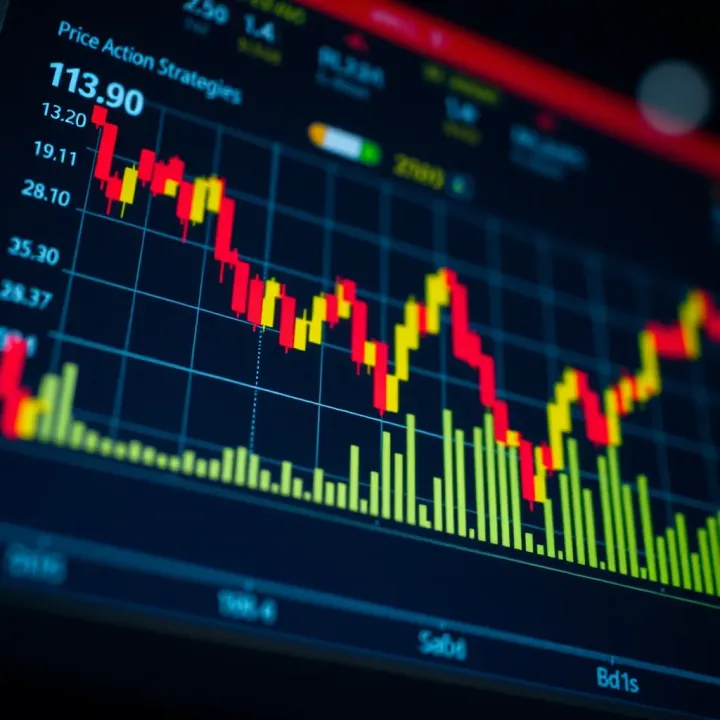
Price action, at its core, examines how price moves within each bar or candlestick. Brooks insists that candlestick patterns—whether it's a pin bar showing rejection of a price level or an engulfing bar signalling strong buying or selling pressure—offer powerful clues about future price direction. Take, for example, a long lower shadow bar in a downtrend; this hints that buyers stepped in to push prices back up, possibly signalling a reversal or pause.
Instead of depending on moving averages or oscillators, Brooks places importance on recognising significant candlestick formations as they unfold. This hands-on reading helps Indian traders, who often deal with volatile markets like NSE or BSE, adjust their trades quickly without lag from indicators.
Supply and demand at specific price levels underpin this concept. Price tends to bounce or pause around areas where many traders either want to buy or sell. For instance, if a stock frequently reverses near ₹1,500, that price acts as a demand zone if buyers come in consistently. Brooks encourages traders to identify these levels by noting repeated price behaviour and volume spikes around them, as these indicate real market interest rather than random fluctuations.
Understanding these zones can improve entry and exit points. Spotting supply at a resistance level, for example, can help you avoid entering a long trade too early. Similarly, recognising demand in a support area signals good places to place stop-loss orders or add to positions.
Price bars represent the interaction between buyers and sellers for a specific time frame. Brooks teaches traders to look beyond single bars and examine patterns of bars to gauge market sentiment. A narrow range bar after a strong move often points to indecision, which might precede a reversal or a breakout. Traders paying attention to such subtle shifts can catch high-probability trades.
Trading ranges—periods when price bounces between defined highs and lows—are key features in Brooks’ method. Rather than dismissing ranges as just sideways movement, he analyses them for clues about potential breakouts or trapping of traders. Identifying whether the market is in a range or trending helps plan trades better; for example, in a range-bound scenario, buying near support and selling near resistance works well, while in a trending market, following pullbacks in the trend direction might yield better results.
Recognising the context—whether the market is in a range or a trend—is essential to applying Brooks’ price action techniques effectively.
By mastering price bar analysis and understanding trading ranges, traders can align their strategies with evolving market dynamics rather than relying on fixed indicators or rigid rules. This fits well with India's fast-changing markets, where reaction speed and awareness often decide profit or loss.
This section highlights Brooks’ shift from technical indicators to pure price study, illustrating how Indian traders can benefit from focusing on price bars and market psychology. His emphasis on price action without indicators, supply and demand zones, and the art of reading trading ranges forms the backbone of a practical, adaptive trading style.
Al Brooks’ approach to market entry and exit is about timing trades precisely and managing risk effectively using price action signals. This method helps traders avoid reliance on lagging indicators and instead focus on real-time bar and pattern analysis. Such an approach is especially useful in volatile Indian markets like the NSE and BSE, where quick decisions often spell the difference between profit and loss.
Trade setups following breakouts and pullbacks play a key role in Brooks’ strategy. Breakouts occur when price moves decisively beyond a support or resistance level, signalling potential momentum. The critical idea here is not to jump in immediately but watch the first few bars after the breakout. For example, on a Nifty 50 chart, a breakout above a consolidation zone may be confirmed if subsequent bars avoid closing back inside the range. Pullbacks, or retracements after breakouts, offer a safer entry point by testing the breakout level. Entering after a successful pullback reduces the risk of false breakouts common in Indian markets.
Recognising high-probability bar formations allows traders to identify moments when the market is more likely to move in their favour. Brooks emphasises certain bars like the "wide-ranging bar" or "key reversal bar" that show strong buying or selling pressure. For instance, a wide-ranging bullish bar following a pullback on the BSE Sensex could signal a good entry with momentum behind the move. Detecting such bars demands constant attention to bar size, close position, and volume context, providing traders with signals that have historically worked well.
Determining stop-loss levels with price bars is fundamental to Brooks’ risk management. Instead of setting arbitrary stops, he suggests placing them just beyond recent swing highs or lows indicated by specific price bars. On an intraday chart of an NSE stock, this might mean holding a buy position until price closes below the low of a strong bullish bar. This method keeps stops tight and logical, adapting to actual price action rather than fixed percentages.
Adjusting position size according to market behaviour ensures that traders don’t risk too much during choppy or uncertain phases. When price action shows clear trends and strong bar patterns, traders might increase position size slightly. Conversely, in sideways or low volume markets, smaller positions reduce exposure. This dynamic sizing helps conserve capital in tricky conditions typical of emerging markets like India and maximises gains during clearer trends.
Mastering Al Brooks’ entry and exit techniques means seeing the market’s story unfold one bar at a time, and using that story to make smarter, timely decisions that protect your capital and enhance profits.
Al Brooks' price action trading method has gained recognition for its depth and detail, yet the system is not without its challenges. Understanding these critiques can help traders realistically assess whether Brooks’ approach fits their style and market conditions. The method demands not only technical skill but also a significant time investment, and its performance can differ depending on the market environment.
Mastering Brooks’ detailed price bar reading poses a steep challenge for many. Unlike simpler indicator-based strategies, his approach requires close attention to subtle nuances in candlestick formations and bar sequences. For instance, spotting a high-probability reversal bar often depends on interpreting small variations in bar size and position relative to previous bars. This intricacy can overwhelm traders new to price action, making consistent application difficult without diligent practice.
Besides the technical detail, the time commitment to study and practise Brooks’ methods effectively cannot be overlooked. Traders often need months, sometimes years, to internalise the rules and patterns. Practice involves analysing countless charts to recognise setups and non-setups accurately. For example, a trader working through the day might find it hard to dedicate daily hours needed for such study alongside their main job. This limits how quickly they can become proficient enough to trade confidently.
Brooks' price action approach performs distinctly in volatile compared to trending markets. It shines in ranging or sideways environments where price bars form identifiable trading ranges, enabling precise entries and exits. However, in strong trending markets — such as during sustained moves seen in the Nifty 50 or Sensex — the numerous pullbacks and breakouts can generate false signals. Traders must adjust accordingly, being patient and waiting for more reliable setups, or risk frequent stop-outs.
Additionally, the method faces limitations in low liquidity markets. Thin trading volume often leads to erratic price bars, which can mislead the trader’s reading of supply and demand. For example, stocks traded less frequently on regional exchanges or during off-hours may generate misleading price bar patterns that don’t reflect true market sentiment. As a result, traders using Brooks’ system should be cautious when applying it to less liquid instruments or extended trading sessions.
Brokers and retail traders especially benefit from understanding these challenges, so they can tailor their approach, manage expectations, and integrate Brooks’ techniques where they best fit their trading context.
Al Brooks’ approach to price action trading is gaining traction among Indian traders, especially retail participants who seek a method beyond traditional indicator-based strategies. The detailed study of price bars and candlestick patterns offers them a way to interpret market behaviour directly from price movement, which resonates well with the practical, hands-on style preferred in India’s active trading community.
In recent years, interest in price action trading has grown steadily in India due to wider access to real-time market data and the increasing awareness of Brooks’ work through online platforms. Retail traders—particularly those trading on NSE (National Stock Exchange) and BSE (Bombay Stock Exchange)—find Brooks’ focus on raw price data helpful for predicting short-term moves without relying on complex technical indicators, which often lag. This approach suits India’s vibrant intraday and swing trading culture, where decisions need to be swift and based on visible patterns rather than lagging signals.
Moreover, the emphasis on understanding price behaviour rather than relying solely on automated tools appeals to traders seeking to build an intuitive grasp of the markets. This is especially practical during volatile sessions around announcements such as RBI policy decisions or quarterly results, where quick reading of price action can be crucial.
Brooks’ price action concepts fit well with the peculiarities of Indian equity markets, where liquidity and volatility can vary significantly across instruments. Traders use his methods to read price bar setups on popular large-cap stocks like Reliance Industries and HDFC Bank, or even across Nifty 50 derivatives. These markets often exhibit clear trends and trading ranges, making Brooks’ detailed bar-by-bar analysis a useful tool for timing entries and exits.
Indian traders also face unique trading hours, pre-opening sessions, and restrictions that make reactive price analysis essential. For example, interpreting price action around the market open (9:15 am IST) or during the last 30 minutes of trading can give them an edge in managing positions effectively.
Several Indian traders and educators have translated or adapted Al Brooks’ concepts into region-specific learning materials. You will find both printed books and digital courses that unpack his dense writings into more accessible lessons suited for the Indian context. Webinars often focus on trading setups relevant to NSE and BSE equities or futures, helping learners apply Brooks’ techniques to instruments they regularly trade.
These resources often include live demonstrations during volatile sessions and explain risk management in terms familiar to Indian retail traders, such as fixed rupee-based stop losses rather than percentage terms.
Price action trading enthusiasts in India also benefit from active mentor groups and community forums, where experienced traders share insights and real-time price analyses based on Brooks’ methods. Platforms like Telegram and WhatsApp host groups discussing setups on Indian indices and stocks, while mentorship programmes offer personalised feedback on trading journal entries and bar-by-bar reading.
This peer interaction bridges the gap between theory and practice, helping newer traders grasp the nuances of Brooks’ price action methods faster than solitary study would allow. These communities often organise live market sessions, which are invaluable for Indian traders trying to internalise bar-reading skills amid the unique rhythms of Indian markets.
For Indian traders, integrating Al Brooks’ price action techniques with local market knowledge helps turn complex concepts into practical strategies that work in fast-paced, diverse trading environments like NSE and BSE.
Discover how Quotex works, its key features, trading options, and registration process in India. Get a clear view of benefits and risks 📈💡

Explore RBI's detailed rules on forex trading in India 🇮🇳. Understand authorized dealers, permissible transactions, and compliance essentials for traders and businesses.

🔐 Learn how to easily log in to Quotex with step-by-step tips, secure account access, and quick fixes for common login problems to keep your trading smooth.

Explore QX Affiliate 👥 for top affiliate marketing ways 📈. Learn how it works, benefits & tips to earn 💰 by growing your online presence 🌐.
Based on 5 reviews