
Dogecoin Price Prediction Today: Trends and Outlook
📈 Explore Dogecoin's price trends today plus expert forecasts and technical insights to guide investors on shifting market factors and near-term prospects.
Edited By
Oliver Hastings
The crude oil market is currently under sharp scrutiny as traders and analysts watch signals closely to anticipate price movements. Prices today are shaped by a blend of supply-demand factors, geopolitical tensions, and broader economic indicators, each altering market sentiment within hours or days.
Globally, supply constraints arise from production cuts led by OPEC+ nations combined with unrest in key exporting regions. For instance, recent disruptions in Libya and Venezuela have tightened supply chains, causing prices to edge upwards. On the demand side, the pace of economic recovery from the pandemic varies regionally, influencing crude consumption patterns. China’s industrial activity remains a critical driver, given its status as the world’s largest crude importer.

India’s role in this market is particularly relevant. The country’s growing energy needs, driven by industrial expansion and increasing transport demands, have tightened import requirements. Import reliance means Indian refiners are sensitive to price swings, which affect domestic fuel pricing and inflation.
Economic indicators such as the US dollar index, interest rates, and inventory reports from the Energy Information Administration (EIA) frequently nudge prices. A weaker dollar usually makes oil cheaper in other currencies, pushing demand, whereas higher interest rates may slow down economic activity and lower demand.
For investors and brokers, understanding these short-term drivers is essential to position portfolios that can adapt swiftly when geopolitical flashpoints or economic data surprise the market.
OPEC+ production decisions: Any tweaks to output quotas immediately shift market balance.
Global economic growth: Indicators from major economies signal future crude demand.
Geopolitical tensions: Conflicts impacting key oil-producing regions heighten price volatility.
US crude inventory levels: Weekly data releases guide trader expectations on supply surplus or shortage.
India’s import forecasts: Government policies and refinery runs affect demand projections in Asia’s third-largest economy.
Tracking these elements helps finance professionals gauge near-term price trends effectively. Staying ahead requires close attention to real-time news and reports along with technical market analysis tools.
This overview sets the stage for a deeper look at demand-supply dynamics, geopolitical factors, and economic signals shaping crude oil’s immediate future.
Understanding the current situation of the crude oil market is essential for traders, investors, and analysts to make informed decisions. The crude oil price today reacts to a complex mix of supply-demand dynamics, geopolitical events, and economic indicators. Tracking how these factors play out helps stakeholders anticipate market shifts and adjust their portfolios wisely.
Crude oil prices have shown varied movements over the past few weeks, influenced by factors like OPEC+ production changes and global economic cues. For instance, a surprise cut in output by Saudi Arabia and Russia recently pushed prices up by around 5% in a single trading day. Meanwhile, concerns over slower economic growth in China, a major oil consumer, have weighed on prices, causing intermittent dips.
Market reactions often reflect such news quickly; Indian traders noted increased volatility, especially during announcements from the Organisation of the Petroleum Exporting Countries (OPEC) or when U.S. inventory data signals a drawdown. These price swings offer both risks and opportunities for short-term traders and long-term investors.
Sharp shifts in crude prices often act as a barometer for wider economic sentiments, signalling changes in inflows and consumer demand.
On the demand side, global oil consumption has steadily risen as countries recover from pandemic-related restrictions. The International Energy Agency (IEA) has reported growing demand particularly in Asia, with India and China driving much of this increase due to expanding industrial activities and transport needs.
Conversely, supply patterns remain influenced by geopolitical tensions and production decisions from key countries like Saudi Arabia, Russia, and the United States. The U.S. shale oil sector is notable for its flexibility, quickly ramping production up or down in response to price changes, thereby adding unpredictability to global supply.
Additionally, renewable energy adoption and changing policies in Europe and North America cause shifts in long-term demand outlooks. For example, increased electric vehicle sales in Norway and policy pushes for greener energy in the European Union are slowly chipping away at oil's dominance.
Indian investors and analysts benefit from closely watching these global demand-supply trends since they directly impact crude import prices, currency stability, and inflationary pressures domestically. Recent supply constraints combined with strong demand growth have kept crude oil prices elevated, impacting petrol and diesel prices in India as well.
In summarising, staying updated on the current crude oil market situation is critical. It helps in assessing immediate price moves and planning for trends likely to influence the sector in coming months.
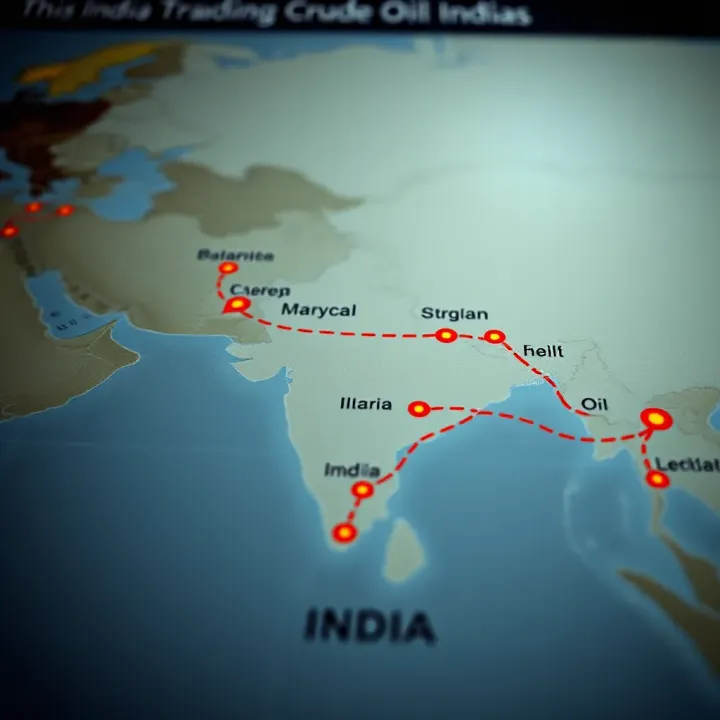
Understanding what drives crude oil prices is essential for traders, investors, and analysts who watch this volatile market closely. The price of crude oil today doesn't just reflect supply and demand but is also shaped by geopolitical tensions, production choices by key players, and broader economic trends along with energy policies worldwide.
Geopolitical instability has always played a big role in crude oil pricing. When conflicts erupt in oil-rich regions like the Middle East, prices often spike because supply routes become uncertain. For example, tensions between Iran and Saudi Arabia or disruptions in the Strait of Hormuz have historically caused immediate fluctuations. Even smaller-scale conflicts or sanctions—such as those imposed on Venezuela or Russia—affect global oil flows and raise concerns among investors. These events add risk premium to prices, making markets jittery and volatile.
Decisions by Organisation of the Petroleum Exporting Countries (OPEC) and allied producers like Russia impact crude oil prices directly. When these producers collectively cut output, as seen in various OPEC+ meetings in recent years, the reduced supply pushes prices up. Conversely, if production ramps up unexpectedly, prices tend to soften. India’s increasing crude imports mean that any reshuffling by Saudi Arabia, Iraq, or Russia affects local fuel price dynamics. Additionally, shale oil production in the US has intensified competition and influenced global supply, forcing major producers to adjust their strategies.
Economic growth rates in major consuming countries like the US, China, and the EU serve as key demand signals. For instance, a slowdown in China's manufacturing or US Federal Reserve interest rate hikes can reduce oil demand expectations, softening prices. Inflation data, currency strength (notably the US dollar), and shipping costs also weigh in on price movements. On top of this, energy policies aimed at reducing carbon emissions, such as India’s increased push for renewable energy under its National Solar Mission, gradually influence long-term oil demand forecasts. Subsidy reforms affecting fuel prices also play a role here.
Crude oil price movements today are a complex interplay of geopolitical risks, production strategies by powerful exporters, and wider economic cues. Keeping an eye on these aspects helps professionals anticipate market shifts more accurately.
In summary, for those involved in crude oil markets, tracking geopolitical developments, OPEC+ production decisions, and global economic trends isn’t optional but necessary for sound decision-making and risk management.
Understanding short-term crude oil price movements helps traders, investors, and analysts make informed decisions in a volatile market. Predicting prices nearby is not just about guessing but analysing patterns, economic signals, and geopolitical shifts that directly affect supply and demand. This insight is especially valuable for managing risks and planning trading strategies, which require agility given how quickly prices can fluctuate.
Technical analysis remains a popular tool among market participants for short-term forecasting. It involves studying price charts, volume data, and key indicators like Moving Averages, Relative Strength Index (RSI), and Bollinger Bands to detect trends and potential reversals. For instance, if the 50-day moving average crosses below the 200-day moving average—a ‘death cross’—it often signals a bearish phase.
Fundamental analysis also plays its part, examining inventory levels reported by agencies like the US Energy Information Administration (EIA), OPEC's production outputs, and seasonal demand changes. For example, a sudden drop in crude inventories during winter might hint at tightening supply, pushing prices upwards.
More advanced methods include the use of machine learning models and sentiment analysis, which process large data sets such as news feeds, social media mentions, and market reports to forecast price movements. Indian traders leveraging platforms offering such tools can gain an edge by reacting faster to emerging trends.
Market predictions from experts and institutions serve as key reference points in price forecasting. Organisations like the International Energy Agency (IEA) and OPEC regularly publish outlook reports based on their extensive data and modelling, indicating expected supply-demand balances and price ranges.
For example, the IEA's recent report suggested a moderation in oil demand growth due to economic slowdowns in key regions, influencing near-term price estimates. Indian market participants benefit from tracking these predictions alongside local factors like monsoon impacts on fuel consumption.
Financial institutions and major banks also release periodic assessments reflecting geopolitical tensions or policy changes. For instance, if a Gulf country hints at cutting production, price projections quickly adjust to reflect potential supply crunch. Keeping an eye on such expert opinions helps traders and investors anticipate possible price jumps or dips.
Forecasting crude oil prices in the near term involves a blend of technical charting, fundamental data, and expert analysis—each offering valuable clues. Combining these approaches allows market players in India and beyond to navigate the unpredictable oil landscape more confidently.
Predictive accuracy does vary with unforeseeable events like sudden geopolitical conflicts or natural disasters, but staying informed through diverse methods and credible sources optimises decision-making in this fast-moving market.
Crude oil prices directly affect India's economy, given the country's heavy dependence on imports. Fluctuations in global oil markets translate into immediate changes in domestic fuel costs, inflation, trade balance, and fiscal planning. Understanding these links helps traders, investors, and analysts evaluate market risks and opportunities specific to India.
India imports nearly 80% of its crude oil needs, making petrol and diesel prices highly sensitive to global supply disruptions and crude price changes. For example, a $5 rise in Brent crude per barrel typically raises retail fuel prices by ₹1.75 to ₹2 per litre, depending on taxation and state levies. Petrol and diesel prices influence a wide array of sectors, from transportation to agriculture, directly affecting consumer spending and logistic costs.
The recent surge in crude prices caused a double-digit hike in fuel prices, impacting daily commuters and logistics providers. Since fuel prices vary across states due to differing VAT (value-added tax) rates, regional disparities add another layer to price sensitivity.
Crude oil price increases tend to stoke inflation in India by raising costs of transport, manufacturing, and essential goods. Inflation in fuel-related sectors often spills over into food inflation, a major concern for policymakers. For instance, rising diesel costs make cold storage and rural transportation pricier, affecting food supply chains.
Besides inflation, higher crude prices widen India’s trade deficit, since more foreign exchange flows out to pay for oil imports. India’s trade gap, which already hovers around $15-20 billion monthly, tends to worsen when oil stays above $80 per barrel. This affects the rupee's stability and limits fiscal space, pressing the Reserve Bank of India (RBI) and government to manage monetary and fiscal policies carefully.
To cushion the economy from volatile crude prices, the Indian government deploys various strategies. Subsidy adjustments on LPG and kerosene aim to protect lower-income segments without straining the fiscal balance. The use of buffer stocks and strategic petroleum reserves helps moderate supply shocks.
On a longer horizon, India is expanding renewable energy capacity and boosting biofuels to reduce oil import dependence. Initiatives like the National Electric Mobility Mission and enhanced focus on solar power are steps to decouple growth from fossil fuel price swings.
For traders and analysts, India's shift towards diverse energy sources signals changing demand patterns, which could moderate crude oil's impact on the economy in coming years.
In sum, oil market trends have immediate and ripple effects on India's economy. Fuel price changes influence inflation and trade deficits, while government policies attempt to mitigate risks and promote energy security. Keeping an eye on these linkages is vital for accurate market forecasting and investment decision-making.
Understanding how global shifts influence crude oil prices is vital for traders, investors, and analysts aiming to navigate the volatile energy markets. Changes in energy consumption patterns, technology, and geopolitical alliances alter supply-demand dynamics and price stability. Recognising these trends helps anticipate market turns and manage risks effectively.
The move towards renewable energy sources like solar, wind, and green hydrogen is gradually reshaping global energy demand. Countries such as Germany and China have ramped up investments in renewables, which reduces dependence on fossil fuels. In India, schemes promoting solar rooftops and electric vehicles are beginning to affect oil consumption patterns. Though crude oil will remain important in coming years, demand growth may slow, exerting downward pressure on prices over the medium term.
This shift presents a dual effect: less direct demand for oil but also uncertainties for producers involving long-term investment decisions. For example, an Indian refinery considering capacity expansion must now assess the risk of future demand erosion due to renewables. Additionally, fluctuating renewable output still necessitates stable fossil fuel supplies for grid balancing, keeping crude relevant but less dominant.
Technological progress in exploration, drilling, and refining improves supply efficiency and cost-effectiveness. Innovations such as digital oilfield technologies, advanced seismic imaging, and automation optimise production, reducing break-even prices for oil wells. This evolution allows producers to maintain output even when prices dip.
In India, state-owned firms like ONGC (Oil and Natural Gas Corporation) are adopting enhanced recovery techniques, increasing domestic crude yield. Cleaner refining technologies also respond to stricter environmental regulations, affecting product mix and market dynamics. Such advancements can stabilize supply and support moderate price levels despite global uncertainties.
Shifts in geopolitical alliances and conflicts influence crude oil markets through supply disruptions or policy changes. The recent realignment in Middle Eastern diplomacy, including renewed dialogues between Saudi Arabia and Iran, may ease regional tensions, potentially stabilising oil export flows.
On the flip side, sanctions on countries like Russia or Venezuela restrict supplies, pushing prices up. In the Indian context, dependence on Gulf countries for crude imports means any diplomatic issues can directly affect fuel costs. Monitoring geopolitical developments and understanding their implications is essential for market participants to gauge price volatility.
Stable crude oil markets depend not only on immediate supply-demand but also on longer-term global shifts in energy sources, technology, and diplomacy. Keeping a pulse on these areas equips traders and investors to anticipate price trends more accurately.
In summary, the transition to renewables softens future demand growth, technology enhances production stability, and geopolitical realignments continue to drive price swings. These three factors together will shape crude oil prices going forward and are critical for informed decision making in today's complex oil landscape.
📈 Explore Dogecoin's price trends today plus expert forecasts and technical insights to guide investors on shifting market factors and near-term prospects.
Explore Ethereum's price outlook 📈 covering market trends, regulation impact, blockchain advances, and expert views for savvy investors in India and beyond.

Explore Ethereum price trends, factors like tech advances, market demand & regulations influencing its future. Get expert insights for short and long-term outlooks 📈🔍
📈Explore Bitcoin price trends and expert insights shaping this week's market moves. Understand risks and factors influencing ₹crore-level fluctuations for smarter investing.
Based on 15 reviews