

EUR/USD Prediction Today: Analysis and Key Factors
Get today’s detailed EUR/USD prediction with analysis of key market factors, expert views, and real-time trends to help Indian traders make smarter forex decisions 📊💹.
Edited By
Emma Clarke
The AUD/USD currency pair remains a focal point for traders and investors monitoring the interplay between the Australian and US economies. Today’s forecast hinges on a blend of recent economic data releases, central bank actions, and geopolitical developments shaping market sentiment.
Australia’s economic indicators like employment numbers, commodity price trends, and retail sales significantly impact the Australian Dollar (AUD). For instance, a stronger-than-expected jobs report or a rise in iron ore prices can support the AUD against the US Dollar (USD). Conversely, slower growth or softer commodity demand weighs on the currency.
On the US side, inflation data, Federal Reserve (Fed) policy decisions, and labour market strength remain critical. Higher inflation often prompts the Fed to hike interest rates, which generally boosts the USD and pressures AUD/USD lower. Traders closely watch the Fed’s tone on monetary policy and any hints about tapering asset purchases or rate movements.
Market participants must consider both countries’ central bank policies as well as broader global risk sentiment which drives demand for safe-havens like the USD.
The Reserve Bank of Australia’s (RBA) recent policy meetings also influence the pair. Markets react not just to rate changes but to forward guidance on economic recovery and inflation outlook.
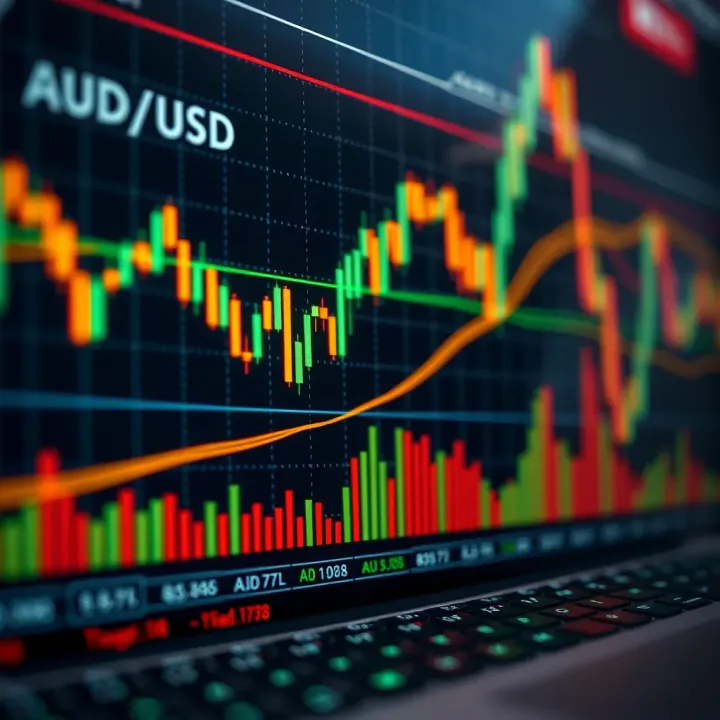
Technical chart patterns provide additional insights for short-term trading. Support and resistance levels around 0.67 and 0.70 respectively have traditionally defined the pair’s range-bound trading, though breakouts can signal new trends. Volume spikes and momentum indicators like the Relative Strength Index (RSI) help confirm potential reversals or continuation patterns.
Summarising the key drivers today:
Australian employment data and commodity prices
US inflation figures and Federal Reserve statements
Reserve Bank of Australia policy signals
Technical chart levels and momentum indicators
For traders, combining fundamental insights with chart analysis improves decision-making. Staying updated on daily releases and global news remains essential to spot opportunities or risks in the AUD/USD market.
This article will unpack these elements to provide a clear snapshot of where AUD/USD could head next and practical strategies to consider for trading this popular currency pair.
Understanding the current AUD/USD exchange rate is essential for traders, investors, and analysts tracking the pair's day-to-day fluctuations. This rate reflects how many US dollars one Australian dollar can buy and, being one of the most traded currency pairs, it provides clear signals on economic health, market sentiment, and policy impacts from both nations.
Recent movements in the AUD/USD rate have shown increased volatility tied closely to shifting global risk appetite and economic releases. For example, during April 2024, AUD/USD saw swings of nearly 1% in a single session following US inflation data and Reserve Bank of Australia (RBA) commentary. Such fluctuations impact traders looking for short-term gains or hedging strategies. Volatility also means wider spreads, which traders must factor into their risk management.
Traders should watch daily price action alongside economic calendar events for signals on potential breakout or pullback zones. For instance, stronger-than-expected Australian employment numbers can quickly boost AUD demand, pushing rates higher on intraday charts. Conversely, US Federal Reserve hawkishness often fuels USD strength, pulling the pair down.
Comparing today’s AUD/USD level with historical rates aids in identifying long-term trends and potential reversal points. Currently, the pair hovers near 0.66–0.68, which is below the post-pandemic peak around 0.80 seen in early 2022. This reflects the combined effect of US interest rate hikes and subdued Australian growth.
Back in 2018, the AUD/USD frequently traded above 0.75 before slipping due to trade tensions and commodity price drops, particularly in iron ore, a key Australian export. Recognising these levels helps investors determine if the currency is undervalued or overextended in today’s context.
For traders and investors, monitoring how current rates stack against past benchmarks provides clarity on entry or exit points and frames expectations for medium-term moves.
In summary, the current exchange rate overview not only captures immediate market conditions but also anchors trading decisions with historical perspective and present-day economic realities.
Understanding the major factors that drive the AUD/USD exchange rate is essential for traders and investors. These elements shape market sentiment, affect currency valuation, and guide short-term movements. Today, the interplay between Australian and US economic data, central bank actions, and global market conditions are the primary forces influencing this currency pair.
Employment data and unemployment rate play a significant role in gauging the health of Australia's economy. A lower unemployment rate typically signals strong economic activity, which tends to support the Australian dollar. For example, recent job gains in sectors like mining and services have bolstered confidence in the AUD, causing it to strengthen against the USD. Conversely, a rise in unemployment can prompt concerns about economic slowdown, putting downward pressure on the currency.
Inflation and Consumer Price Index (CPI) figures provide insights into price stability and purchasing power in Australia. Higher inflation pressures the Reserve Bank of Australia (RBA) to consider tightening monetary policy, often leading to interest rate hikes that attract foreign investment and lift the AUD. For instance, if the CPI unexpectedly rises above the RBA's target range, traders may anticipate faster rate increases, spurring AUD demand. On the other hand, subdued inflation might signal a more cautious approach, weakening the currency.
Gross Domestic Product (GDP) growth reflects the overall economic output and momentum in Australia. Strong GDP growth, driven by sectors like exports or infrastructure spending, signals a robust economy and tends to boost the AUD. For example, a surprise uptick in quarterly GDP could trigger positive sentiment among currency traders. However, if GDP growth slows or contracts, it tends to dampen AUD strength as investors reassess growth prospects.
The Federal Reserve’s interest rate policy significantly influences the USD’s value. When the Fed signals or implements rate hikes, it often attracts capital flows towards the US, strengthening the dollar versus currencies like the AUD. For instance, recent Fed hikes aimed at curbing inflation have increased USD demand. Conversely, any hint of a pause or rate cut may reduce USD’s appeal, offering relief to the AUD.

Non-farm payrolls and unemployment reports give a snapshot of US labour market health. Strong job creation and low unemployment typically support the USD by implying economic resilience and supporting Fed tightening. For example, a robust non-farm payroll figure can lead to immediate USD gains. Weak or disappointing labour data might trigger USD weakness, providing opportunities for AUD appreciation.
Inflation figures and consumer spending in the US affect Federal Reserve policy outlook and currency flows. Rising inflation combined with resilient consumer spending signals stronger economic activity, possibly leading to faster Fed tightening and a stronger USD. On the flip side, if inflation cools and consumer demand falters, markets may expect a softer Fed stance, easing pressure on the AUD/USD pair.
Australia’s heavy reliance on commodities means prices of iron ore and gold directly impact the AUD. For instance, a rise in iron ore prices due to increased demand from China usually boosts the Australian dollar, reflecting improved export earnings. Gold prices can also sway AUD, especially during times of global uncertainty when precious metals act as safe havens.
Risk appetite and safe-haven flows shift investor behaviour between higher-yielding currencies like the AUD and safe-haven assets such as the USD or Japanese yen. When global markets show appetite for risk, investors tend to buy the AUD, which offers higher returns. In contrast, during times of turmoil—say geopolitical tensions or economic shocks—capital often moves towards the USD, weakening the AUD/USD rate.
Traders should closely watch these factors daily as their combination shapes immediate and medium-term exchange rate movements. Being aware of these drivers helps in making informed decisions rather than relying on guesswork.
Key points to remember:
Strong Aussie employment and GDP boost the AUD
US Fed policy and jobs data heavily influence USD strength
Commodity prices track closely with the AUD
Market risk sentiment can quickly shift demand between AUD and USD
These factors together explain the day-to-day fluctuations in AUD/USD and provide a framework for anticipating possible trends ahead.
Central bank policies heavily influence forex markets, especially the AUD/USD pair. The Reserve Bank of Australia (RBA) and the US Federal Reserve (Fed) shape market sentiment by adapting monetary stances that affect interest rates, liquidity, and currency valuations. Traders keep a sharp eye on their announcements and decisions since these directly impact AUD/USD movements and trading strategies.
The RBA's monetary policy stance delivered through its official statements gives hints about Australia's economic health and its inflation trajectory. Recently, the RBA has maintained a cautious but flexible approach amid mixed inflation signals and global uncertainties. Its communications have emphasised steady growth and the need to balance inflation control without curbing employment gains.
This careful stance helps traders gauge whether the AUD is likely to strengthen or weaken. For example, clear signals about tightening monetary policy often encourage buy positions on AUD, anticipating higher yields. Conversely, dovish tones tend to trigger sell-offs or caution.
Regarding the interest rate outlook, the RBA has kept the cash rate unchanged for several months, reflecting concerns about slowing inflation and global economic headwinds. However, market participants watch for any hints of future rate hikes, which could boost the AUD.
If the RBA signals a possible rate increase due to rising inflation or a stronger economy, the AUD usually gains against the USD. On the other hand, any inclination to pause or cut rates amid uncertainty can weigh on the currency. For instance, the RBA’s previous rate cuts during the pandemic supported economic recovery but led to AUD depreciation.
The US Federal Reserve’s recent moves play a key role in shaping the USD side of the pairing. In recent months, the Fed has taken a somewhat aggressive approach by raising interest rates multiple times to tackle persistently high inflation.
For traders, these rate hikes mean higher yields on USD-denominated assets, which often strengthens the USD against the AUD. However, continuous rate increases can also raise concerns about slowing US economic growth, which might cap USD gains.
Forward guidance from the Fed signals the central bank’s likely intentions about future rate paths and economic outlook. The Fed’s communication on upcoming decisions influences market expectations and risk sentiment.
When the Fed offers clear forward guidance indicating sustained rate hikes, traders tend to favour the USD, expecting higher returns. Conversely, a cautious or data-dependent stance may weaken USD momentum. This subtle nuance is critical for traders adapting their AUD/USD positions to changing Fed policy cues.
Both the RBA and Fed policies set the tone for AUD/USD moves. Their policy shifts, statements, and forecasts provide essential clues for traders aiming to anticipate exchange rate trends effectively.
Technical analysis plays a central role for traders and analysts tracking AUD/USD movements. It helps interpret price actions through charts and indicators instead of relying solely on economic data. This approach identifies potential trading opportunities by signalling entry or exit points based on historical price behaviour. For instance, recognising key support or resistance levels can prevent costly mistakes or confirm trend reversals, making the technical read vital alongside fundamental factors.
Support and resistance levels act as price floors and ceilings, respectively, where the AUD/USD pair tends to pause or reverse its direction. Traders pay close attention to these levels because they signal areas with high buying or selling interest. For example, if AUD/USD is approaching a historical support level near 0.6600, many traders expect the pair to bounce back up from there. Conversely, resistance near 0.6750 might cause hesitation or a pullback if sellers overpower buyers. Monitoring these levels daily helps in placing stop-loss orders prudently and setting realistic profit targets.
Moving averages smooth out price fluctuations to reveal the underlying trend. The commonly used 50-day and 200-day moving averages offer insights into medium and long-term directions for AUD/USD. When the 50-day moving average crosses above the 200-day, it forms a 'golden cross,' often signalling bullish momentum. Conversely, a 'death cross' indicates bearish tendencies. Trend lines connect significant highs or lows, helping traders visualise the strength and slope of price movements. For example, if AUD/USD consistently respects an upward trend line, it suggests ongoing buying pressure.
Both moving averages and trend lines provide concrete reference points for traders to anticipate potential reversals or breakouts. They allow for dynamic adjustment of strategies as new price information emerges.
The Relative Strength Index (RSI) measures the speed and change of price movements on a scale of 0 to 100. Typically, an RSI above 70 indicates the pair is overbought and may correct soon, while below 30 suggests oversold conditions, presenting a buying opportunity. For example, if AUD/USD RSI hits 75, some traders might prepare to exit long positions anticipating a dip.
The Moving Average Convergence Divergence (MACD) shows the relationship between two moving averages of prices, indicating momentum shifts. A bullish MACD crossover, where the MACD line crosses above its signal line, can suggest an upward trend gaining steam. Conversely, a bearish crossover could warn of a decline. These signals help traders confirm trends and time entries or exits more accurately.
Using these indicators in combination provides a clearer picture. For example, an oversold RSI coinciding with MACD bullish crossover near a support level is a strong buy signal for the AUD/USD pair.
In summary, technical analysis of AUD/USD today involves carefully watching support/resistance points alongside chart indicators like moving averages, RSI, and MACD. Such insights complement fundamental analysis, helping traders manage risks and capitalise on market moves more effectively.
Understanding the market outlook and expert opinions on the AUD/USD pair offers valuable insights for traders and investors. This perspective complements technical and fundamental analysis by capturing sentiment shifts, anticipated policy moves, and economic events that can sway currency values. For instance, when experts highlight a potential Reserve Bank of Australia (RBA) rate hike, traders can adjust strategies to position ahead of market reactions.
In the short term, AUD/USD often responds sharply to immediate economic data and geopolitical developments. For example, a stronger-than-expected Australian employment report or a surprise US Federal Reserve interest rate decision can trigger intraday volatility. Experts currently predict that the AUD/USD range could fluctuate between 0.6700 and 0.6850 today, driven by upcoming US inflation numbers and commodity price changes, particularly iron ore levels.
Traders should keep a close eye on sudden shifts in risk appetite. If global markets show risk-off behaviour due to tensions in the South China Sea, the AUD could weaken against the USD, which typically benefits as a safe haven. Conversely, signs of easing trade tensions or upbeat Chinese manufacturing data could bolster the AUD.
Timely reaction to breaking news and economic releases often determines success in short-term AUD/USD trading, emphasising the need for real-time monitoring tools.
Looking over the next few months, the AUD/USD outlook depends largely on broader economic trends rather than day-to-day volatility. Factors such as Australia’s GDP growth trajectory, commodity export volumes, and the trajectory of the US dollar influenced by Fed monetary policy will play a pivotal role.
Experts anticipate that if the RBA adopts a relatively hawkish stance in response to inflation, while the Fed signals pauses or rate cuts, the AUD could strengthen towards 0.70 or beyond. On the flip side, persistent US economic resilience might keep the USD firm, capping AUD gains. Moreover, seasonal commodity demand patterns, especially from China, usually support the AUD during its first half of the financial year.
For investors with a medium-term horizon, this outlook suggests:
Monitoring RBA and Fed policy statements closely
Watching commodity price trends, especially iron ore and gold
Following geopolitical developments impacting global trade routes
Overall, combining expert views with economic data and technical signals provides a more rounded picture for planning trades or investments involving AUD/USD.
Trading the AUD/USD pair requires a hands-on approach rooted in solid risk management, timely information, and choosing the right platforms. This section offers practical advice to help traders navigate market swings and make well-informed decisions.
Volatility is a constant when trading AUD/USD, especially with frequent economic data releases from Australia and the US. Proper risk management limits losses and protects profits. Always use stop-loss orders tailored to your risk tolerance to prevent unexpected downturns. For instance, if the Australian employment data is due and your position is long on AUD/USD, placing a stop-loss just below recent support levels can save you from sudden reversals. Position sizing is equally important—never risk more than 1–2% of your trading capital on a single trade. This approach helps you withstand the ups and downs without wiping out your account.
Staying updated on economic releases and breaking news directly affecting AUD/USD is crucial. Economic calendars highlight key dates such as Reserve Bank of Australia (RBA) policy announcements, US non-farm payroll figures, and inflation reports. For example, knowing that the US Federal Reserve will announce interest rate decisions today helps traders prepare for possible spikes in volatility. News feeds from reliable financial sources provide real-time updates on geopolitical developments and market sentiment shifts. Integrate these tools into your daily routine to anticipate market moves rather than react late.
Your trading experience heavily depends on the platform and broker you select. Look for brokers regulated by trusted authorities like the Securities and Exchange Board of India (SEBI) or international bodies such as the Commodity Futures Trading Commission (CFTC). Platforms should offer real-time quotes for AUD/USD, low latency execution, and useful charting tools to perform technical analysis like spotting support and resistance levels easily. Some popular options in India include Zerodha for equity derivatives trading and FXVC for forex. Also, check if the platform supports margin trading with clear terms and competitive spreads. Choosing wisely ensures smoother trades and better control over your positions.
Effective trading of AUD/USD comes down to managing risk sensibly, staying updated with facts fast, and using the right tools that suit your style and objectives.
Implementing these practical tips can elevate your trading game and better position you to seize opportunities within the AUD/USD market’s daily swings.
Get today’s detailed EUR/USD prediction with analysis of key market factors, expert views, and real-time trends to help Indian traders make smarter forex decisions 📊💹.

🔎 Explore Avalanche's future price trends, market potential, tech strengths & risks to make informed investment decisions in India's dynamic crypto scene.
📈 Explore Dogecoin's price trends today plus expert forecasts and technical insights to guide investors on shifting market factors and near-term prospects.

📈 Explore ApeCoin price trends and market outlook with insights on factors influencing value, risks, and tech-fundamental analysis for informed investing decisions.
Based on 13 reviews